
The Capsule Wardrobe Method, Applied to Your Toy Drawer

Fashion figured this out years ago: instead of buying more, buy fewer things that actually work together. A capsule wardrobe is built from a small number of pieces that mix and match across every situation, so nothing sits unused in the back of the closet. Your toy drawer can work exactly the same way. Most people don't need fifteen paddles — they need four or five that each earn their place, cover a different sensation, and actually get reached for.
A capsule toy collection applies the same logic as a capsule wardrobe — a small set of versatile, well-chosen pieces that each serve a distinct purpose, so every item gets used instead of forgotten.
🔽 Quick Navigation
- 📌 Why Toy Drawers Get Cluttered the Same Way Closets Do
- 📌 The Four-Piece Framework
- 📌 Piece One: The Everyday Workhorse
- 📌 Piece Two: The Statement Piece
- 📌 Piece Three: The Going-Out Piece
- 📌 Piece Four: The Basics Layer
- 📌 Capsule Comparison Table
- 📌 Building Your Own Capsule: A Simple Method
- ❓ FAQ
- 🧭 Final Thoughts
Why Toy Drawers Get Cluttered the Same Way Closets Do
Impulse purchases and duplicate sensations are the two biggest reasons a collection grows without actually becoming more useful.
The pattern in clothing and in impact gear is identical: something looks exciting in a photo, gets bought on a whim, and then sits unused because it doesn't fit into an actual routine. A drawer full of paddles that all deliver roughly the same moderate sting isn't a collection — it's five versions of the same decision. The capsule method fixes this by forcing a question before every purchase: does this piece do something the others don't?
The Four-Piece Framework
A working capsule needs exactly four functional roles — everyday workhorse, statement piece, going-out piece, and basics layer — borrowed directly from wardrobe planning.
| Role | Wardrobe Equivalent | Toy Drawer Equivalent |
|---|---|---|
| Everyday Workhorse | The blazer you reach for constantly | Moderate, reliable, beginner-to-intermediate paddle |
| Statement Piece | The bold coat that changes the whole outfit | A denser, more intense implement for deliberate scenes |
| Going-Out Piece | Something sharper and more dramatic for a specific mood | A sting-focused, higher-skill implement for advanced sessions |
| Basics Layer | The plain white tee you layer everything around | An affordable, gentle, wide-face beginner piece |
Four roles, four pieces, and — critically — no overlap. If two items in your drawer do the same job, one of them is clutter, no matter how good it looked in the listing photo.
Piece One: The Everyday Workhorse
The workhorse role goes to a paddle with moderate, predictable feedback that works for warm-ups, longer sessions, and almost any mood — the piece you'd grab without thinking.
The Classic Leather Paddle with Tassel ($69.00) fills this role well. At 39.5 cm total length with a 17 cm handle, it's built from genuine leather rated beginner-to-intermediate, with an impact profile SexPaddle describes as "moderate, controlled sensation." That balance is exactly what a workhorse needs — nothing about it demands a specific mood or skill level, which is why it's the piece that ends up used the most, not the piece that looks the most exciting on a shelf.
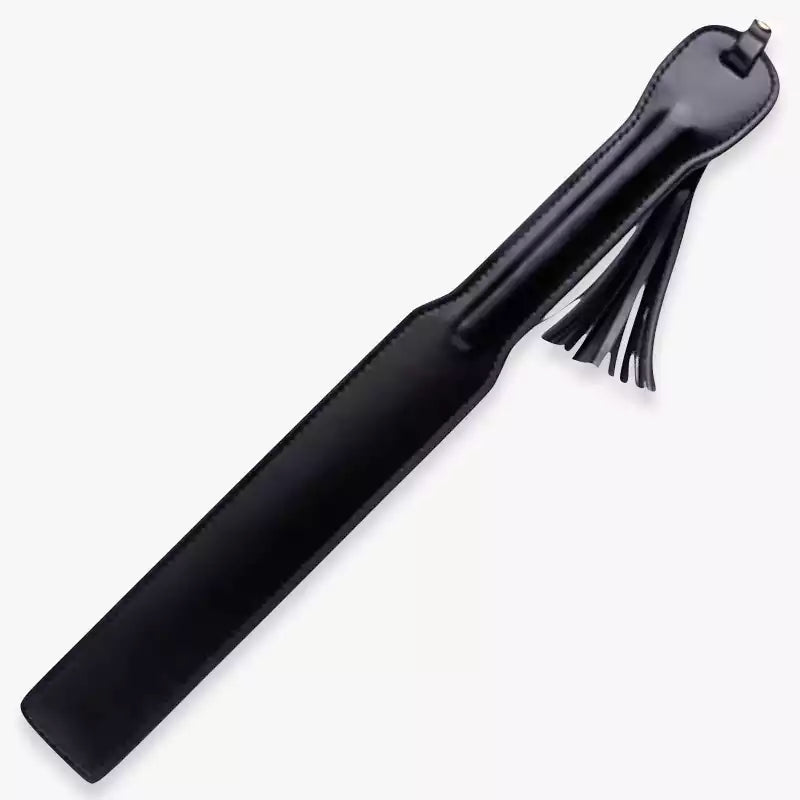
In wardrobe terms, this is the well-cut blazer — not the most photographed item you own, but the one that makes every other piece easier to plan around.
Piece Two: The Statement Piece
The statement piece should feel deliberately heavier and more grounded than everything else in the drawer — a paddle you reach for specifically because tonight calls for more weight, not less.
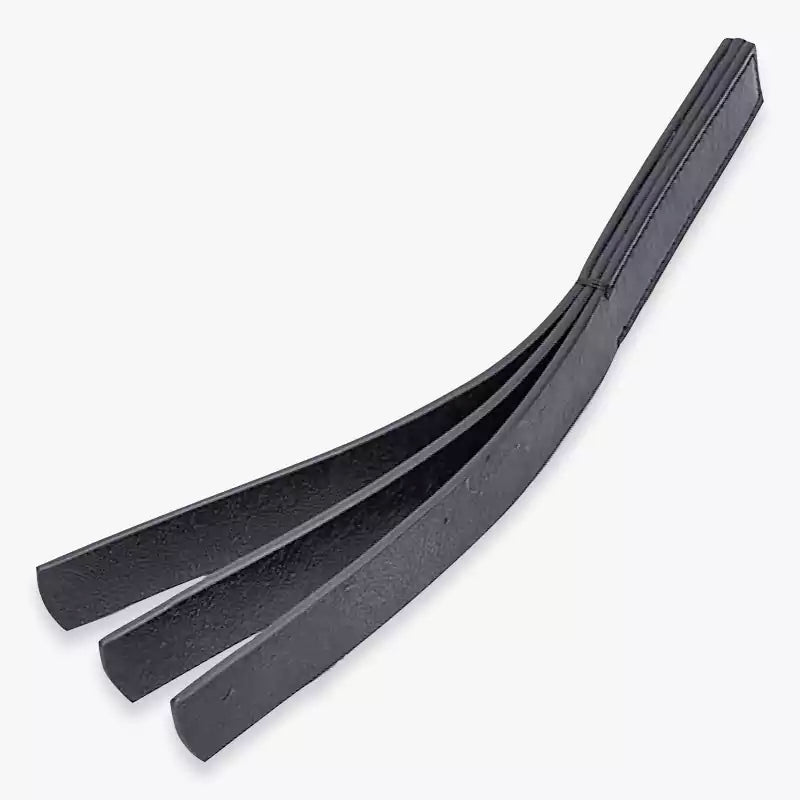
The Triple Layer Vintage Leather Paddle ($49.00) earns this spot through construction, not decoration. Its stacked, full-grain leather build is explicitly designed to reduce flex compared to thinner paddles, producing what SexPaddle calls a "more grounded, thuddy response." One reviewer put it bluntly: "This paddle is a beast." That's a statement piece doing its job — it doesn't get used every session, but when it comes out, everyone in the room knows the tone has shifted.
Piece Three: The Going-Out Piece
The going-out piece trades versatility for intensity — a sharper, more advanced tool reserved for sessions where sting, not thud, is the whole point.
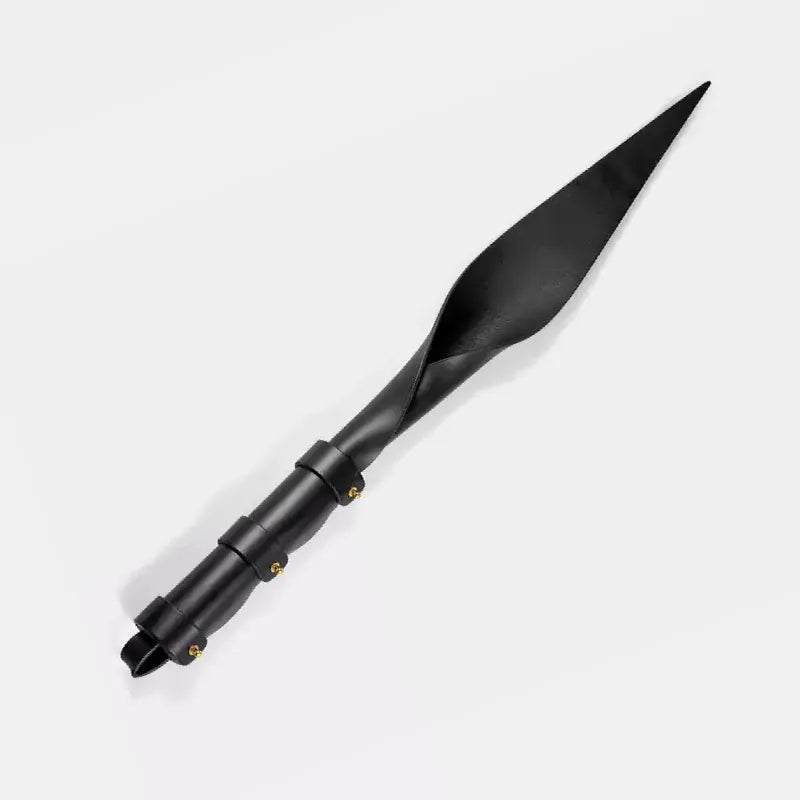
The Dragon Tail Leather Paddle ($89.00) is rated intermediate-to-advanced with an Impact Index of 8/10 sting and just 2/10 thud — almost the mechanical opposite of the workhorse piece above. At roughly 53 cm long and 160 g, its tapered cowhide body concentrates force at the tip, borrowing whip-style sensation without requiring whip-handling skill. This is not a piece you use every session; it's the one you plan around, the way a dramatic going-out jacket only comes out for the right night.
Piece Four: The Basics Layer
Every capsule needs an inexpensive, gentle, forgiving basic — the piece that makes the whole collection accessible to a nervous beginner or a lighter mood.
The Yellow Checkered Heart Paddle ($25.90), listed in SexPaddle's leather paddle collection as a wide beginner-oriented design, plays this role. Its lower price and broad face make it the natural on-ramp for a partner who's new to impact play, or for nights when the mood calls for playful rather than intense. A capsule without a basics layer isn't actually beginner-friendly, no matter how good the other three pieces are.
Capsule Comparison Table
Laid out side by side, the four roles cover a genuinely wide range of sensation and price without a single redundant piece.
| Piece | Role | Price | Skill Level | Defining Trait |
|---|---|---|---|---|
| Classic Leather Paddle with Tassel | Everyday Workhorse | $69.00 | Beginner–Intermediate | Moderate, predictable feedback |
| Triple Layer Vintage Leather Paddle | Statement Piece | $49.00 | Intermediate | Dense, thuddy, deliberate |
| Dragon Tail Leather Paddle | Going-Out Piece | $89.00 | Intermediate–Advanced | 8/10 sting, tip-focused |
| Yellow Checkered Heart Paddle | Basics Layer | $25.90 | Beginner | Wide, gentle, affordable |
Total capsule cost: roughly $232.90 for four pieces that cover four genuinely different sensations — less than buying eight overlapping paddles at random.
Building Your Own Capsule: A Simple Method
Before adding anything new to your collection, ask which of the four roles it fills — if the honest answer is "none, it just looked cool," that's the signal to skip it.
- Audit what you already own. Sort every piece into workhorse, statement, going-out, or basics. Anything that doesn't fit a role, or duplicates one you already have, is a candidate to retire or gift.
- Identify your gap. Most collections that grow organically end up heavy on one role — usually workhorse-adjacent moderate paddles — and missing a true statement or basics piece.
- Buy for the gap, not the sale. A discount on a fifth moderate paddle isn't a deal if you already own four that do the same thing.
- Reassess every few months. Preferences shift. A piece that felt like a going-out item a year ago might now function as your workhorse — that's a sign your capsule is evolving with you, not failing.
FAQ
Quick answers to the most common questions about building a capsule-style collection.
How many pieces should a capsule collection actually have?
Four is the functional minimum that covers meaningfully different sensations without gaps. Some people expand to five or six by splitting "going-out" into two intensity tiers, but four is where most collections stop feeling cluttered.
Isn't this just a fancier way of saying "buy less"?
Partly — but the framework matters because it's specific. "Buy less" doesn't tell you what to keep. Assigning roles does.
What if I already own eight paddles?
Sort them into the four roles first. You'll likely find several fill the same role — those are the ones worth setting aside, not the ones to feel guilty about owning.
Does the capsule method work for floggers and crops too, not just paddles?
Yes — the same four roles (workhorse, statement, going-out, basics) apply across implement types. A capsule could even mix categories: one paddle, one flogger, one crop, one cane, each filling a different role.
Is a cheaper piece automatically the "basics" role?
Usually, but not always. Price is a helpful shortcut, but the real test is sensation and skill level — a $25 piece with an aggressive profile isn't a true basics item just because it's inexpensive.
What's the biggest mistake people make building a capsule?
Buying two "statement" pieces because both looked striking, while skipping the basics layer entirely. A capsule only works if every role is actually filled.
Final Thoughts: Fewer Pieces, More Use
A capsule collection isn't about owning less for its own sake — it's about making sure every piece you own actually gets used.
Start with the Classic Leather Paddle with Tassel as your workhorse, add the Triple Layer Vintage Leather Paddle when you want more weight, and the Dragon Tail Leather Paddle when the mood calls for something sharper. For a deeper look at whether you actually need more pieces at all, read How Many Paddles Do You Actually Need, and browse the full leather spanking paddles collection to find the pieces that complete your own capsule. Whatever you build toward, keep a clear safe word system in place regardless of how many — or how few — pieces are in the drawer.


