
Flogger vs Whip (Single-Tail): What's the Difference

Floggers and whips are often lumped together as "the multi-tail category," but the skill gap between them is one of the biggest in impact play. A flogger's short, weighted falls are largely self-correcting, while a single-tail rope whip relies entirely on arc, timing, and momentum built by the user. If you have not yet compared every tool type, start with the Impact Play Toys 101 guide. This comparison focuses specifically on why a flogger is beginner-friendly while a whip is not — and what that actually means in practice.
A flogger's multiple falls are largely self-correcting and beginner-friendly, while a single-tail rope whip demands real arc and timing skill before it belongs anywhere near a partner.
🔽 Quick Navigation
- 📌 Before You Compare Flogger and Whip
- 📌 Flogger vs Whip at a Glance
- 📌 Flogger: Forgiving Multi-Fall Impact
- 📌 Whip: Momentum-Driven Precision
- 📌 Why the Skill Gap Is So Large
- 📌 Real Experience: Practicing Before a Whip Ever Touches Skin
- 📌 Aftercare for Floggers and Whips
- ❓ FAQ
- 🧭 Final Thoughts: Earn the Whip, Don't Start With It
Before You Compare Flogger and Whip
A whip in this category should never be a first tool, and neither tool should touch skin before consent, safe words, and target zones are agreed on.
Both tools should only be used on the buttocks and outer thighs — never the spine, kidneys, lower back, joints, neck, or any injured or numb area. Agree on a stop system before starting. This guide assumes you already have experience with at least a paddle or a flogger; a single-tail whip is not an appropriate first purchase.
Flogger vs Whip at a Glance
The core difference is mechanical: a flogger's short falls are largely self-correcting, while a whip has no handle-based leverage and relies entirely on the user's swing.
| Factor | Flogger | Whip (Rope-Style) |
|---|---|---|
| Mechanics | Handle plus multiple short falls | No rigid handle — full-length flexible braid |
| Aim tolerance | Self-correcting across a spread | Requires precise arc and timing control |
| Practice needed | Minimal — usable with basic technique | Significant — practice swing before any use on a partner |
| Typical skill level | Beginner to intermediate | Advanced |
| Featured product | Handwoven Grip Flogger — $32.90 | Knot-Braided Jute Rope Whip — $49.00 |
Flogger: Forgiving Multi-Fall Impact
A flogger's short, weighted falls hang from a rigid handle, which keeps the swing predictable even when technique isn't perfect.
The Handwoven Grip Flogger shows why this category is such a common recommendation for newer users. Its 18.9 in / 48 cm falls hang from a secure braided handle, and because the handle itself provides structure and leverage, the swing stays controllable even without advanced timing. At 168 g, it has enough weight to feel substantial without requiring the arc-building technique a whip needs. SexPaddle rates it beginner-to-intermediate with a balanced, versatile impact profile.
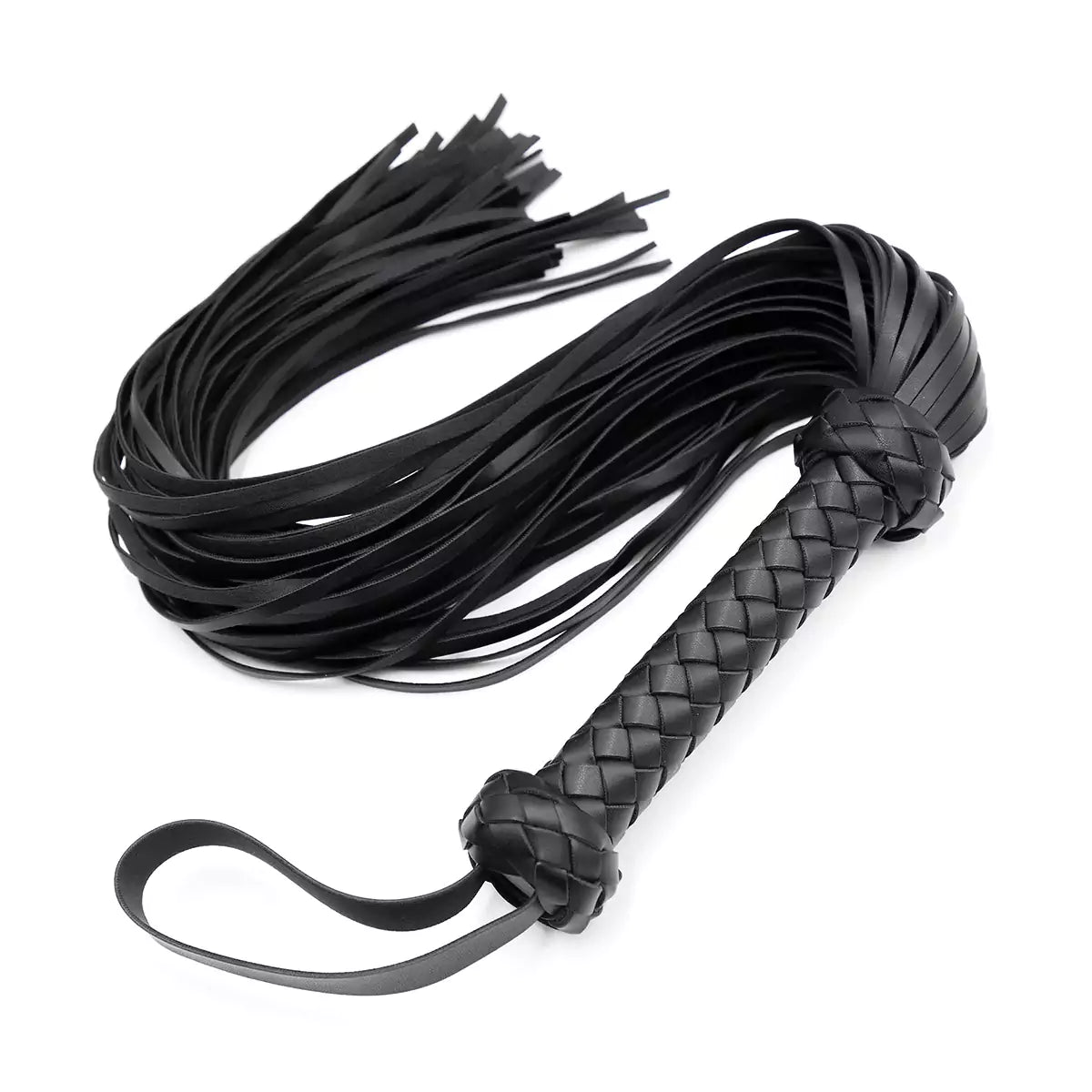
This is the core advantage of any handle-based flogging tool: the rigid handle does a lot of the aiming work for you. Browse the full floggers collection for lighter and heavier fall options as you build experience.
Whip: Momentum-Driven Precision
Without a rigid handle to anchor the swing, a whip relies entirely on the user's ability to build and control momentum through the full length of the tool.
The Knot-Braided Jute Rope Whip is hand-woven entirely from jute rope with no rigid handle section at all, running 47.24 in / 120 cm end to end. Every inch of that length is flexible, which means the entire swing — from wind-up to arc to point of contact — depends on the user's timing rather than a handle doing structural work. Its knotted braid builds real pendulum weight through a slow arc, landing a 6/10 sting with a heavy 8/10 thud plus a warm friction sensation from the natural jute fiber. SexPaddle lists this squarely as an advanced tool.
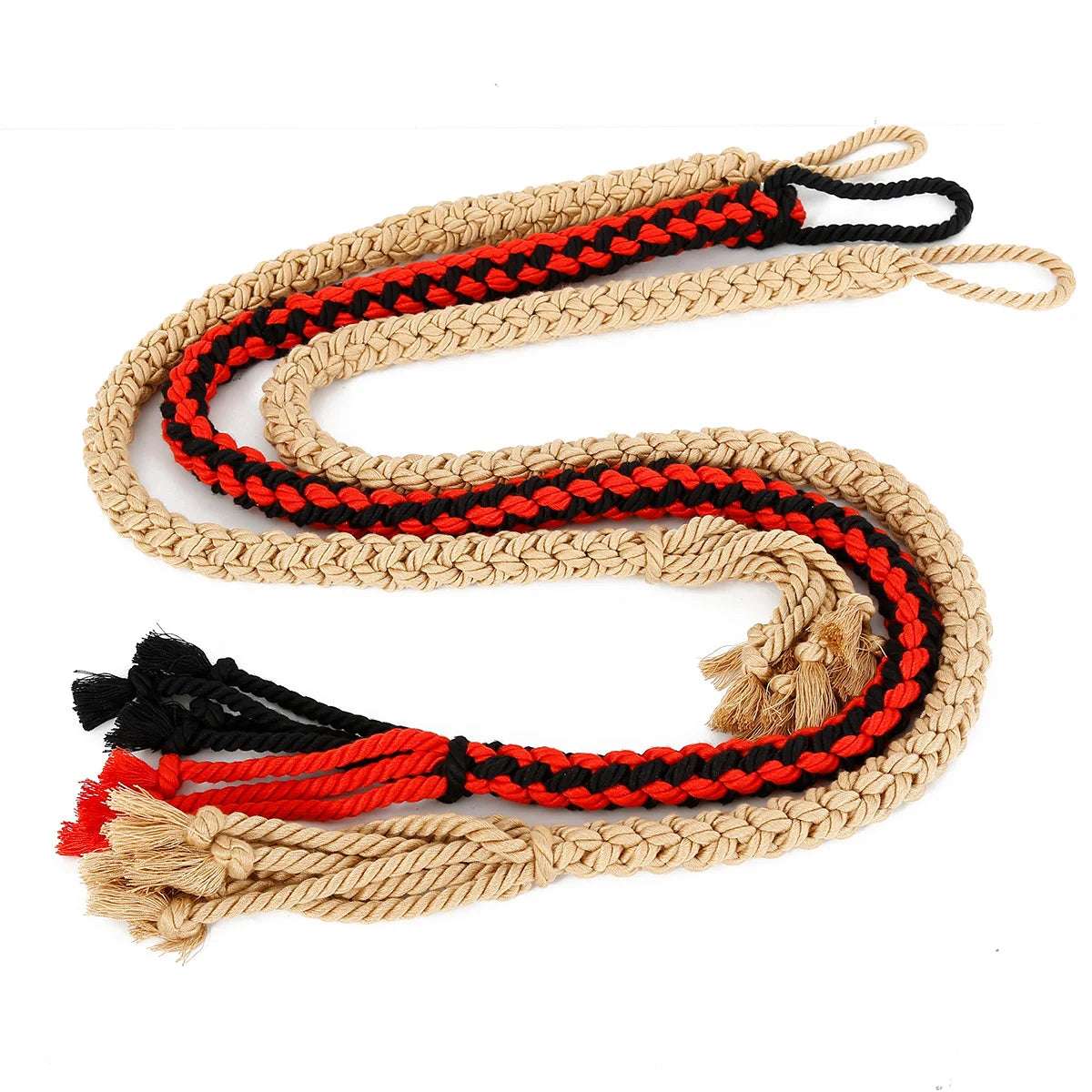
Because there is no handle to fall back on, mistakes with a whip are far less forgiving than with a flogger — a poorly timed swing can land unpredictably rather than simply feeling slightly off-center. Practice the arc alone, in open space, before ever bringing this tool into a scene with a partner. Browse the full whips collection once you have that foundation.
Why the Skill Gap Is So Large
A flogger's handle does structural work that a whip simply does not have, which is the single biggest reason the skill requirement differs so much between the two.
| Skill Element | Flogger Requirement | Whip Requirement |
|---|---|---|
| Grip and leverage | Handle provides built-in leverage | No handle — leverage comes entirely from wrist and arm technique |
| Aim consistency | Falls self-correct across a spread | Precise arc and timing required every swing |
| Practice before partner use | Minimal warm-up is usually enough | Solo practice sessions strongly recommended |
| Consequence of a mistake | Slightly uneven contact within the spread | Unpredictable placement, including wrap-around risk |
Real Experience: Practicing Before a Whip Ever Touches Skin
Solo practice with a whip, well before any partner is involved, is what most experienced users describe as the real dividing line between the two tools.
In a composite scenario based on common user questions, Ren had used a flogger comfortably for months and assumed a rope whip would feel like a natural next step. The first practice swing — done alone, aimed at a cushion rather than a partner — immediately proved otherwise. Without a handle to anchor the motion, the arc landed short on the first three attempts and wrapped slightly on the fourth. Ren spent several solo sessions over two weeks just building consistent arc control before ever suggesting it for a scene.
When the whip finally was introduced with a partner, Ren kept swings deliberately short and slow, well below what solo practice sessions had built up to. The partner described the sensation as "heavier and warmer than the flogger, but honestly the flogger still feels more comfortable for regular use." They kept the flogger as their primary tool and treated the whip as an occasional, carefully practiced addition. Their takeaway: the practice gap between these two tools is real, and skipping it is where most whip-related injuries happen.
Aftercare for Floggers and Whips
Leather and rope need different care, and both should be inspected for wear before every use, not just after.
| Tool | Cleaning | Storage | Watch For |
|---|---|---|---|
| Leather flogger | Wipe tails with a dry cloth; condition periodically | Hanging by the included loop | Fraying tails, handle looseness |
| Jute rope whip | Shake out loose fibers; wipe gently, never soak | Loosely hung or laid straight to avoid kinking | Fraying knots, fiber breakdown, weakened braid points |
FAQ
These answers cover the most common questions when comparing a flogger to a whip.
Is a flogger the same as a whip?
No. A flogger has a rigid handle with multiple short falls, while a single-tail rope whip has no handle and relies entirely on arc and momentum.
The two require very different levels of skill to use safely.
Can a beginner use a rope whip?
Not recommended. A whip requires practiced arc control that most beginners have not yet developed.
Start with a flogger or paddle and build experience before attempting whip play.
Why is a whip more dangerous than a flogger?
Without a rigid handle, a whip's placement depends entirely on the user's timing, which makes unpredictable contact and wrap-around far more likely than with a flogger.
A flogger's short falls are largely self-correcting even with imperfect technique.
How do I practice with a whip safely?
Practice the swing alone, aimed at a cushion or similar target, well before ever using it on a partner.
Build consistent arc control over multiple solo sessions before introducing it into a scene.
Does a whip hurt more than a flogger?
Generally yes — the pendulum momentum of a rope whip produces heavier thud than most flogger falls, plus friction sensation from the fiber itself.
Sensation also depends heavily on swing force and timing, which is harder to control with a whip.
Should I buy a flogger or a whip first?
A flogger should always come first. Its handle-based design is far more forgiving and appropriate for building baseline experience.
Consider a whip only after you are comfortable and experienced with handle-based tools.
Final Thoughts: Earn the Whip, Don't Start With It
A flogger and a whip may look related, but the practice gap between them is one of the largest in impact play — respect it rather than skipping ahead.
For nearly everyone starting out, the Handwoven Grip Flogger offers a forgiving, handle-based introduction to multi-fall sensation. Save a tool like the Knot-Braided Jute Rope Whip for later, after real solo practice with arc and timing.
For the full picture across every impact toy type, revisit the Impact Play Toys 101 guide, and make sure your safe word system is in place using the safe word guide before your next session.


