
Hitting Too Soft, Too Hard, or Just Right? Overcoming a Top's Hesitation

Every new Top hits this wall eventually: hand raised, mind racing — too soft and it feels pointless, too hard and you might hurt someone you care about. That hesitation is normal, and it's fixable. It's not about finding the "right" force on the first try with a paddle or flogger — it's about building a feedback loop that tells you when you're close, so confidence replaces guesswork over time. This isn't a rare problem either; it's one of the most common things new Tops describe, and one of the most fixable, once you understand what's actually happening in that moment of hesitation.
Overcoming a Top's hesitation comes down to three things: starting with genuinely forgiving tools, building a real-time feedback loop with your partner, and accepting that calibration is a skill built over sessions, not solved in one.
🔽 Quick Navigation
- 📌 Why Every New Top Freezes at This Exact Moment
- 📌 Start With Tools That Forgive Mistakes
- 📌 The Calibration Conversation Before You Start
- 📌 Reading Real-Time Feedback
- 📌 The Progressive Warm-Up Method
- 📌 Separating Mechanics From Persona
- 📌 What Confidence Actually Looks Like
- 📌 Common Hesitation Triggers and Fixes
- 📌 Tool Forgiveness Comparison Table
- ❓ FAQ
- 🧭 Final Thoughts
Why Every New Top Freezes at This Exact Moment
Hesitation isn't a sign you're doing something wrong — it's a sign you care about getting it right, and that instinct is worth channeling rather than suppressing.
New Tops often describe wanting mechanics and persona to feel natural immediately, when in practice those two things stay tangled together while you're still learning — and that's completely normal. The freeze happens because you're trying to solve force, rhythm, timing, and emotional presence all at the same time, in real time, often for the first time in front of someone whose comfort matters deeply to you. Separating those variables, and tackling force calibration specifically as its own skill, is what actually breaks the freeze. Most people who eventually feel confident as a Top didn't get there by eliminating self-doubt through willpower — they got there by narrowing the problem down to something concrete and practicing it deliberately, one variable at a time, rather than trying to master everything in a single session.
It also helps to recognize that this hesitation rarely comes from a lack of care — quite the opposite. The Tops who freeze up are usually the ones paying the closest attention to their partner's wellbeing. That's a strength, not a weakness, even though it doesn't always feel that way in the moment. The goal isn't to feel nothing when you raise your hand; it's to channel that attentiveness into something productive, like reading feedback, rather than letting it spiral into paralysis.
Start With Tools That Forgive Mistakes
Choosing an implement engineered for forgiveness — broad contact, minimal sting, gentle at the extremes — removes the stakes from your early hesitation entirely.
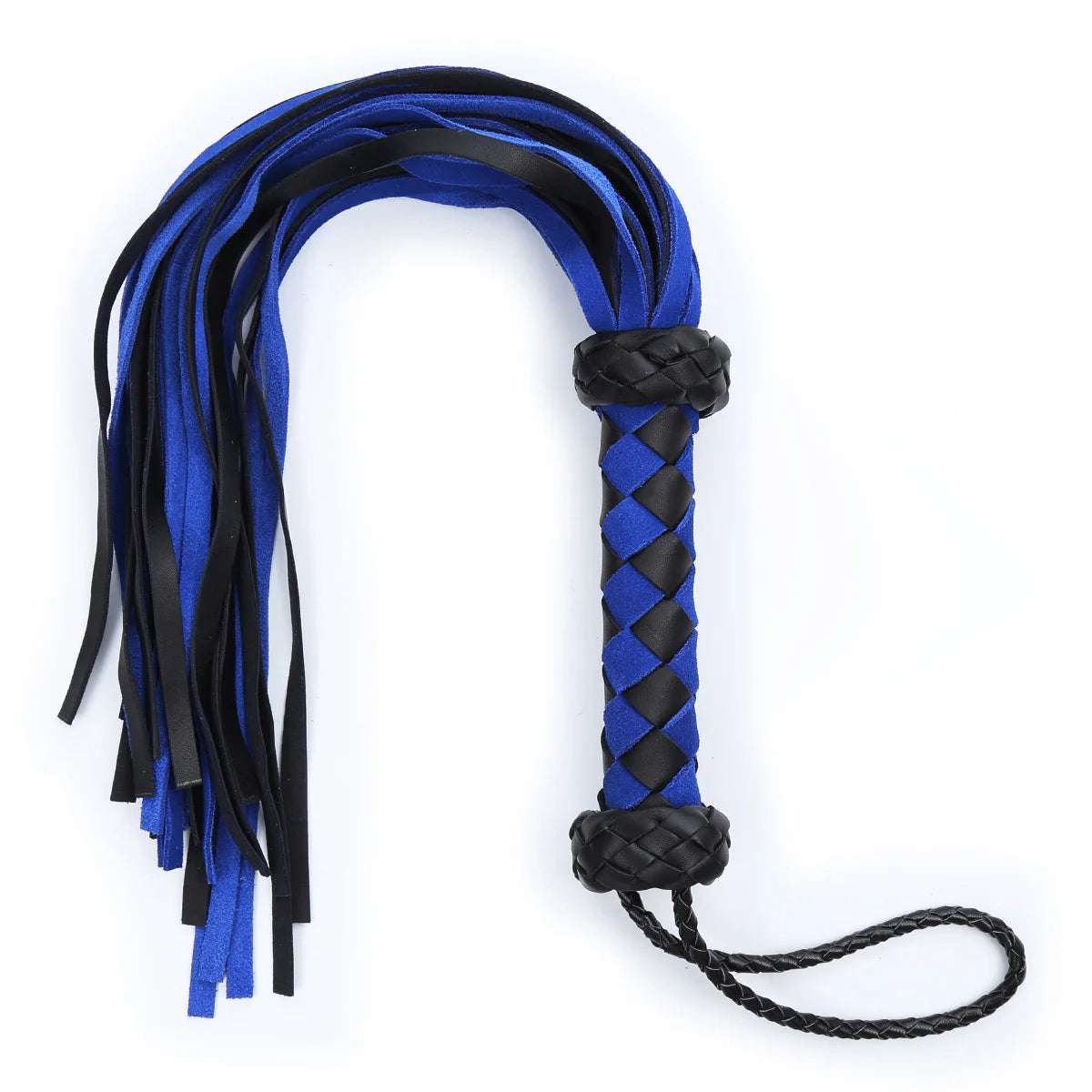
The Suede BDSM Flogger ($39.90) is a genuinely good first tool for a hesitant Top: its faux suede falls spread sensation across a wide area, and the design is explicitly built for soft, teasing contact with minimal sting even when your swing isn't perfectly calibrated yet. At 27.56 inches with a braided handle and wrist loop, it's rated beginner-friendly specifically because the sensation profile stays gentle even at the high end of your force range — which means a slightly-too-hard swing doesn't carry the same weight it would with a sharper implement. That matters enormously for a hesitant Top, because it means you can actually practice reading feedback without the fear of causing real discomfort clouding every decision you make mid-swing.
The Classic Leather Paddle with Tassel ($69.00) works the same way in the paddle category — genuine leather rated for beginner-to-intermediate use, with moderate, predictable feedback that doesn't punish an imperfect first attempt. Practicing with either of these tools first, before moving to anything sharper, gives you room to make mistakes that don't matter, which is exactly the low-stakes environment a hesitant Top needs in order to actually learn instead of just white-knuckling through a scene hoping nothing goes wrong. Once you've built genuine confidence with a forgiving tool, moving to something with a sharper sensation profile — like a crop or a denser paddle — becomes a much smaller leap, because your underlying calibration skill has already been established.
The Calibration Conversation Before You Start
A short, explicit conversation about force before the scene begins removes most of the guesswork that causes hesitation in the first place.
Sex therapists who work with couples on negotiation consistently recommend starting small and building up gradually as confidence grows, rather than aiming for an ideal outcome on the first attempt. This same principle applies directly to force calibration. Before you start, ask your partner directly: what did a "too light" and "too much" moment feel like the last time, if there was one? Specific, concrete answers — not vague reassurance like "just do what feels right" — give you an actual reference point instead of an abstract worry with no data behind it.
It can also help to frame this conversation using simple, low-stakes language rather than treating it like a formal negotiation every single time. Something as casual as "tell me if this is too much or too little, especially early on" sets the expectation that feedback is welcome and expected, not a sign that something has gone wrong. Couples who build this kind of casual, ongoing check-in into their routine tend to report feeling more relaxed overall, precisely because neither partner is carrying the entire burden of getting it perfect alone.
Reading Real-Time Feedback
Confidence comes from learning to read a small set of consistent signals — breathing, vocalization, body tension — rather than needing verbal confirmation after every single strike.
- Breathing changes — a sharp inhale or held breath often signals more sensation than expected; steady, relaxed breathing usually signals comfortable pacing.
- Vocal tone — a rising pitch or sudden silence can both be worth checking in on, while a relaxed sigh or soft moan usually signals you're in a good range.
- Body posture — tensing away from contact suggests backing off; settling into position suggests you can hold steady or slightly build from here.
- Hand and grip signals — clenched fists or gripping the surface beneath them can indicate rising intensity that either needs a pause or is exactly the sensation being sought, depending on context you've already discussed.
None of these signals replace a safe word system — they're a supplement that lets you calibrate moment to moment, while the safe word remains the hard stop for anything more serious. Learning to read these signals takes repetition; don't expect to catch every nuance in your first few sessions. Over time, these signals become almost automatic to notice, the same way an experienced driver stops consciously thinking about checking mirrors — it becomes background awareness rather than a deliberate, effortful task.
The Progressive Warm-Up Method
Building intensity gradually across a session, rather than guessing at a fixed "right" force from the first strike, is the single most effective fix for Top hesitation.
- Begin well below what you think is needed. The first several strikes are about establishing a baseline, not delivering the scene's peak — treat this phase as calibration, not performance.
- Increase in small increments, checking in verbally or reading feedback signals after each step up, rather than jumping straight from cautious to committed.
- Pause when you find a level that gets a clear positive response, and stay there for a while before deciding whether to build further — there's no requirement to keep escalating just because you can.
- Treat each session as data, not a final verdict — force calibration is a skill you refine over many sessions, not something you solve once and never revisit.
- Debrief afterward. A brief conversation about what felt right and what you'd adjust builds a shared reference point for next time, so you're not starting from zero again.
Separating Mechanics From Persona
Trying to nail your dominant persona and your technical force calibration in the same moment is what actually causes most of the freeze — separating them, even temporarily, makes both easier.
One well-known piece of advice for new Tops is refreshingly simple: if a blindfold is part of your scene, use it, because it removes the pressure of managing your facial expression while you're still focused on getting the mechanics right. Even without a blindfold, the underlying idea holds — give yourself permission to focus purely on force and rhythm for the first portion of a session, without also trying to perform confidence you don't feel yet. The persona can come later, once the mechanics feel automatic. Trying to force both at once is what usually causes the paralysis in the first place, since your attention only has so much room, and force calibration deserves to be prioritized early on.
What Confidence Actually Looks Like
Confidence as a Top isn't the absence of uncertainty — it's the ability to stay present and keep communicating even while you're still learning.
General BDSM guidance is consistent on this point: a healthy dynamic depends far more on communication and a willingness to check in than on getting every technical detail perfect from the start. A Top who pauses to ask "how was that?" is not failing at confidence — they're practicing the exact skill that eventually makes hesitation disappear. The goal isn't eliminating self-doubt overnight; it's building enough real feedback data that your instincts start matching reality, session by session, until the calculation you used to have to make consciously starts happening almost automatically.
It's worth saying plainly: even experienced Tops still check in, still adjust, and still occasionally misjudge a strike. Confidence doesn't mean those things stop happening — it means you've built enough trust in your own feedback loop that a misjudged strike doesn't derail the whole session. You notice, you adjust, and you keep going, rather than spiraling into the same freeze you started with.
Common Hesitation Triggers and Fixes
A few specific moments tend to trigger renewed hesitation even in Tops who've otherwise built confidence — recognizing them in advance makes them easier to move through.
| Trigger | Why It Happens | Practical Fix |
|---|---|---|
| Switching to a new implement | Unfamiliar weight and sensation profile resets your calibration | Treat the first few strikes with any new tool as a fresh warm-up phase |
| A longer gap between sessions | Feedback-reading skill can feel rusty after time away | Start the next session at a lower intensity than where you left off |
| Partner seems unusually quiet | Ambiguous signals are harder to read than clear ones | Ask directly rather than guessing — a quick check-in costs nothing |
| Trying a new position or angle | Changes how force lands and how feedback is visible to you | Slow down and re-establish your baseline in the new position first |
Tool Forgiveness Comparison Table
| Tool | Series | Forgiveness Level | Best For |
|---|---|---|---|
| Suede BDSM Flogger | Floggers | High — broad, soft contact | Practicing swing and rhythm with minimal stakes |
| Classic Leather Paddle with Tassel | Leather Paddles | High — moderate, predictable | Practicing direct-contact force calibration |
| Black & Gold Leather Riding Crop | Riding Crops | Moderate — 6/10 sting, 6/10 thud | Once basic calibration confidence is established |
Notice the pattern: forgiveness generally correlates with broader contact area and softer material, while precision tools like crops trade some of that forgiveness for more concentrated feedback. Starting on the left side of this table and working toward the right, as your confidence builds, is a sensible default progression for almost any new Top.
FAQ
Common questions about overcoming hesitation as a Top.
Is it normal to still feel nervous after several sessions?
Yes. Nervousness fading gradually, not disappearing after one good session, is the typical pattern — confidence builds from accumulated feedback, not a single breakthrough moment. Expecting instant confidence is actually one of the more common reasons people feel discouraged early on.
Should I ask for verbal confirmation after every strike?
Early on, yes — frequent check-ins are normal and expected while you're both calibrating. As you build a shared feedback language together, you'll naturally need to ask less often, and reading non-verbal signals will start to feel sufficient on their own.
What if my partner says "harder" and I'm still hesitant to comply?
It's reasonable to increase gradually rather than jumping straight to a big change, even if asked directly — explain that you're stepping up incrementally so you can both confirm it lands well. Most partners appreciate this caution rather than finding it frustrating, once they understand the reasoning behind it.
Does using a gentler tool first mean I'm not a "real" Top?
Not at all. Starting with forgiving tools while you build calibration skill is a practical training method, not a limitation on your role or a sign of inexperience that needs to be hidden.
How long does it typically take to feel confident?
It varies widely, but consistent practice across several sessions — with real feedback each time — is what builds it, not a fixed timeline. Some Tops feel steadier after three or four sessions; others take longer, and both are completely normal outcomes.
What if I misjudge a strike badly even after building some confidence?
It happens even to experienced Tops. Pause, check in directly, adjust, and continue — a single misjudged strike doesn't undo the calibration skill you've built, and treating it as a minor correction rather than a crisis keeps the session on track.
Does hesitation ever come back after it's mostly gone?
Often, yes — a new implement, a new partner, or simply a long break between sessions can bring some of that early hesitation back temporarily. This isn't a regression; it's a normal reset that responds to the same progressive warm-up approach that worked the first time.
Final Thoughts: Calibration Is a Skill, Not a Guess
Hesitation fades when you stop trying to guess the "right" force and start building a real feedback loop, one incremental step at a time.
Start with forgiving tools like the Suede BDSM Flogger or the Classic Leather Paddle with Tassel, build intensity in small increments, and treat every session as practice rather than a test. For more on establishing clear communication before you begin, see our safe word system guide, and browse the full leather spanking paddles collection and floggers collection for more forgiving starter tools.


