
Wood Hardness Guide: Ebony vs Padauk vs Beech vs Bamboo

Why does a solid ebony paddle cost three times more than a beechwood one of similar size? It's not branding — it's wood science. Different wood species pack their fibers at dramatically different densities, and that density is measurable, comparable, and directly predicts both price and sensation. This guide walks through the actual hardness science behind the wood species in our collection, so "solid ebony" and "beechwood" stop being marketing words and start being specs you can evaluate.
Wood hardness is measured using the Janka scale, and species like ebony and padauk sit far denser than beechwood or bamboo — denser wood transfers force more directly and feels firmer, while less dense species flex slightly and feel comparatively softer at the same swing effort.
🔽 Quick Navigation
- 📌 The Janka Scale: How Wood Hardness Is Actually Measured
- 📌 Ebony: Near the Top of the Density Scale
- 📌 Padauk: Dense and Distinctively Colored
- 📌 Beechwood: The Reliable Middle Ground
- 📌 Bamboo: A Different Kind of Structure Entirely
- 📌 Density Comparison Table
- 📌 Why Density Isn't the Only Variable
- 📌 Real Experience: Feeling the Density Difference Directly
- ❓ FAQ
- 🧭 Final Thoughts: Density Is a Spec You Can Actually Verify
The Janka Scale: How Wood Hardness Is Actually Measured
The Janka hardness test measures the force required to embed a steel ball halfway into a sample of wood, giving every species a comparable, objective hardness number.
Developed over a century ago and still the industry standard for flooring, furniture, and woodworking today, the Janka scale lets you compare wood species the same way you'd compare any other material spec — a higher number means denser, harder wood that resists denting and transfers force more directly. For context, red oak (a common furniture wood) sits around 1,290 pounds-force (lbf) on the Janka scale. Species used in our wood paddle and cane collection span a genuinely wide range above and around that benchmark, which is exactly why "wood" alone tells you very little about how a specific piece will actually feel.
Ebony: Near the Top of the Density Scale
Ebony is one of the densest commercially available woods in the world, which is precisely why it transfers force so directly and feels so firm on contact.
True ebony species sit roughly in the 3,000+ lbf range on the Janka scale — more than double red oak's hardness, and among the densest woods used in any consumer product. The Ebony Dot Texture Spanking Paddle ($69.00) is solid ebony construction, and its 7/10 sting rating at a relatively modest 138 g directly reflects this density — a lighter-weight paddle still delivers firm, direct sensation because the wood itself is so dense that weight alone doesn't need to compensate. For buyers who want the absolute firmest, most direct wood sensation available, ebony's extreme density is exactly what delivers that.
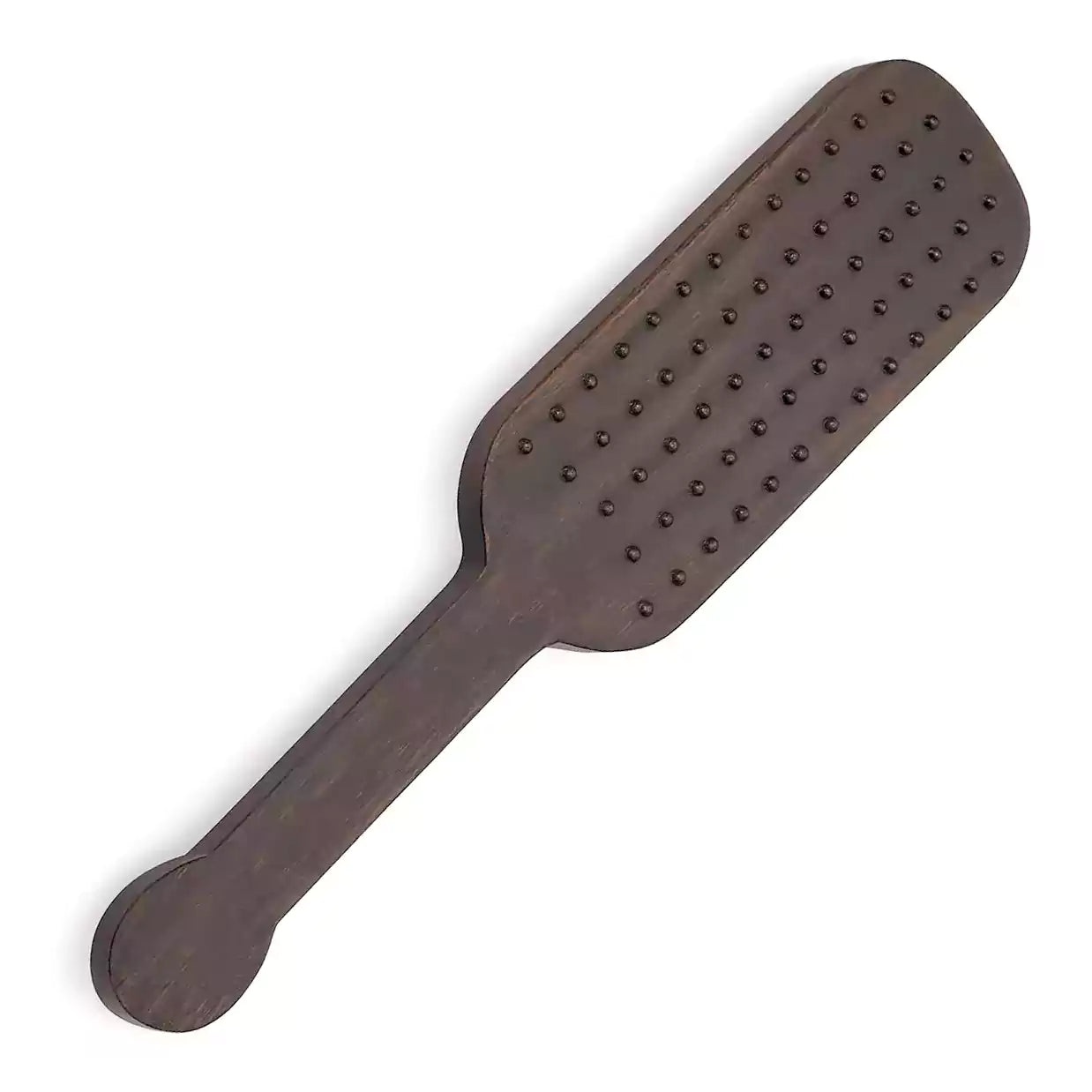
This same density is also why ebony paddles command a premium price — dense tropical hardwoods are slower-growing and more labor-intensive to work with than common furniture-grade species, which is reflected throughout our ebony product line.
Padauk: Dense and Distinctively Colored
Padauk sits solidly in the dense hardwood category — not quite as extreme as ebony, but considerably harder than mid-range furniture woods — with a distinctive reddish-orange color that darkens over time.
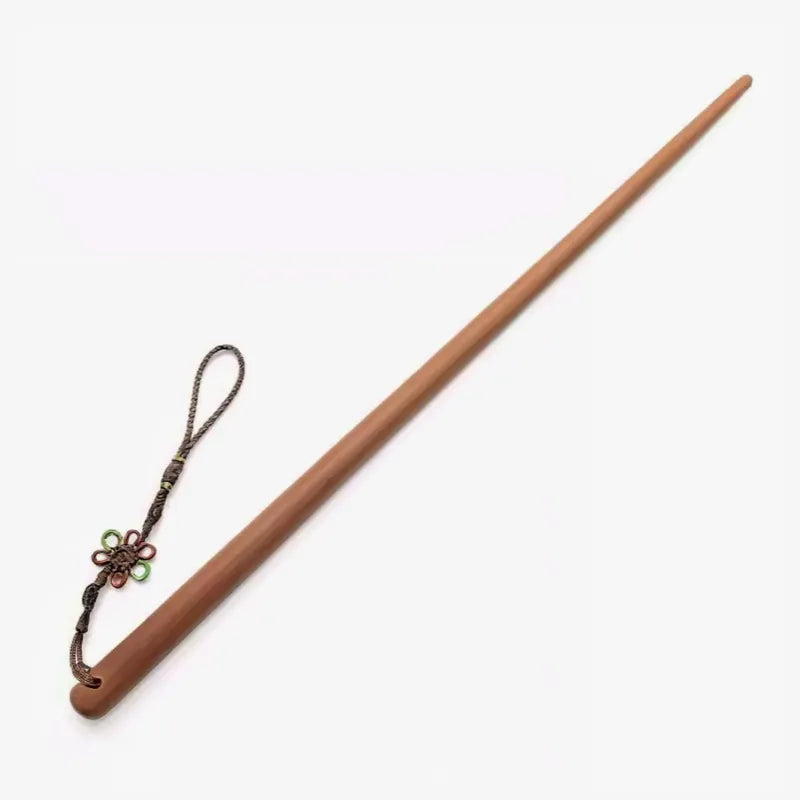
African padauk typically measures around 1,725 lbf on the Janka scale — meaningfully denser than red oak, though less extreme than ebony. The Padauk Hardwood Teaching Cane ($89.00) uses this density to deliver a firm, controlled, hand-tapered sensation at a shorter 19.7 in length, and the wood's natural red-brown tone gives it real visual distinctiveness compared to the darker, more neutral ebony paddle above. Padauk's color is actually a useful durability indicator in its own right — the wood oxidizes and deepens in color with light exposure and handling over time, similar to how leather develops a patina, giving a well-used padauk piece a visibly different character from a brand-new one.
Beechwood: The Reliable Middle Ground
European beechwood sits closer to the mid-range of common hardwoods, offering a dependable, moderate density that's long been a standard choice for tool handles and furniture precisely because it balances strength with workability.
Beech typically measures around 1,300 lbf on the Janka scale — close to red oak, and notably less dense than either ebony or padauk. The Thick Beech Wood Spanking Paddle ($79.00) compensates for this moderate density with genuine thickness and an extra-wide face, available in two thickness options that scale from 6/10 sting and 5/10 thud up to 6/10 sting and 7/10 thud at maximum thickness. This demonstrates an important principle: moderate-density wood can still deliver serious sensation through dimension and mass, even without ebony or padauk's raw hardness.
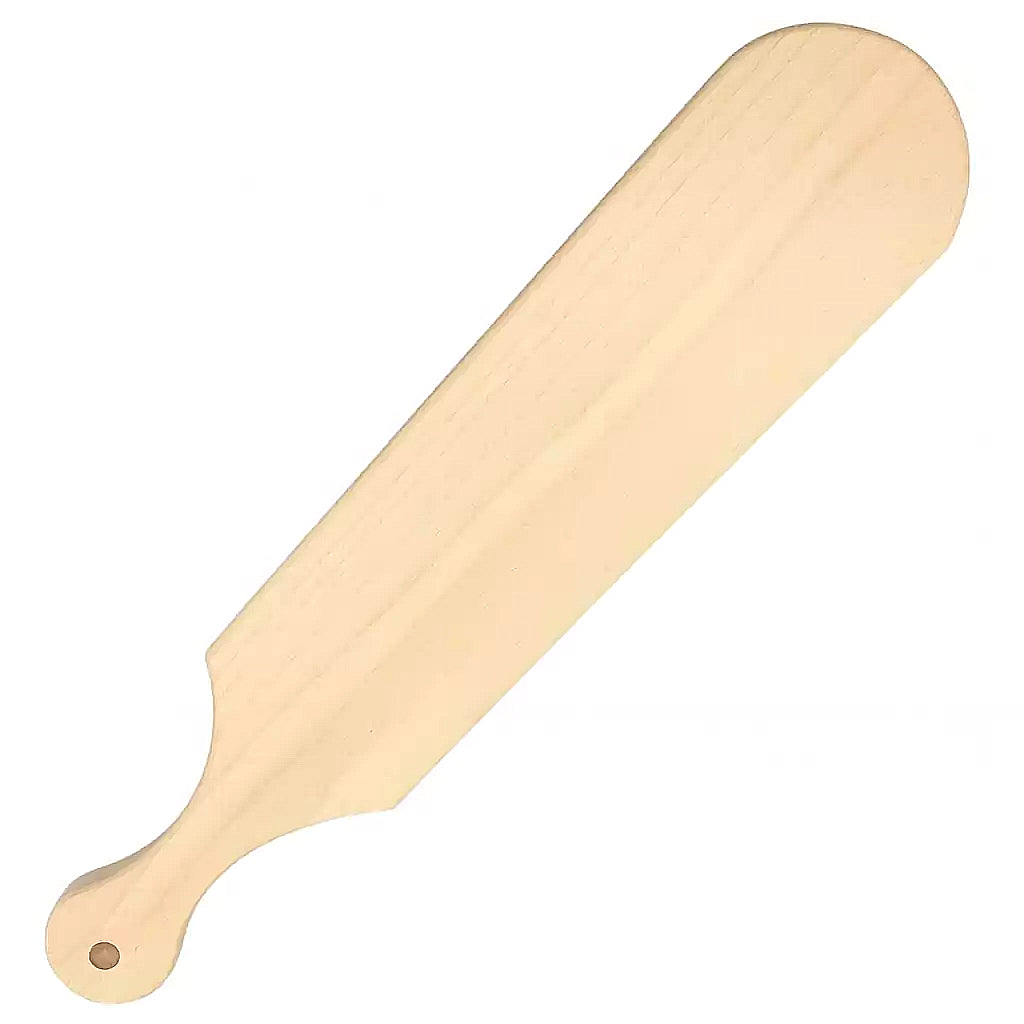
Beech is also historically prized in woodworking for its consistent, fine, even grain — it machines cleanly and resists splintering better than many softer woods, which is part of why it remains a reliable, time-tested choice rather than simply a budget compromise.
Bamboo: A Different Kind of Structure Entirely
Bamboo isn't technically wood at all — it's a grass — and its hollow, fibrous structure behaves differently from any true hardwood regardless of where it would theoretically rank on the Janka scale.
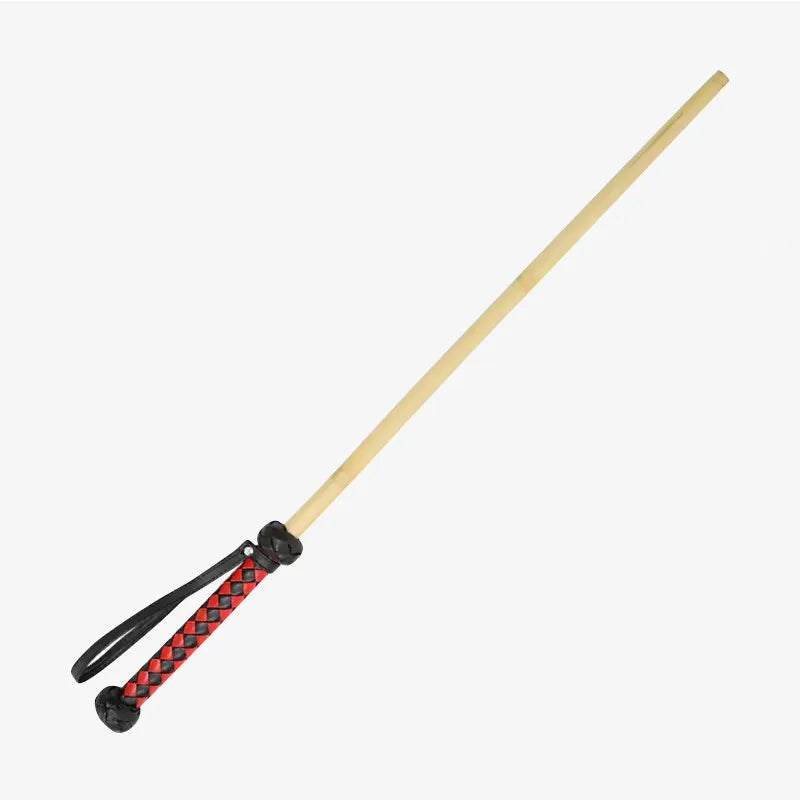
Because bamboo grows in segmented, hollow stalks rather than the solid cellular structure of tree wood, density comparisons using the standard Janka scale don't fully capture how it behaves in use. The Thick Bamboo Discipline Cane ($19.90) is explicitly positioned for advanced impact play despite bamboo's reputation as a "lighter" material — its segmented structure actually produces a fast, springy rebound that transfers energy efficiently through the swing, a behavior closer to rattan's flex than to a solid hardwood's direct force transfer. This is exactly why comparing bamboo to true hardwoods purely by a hardness number can be misleading; the structural behavior matters as much as raw density.
Density Comparison Table
Laying out approximate Janka hardness alongside real products makes the practical differences concrete.
| Species | Approx. Janka Hardness | Character | Featured Product |
|---|---|---|---|
| Ebony | ~3,000+ lbf | Extremely dense, direct force transfer | Ebony Dot Texture Paddle — $69.00 |
| Padauk | ~1,725 lbf | Dense, distinctive reddish color that deepens with age | Padauk Hardwood Teaching Cane — $89.00 |
| Beech | ~1,300 lbf | Moderate density, fine consistent grain | Thick Beech Wood Paddle — $79.00 |
| Bamboo | Variable (grass, not wood) | Hollow, segmented, fast springy rebound | Thick Bamboo Discipline Cane — $19.90 |
Why Density Isn't the Only Variable
Density predicts a lot, but thickness, face width, and overall mass can meaningfully shift where a specific product lands on the sensation scale, regardless of species.
The Thick Beech Wood Paddle's two-thickness design is a clear demonstration: the same moderate-density species produces a noticeably different thud rating (5/10 versus 7/10) purely based on how much wood is actually present in the striking face. This means a thick, wide piece of moderate-density beech can deliver more overall mass-driven impact than a thin, narrow piece of denser padauk — species sets the baseline character, but dimension and construction still matter enormously on top of that baseline.
Real Experience: Feeling the Density Difference Directly
Reading Janka numbers is useful context, but most people only really internalize density differences once they compare two species directly at matched intensity.
In a composite scenario based on common buyer questions, Theo owned only the Thick Beech Wood Spanking Paddle and assumed any "solid wood" paddle would feel roughly similar regardless of species. After adding the Ebony Dot Texture Spanking Paddle and trying both at matched light swing force, the difference was immediate and obvious — the ebony paddle felt noticeably more direct and unforgiving despite being considerably lighter in total weight than the beech paddle.
Theo's takeaway was that density, not just overall weight or size, was doing most of the work in that sensation difference — a lesson that changed how future wood purchases got evaluated, checking species and approximate hardness rather than assuming "solid wood" meant one consistent experience across different products.
FAQ
These answers cover common questions about wood density and hardness in impact toys.
What is the Janka hardness scale?
It's a standardized test that measures the force needed to embed a steel ball halfway into a wood sample, giving every species a comparable hardness number used throughout woodworking and flooring industries.
A higher Janka number means denser, harder wood.
Is ebony always the hardest wood option?
Among commonly used woods in impact toys, yes — ebony sits among the densest species available, meaningfully harder than padauk, beech, or most other furniture-grade hardwoods.
This is why ebony paddles are generally positioned for intermediate to advanced users.
Why does bamboo feel different from its apparent "lightness"?
Bamboo is a grass, not a true wood, with a hollow, segmented structure that behaves differently from solid hardwood regardless of density comparisons.
Its structure produces a fast, springy rebound rather than the direct force transfer typical of dense solid hardwoods.
Does a denser wood always hurt more?
Generally yes, at matched swing force and similar dimensions, since denser wood transfers energy more directly with less flex to absorb it.
Thickness and face size can still shift this — a thick, wide piece of moderate-density wood can rival a thinner piece of denser wood.
Why does padauk change color over time?
Padauk oxidizes with light and air exposure, gradually deepening from its bright orange-red toward a darker brown-red tone — a natural aging process similar in spirit to leather developing a patina.
This is a normal characteristic, not a sign of damage or lower quality.
Should beginners avoid dense woods like ebony?
Not necessarily avoid, but be aware that dense wood's direct force transfer often means less margin for error with technique, which is why ebony paddles typically carry an intermediate-to-advanced rating.
Check the specific product's Impact Index rather than assuming based on species alone.
Final Thoughts: Density Is a Spec You Can Actually Verify
Wood species isn't a vague aesthetic choice — it's a measurable density spec that directly predicts sensation, just like material grade does for leather.
For maximum density and the firmest, most direct sensation, the Ebony Dot Texture Spanking Paddle sits near the top of the scale. For dense wood with distinctive, aging color, the Padauk Hardwood Teaching Cane offers that. For moderate, reliable density that scales with thickness, the Thick Beech Wood Spanking Paddle delivers real mass-driven impact, and for a genuinely different springy structure, the Thick Bamboo Discipline Cane stands apart from true hardwoods entirely.
For material fundamentals across paddle construction broadly, revisit Wood vs Leather vs Silicone Paddles, and browse the full wooden spanking paddles collection to compare species directly.


