
Lightweight vs Heavy Paddles: Control and Intensity Compared

Weight is one of the most underrated specs on a paddle listing, but it changes almost everything about how a tool feels and handles — control, fatigue, sensation depth, and how forgiving it is of a fast wrist. This final comparison in our impact toy series looks at the two extremes: an ultra-light mini paddle and a thick, extra-wide hardwood paddle. For the full picture across every tool type, see the Impact Play Toys 101 guide.
Lightweight paddles are fast, easy to control, and naturally gentle, while heavy paddles deliver deeper, more grounded thud with far less swing effort — weight alone can shift a paddle's entire sensation profile.
🔽 Quick Navigation
- 📌 Before You Compare by Weight
- 📌 Lightweight vs Heavy at a Glance
- 📌 The Lightweight Pick: Fast, Forgiving, and Controlled
- 📌 The Heavy Pick: Grounded, Deep Thud With Less Effort
- 📌 Why Weight Changes Sensation More Than People Expect
- 📌 Real Experience: Realizing Weight Was the Missing Variable
- ❓ FAQ
- 🧭 Final Thoughts: Weight Is a Spec Worth Checking First
Before You Compare by Weight
A heavier paddle requires more restraint, not more force, since its own mass already does much of the work a lighter paddle needs a faster swing to achieve.
Both paddles in this comparison should only be used on the buttocks and outer thighs — never the spine, kidneys, lower back, joints, neck, or any injured or numb area. If you're used to a lightweight paddle and trying a heavier one for the first time, reduce your swing speed significantly — the added mass alone will produce more sensation than you're used to, even at a slower pace.
Lightweight vs Heavy at a Glance
These two paddles sit at opposite ends of the weight spectrum, which shows up clearly in both sensation and required technique.
| Factor | Lightweight | Heavy |
|---|---|---|
| Size | 9.4 in / 24 cm total length | 15.7 in / 40 cm, 3.54 in extra-wide face |
| Impact Index | 2/10 sting, 1/10 thud | 6/10 sting, 7/10 thud (thick version) |
| Effort required | Faster wrist motion needed for sensation | Sensation builds with minimal effort |
| Skill level | Beginner | Intermediate to advanced |
| Featured product | Mini Triple-Heart Paddle — $19.90 | Thick Beech Wood Spanking Paddle — $79.00 |
The Lightweight Pick: Fast, Forgiving, and Controlled
A very light paddle requires real wrist speed to generate meaningful sensation, which naturally limits how intense it can get even with an enthusiastic swing.
The Mini Triple-Heart Paddle ($19.90) sits at the lightest end of the spectrum. At just 9.4 in / 24 cm with a faux leather build and rope wrist loop, SexPaddle rates its Impact Index at just 2/10 sting and 1/10 thud — closer to light surface tapping than true impact. Its low mass means the giver has to work for sensation rather than the paddle providing it automatically, which naturally caps intensity even if swing speed increases.
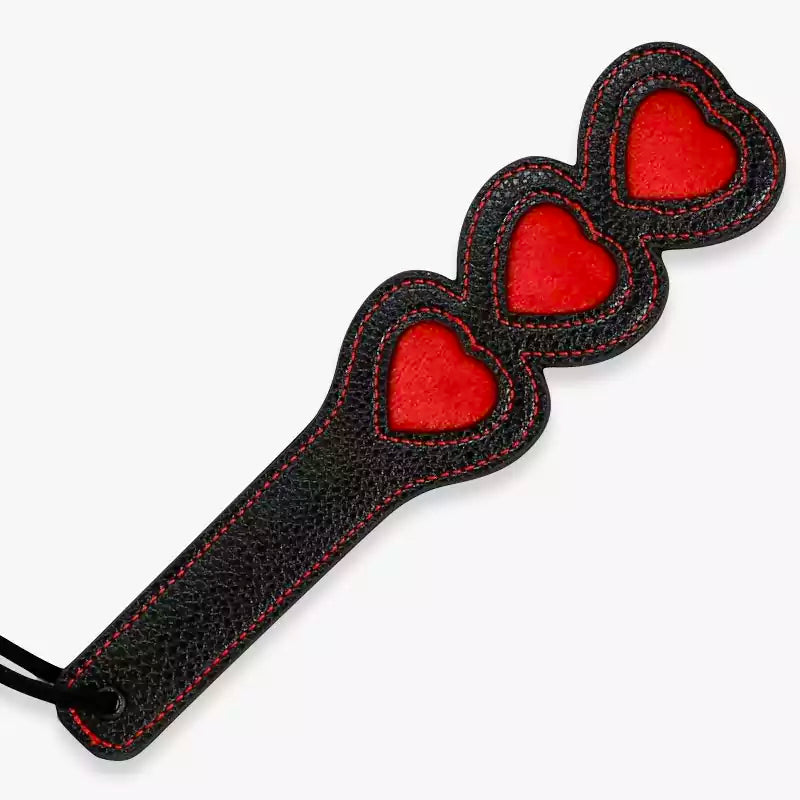
This built-in ceiling is exactly what makes very light paddles forgiving for beginners and for playful, low-stakes teasing — it's genuinely difficult to overshoot intensity by accident, since the sensation is mostly bounded by how fast someone can comfortably flick their wrist.
The Heavy Pick: Grounded, Deep Thud With Less Effort
A heavier, thicker paddle builds sensation through mass rather than speed, which means even a slow, controlled swing can land with real depth.
The Thick Beech Wood Spanking Paddle ($79.00) sits at the opposite end. Its solid, unfinished beechwood body comes in two thicknesses — the thinner 0.39 in version rates 6/10 sting and 5/10 thud, while the thicker 0.59 in version pushes to 6/10 sting and 7/10 thud. Combined with a 3.54 in extra-wide face for broad, full-surface coverage, SexPaddle rates this intermediate to advanced, since the mass alone produces a deeper, more grounded impact than a light swing with a lighter paddle ever could.
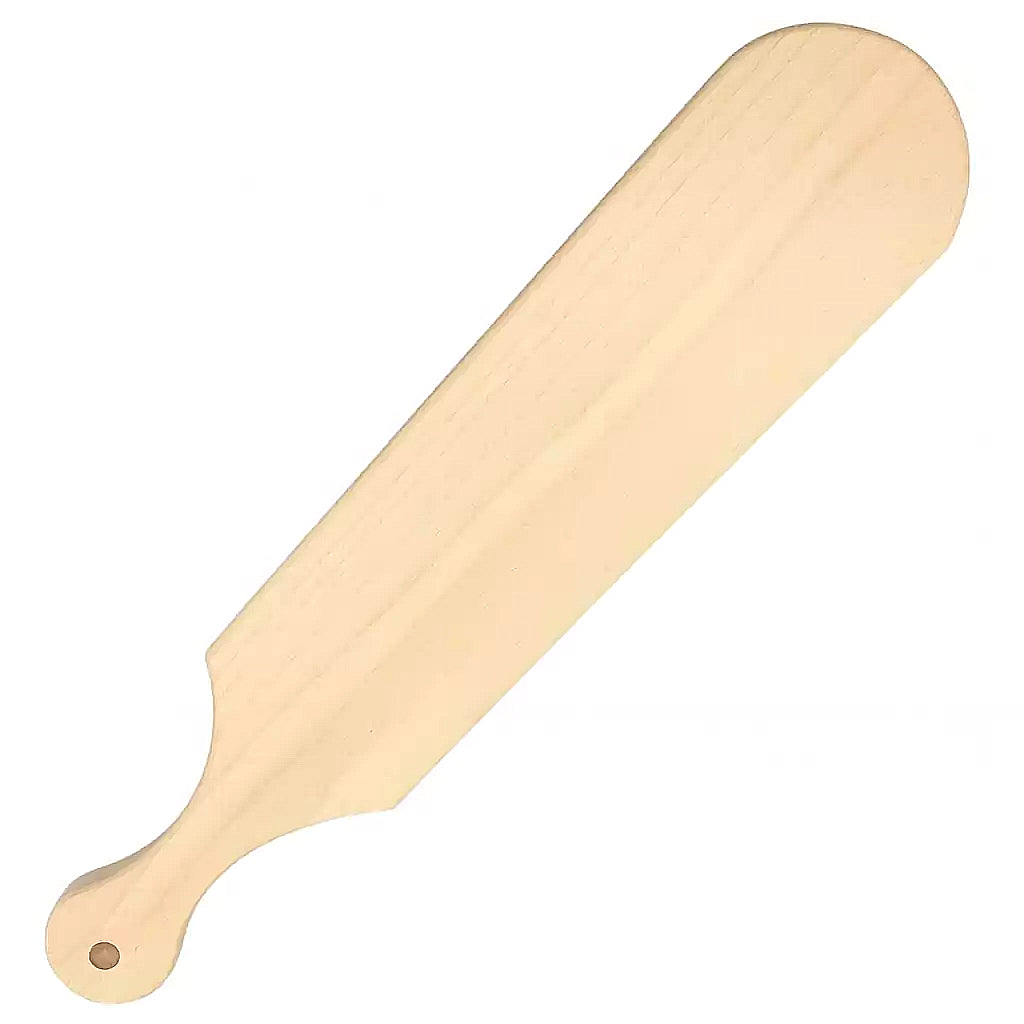
This is precisely why heavier paddles demand more restraint: a slow, gentle-feeling swing can still land with surprising depth because the paddle's own weight is doing most of the work, not the speed of the arm swinging it.
Why Weight Changes Sensation More Than People Expect
Weight interacts with swing speed to determine total impact force, which is why the same "effort level" can feel completely different depending on which paddle you're holding.
| Paddle Weight | What Drives Sensation | Risk of Overshooting |
|---|---|---|
| Very light | Wrist speed and swing frequency | Low — sensation is naturally capped |
| Heavy | Mass itself, even at low speed | Higher — easy to underestimate force at "gentle" swing speed |
Real Experience: Realizing Weight Was the Missing Variable
Many people troubleshoot sensation problems by changing material or technique, when the real issue was simply the paddle's weight all along.
In a composite scenario based on common buyer questions, Sam had been using the Mini Triple-Heart Paddle for months and felt like sessions had plateaued — no matter how fast the swing, sensation stayed mild and playful rather than building any real depth. Rather than assuming technique was the problem, Sam's partner suggested the plateau might simply be the paddle's built-in ceiling.
Switching to the Thick Beech Wood Spanking Paddle confirmed it immediately: even a noticeably slower, gentler-feeling swing produced far more depth than the mini paddle ever had at full speed. They had to consciously relearn restraint, since a "light" swing with the heavy paddle still landed with real thud. Their takeaway: when sensation feels stuck despite technique changes, checking the paddle's actual weight is often the fastest diagnosis.
FAQ
These answers cover common questions about paddle weight and its effect on sensation.
Does a heavier paddle always hurt more?
Generally yes, at a similar swing speed, since more mass transfers more force on contact.
But a heavy paddle used very gently can still feel milder than a light paddle swung at full speed.
Is a lightweight paddle good for beginners?
Yes, very light paddles are often a safe starting point because their sensation ceiling is naturally lower, making it harder to accidentally overshoot intensity.
They're also generally easier to control with precise, wrist-led motion.
Why does a heavy paddle require a slower swing?
Because the paddle's own mass already contributes significant force, so the same swing speed used with a lighter paddle would produce much more impact than intended.
Start noticeably slower than your usual pace when switching to a heavier tool.
Can paddle weight compensate for material?
To some extent — a lighter material at a heavier weight, or vice versa, can shift sensation in either direction, so weight and material should be considered together rather than separately.
Check both the Impact Index and the specific weight or thickness listed for a full picture.
How do I know if I need a heavier paddle?
If sensation feels capped even at fast swing speeds with your current paddle, weight — not technique — may be the limiting factor.
Try a heavier option at a deliberately slow, controlled pace to see if it opens up more depth.
Is a wider paddle face related to weight?
Often yes — a wider, thicker face typically adds mass along with broader coverage, which is why extra-wide paddles tend to also be heavier.
Check both dimensions and weight together when comparing paddles.
Final Thoughts: Weight Is a Spec Worth Checking First
Weight quietly shapes nearly everything about how a paddle feels and handles — it deserves as much attention as material or shape when choosing a tool.
For fast, forgiving, naturally gentle sensation, the Mini Triple-Heart Paddle offers a built-in ceiling that suits beginners and playful teasing well. For deep, grounded thud that builds with minimal swing effort, the Thick Beech Wood Spanking Paddle delivers real depth — just remember to swing slower than you think you need to.
That wraps up our full impact toy comparison series. For the complete picture across every tool type, revisit the Impact Play Toys 101 guide, and make sure your safe word system is in place using the safe word guide before your next session.


