
Single-Rod vs Multi-Rod Canes: Which Should You Buy First

Two canes can be made from completely different materials and still feel more similar to each other than a single-rod and multi-rod cane in the exact same material would. Construction — whether the cane is one continuous rod or several bundled together — changes sensation as fundamentally as material does, and for many buyers, it's the more important decision. This guide compares the two constructions directly using a real single-rod and multi-rod cane.
A single-rod cane concentrates every strike into one continuous line for sharp, precise sensation, while a multi-rod cane disperses the same effort across several points, producing a softer, broader sting that's considerably more forgiving of imperfect aim.
🔽 Quick Navigation
- 📌 Before You Compare Constructions
- 📌 Single-Rod vs Multi-Rod at a Glance
- 📌 Single-Rod Canes: Concentrated Precision
- 📌 Multi-Rod Canes: Dispersed Forgiveness
- 📌 Why Construction Can Matter More Than Material
- 📌 Which Should You Choose?
- 📌 Real Experience: The Same Question, Two Different Canes
- ❓ FAQ
- 🧭 Final Thoughts: Construction Is a Decision of Its Own
Before You Compare Constructions
Both constructions require the same strict target-zone discipline — the difference is how forgiving each one is of a strike that lands slightly off-target.
All cane contact should stay within the center of the glutes and upper hamstrings — never the spine, tailbone, lower back, hips, kidneys, joints, or inner thighs. Agree on a stop system before starting, and if you're new to either construction, begin with calibration taps well below your instinct.
Single-Rod vs Multi-Rod at a Glance
The core difference is contact geometry: one continuous line versus several dispersed points.
| Factor | Single-Rod | Multi-Rod |
|---|---|---|
| Contact pattern | One continuous line | Contact dispersed across several rods |
| Sensation | Sharp, concentrated, precise | Softer, broader, less punishing |
| Aim tolerance | Low — rewards precise placement | Higher — forgives minor misalignment |
| Typical skill level | Intermediate to advanced | Beginner to intermediate |
| Featured product | Ebony Square Discipline Rod — from $49.90 | Traditional Multi-Rod BDSM Cane — $26.90 |
Single-Rod Canes: Concentrated Precision
A single continuous rod delivers every bit of swing energy along one unbroken line, which is what makes single-rod canes feel so much sharper than their multi-rod counterparts.
The Ebony Square Discipline Rod demonstrates this clearly. Its dense ebony construction has essentially no flex, and its square profile concentrates force along defined edges rather than a rounded surface. There's no secondary rod to disperse contact — every strike lands exactly where it's aimed, with the full weight of the swing behind it. This is precisely why single-rod hardwood canes are positioned for experienced users: the precision that makes them satisfying is the same quality that punishes imperfect aim.
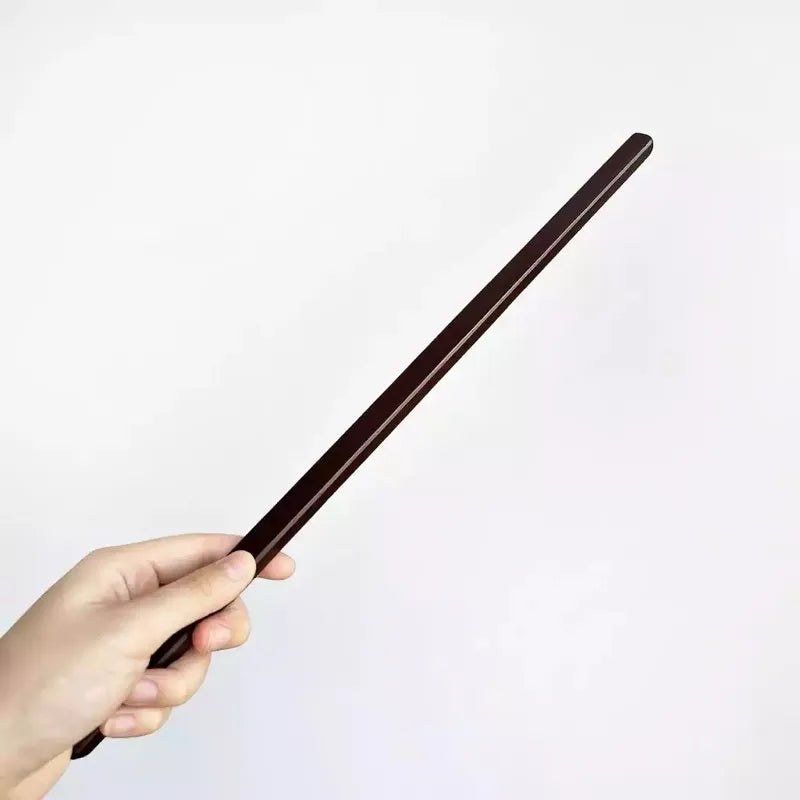
Single-rod canes reward deliberate, well-practiced technique. If your aim isn't yet consistent, a single-rod design is not the place to build that skill — start with a multi-rod cane instead.
Multi-Rod Canes: Dispersed Forgiveness
Bundling several rods together means each strike distributes contact across multiple points rather than one line, softening the effect of any small aiming error.
The Traditional Multi-Rod BDSM Cane is available in 4-rod or 7-rod rattan construction, both bundled with a wrapped leather handle. Instead of one continuous strike line, the bundled rods spread contact across a wider area, meaning a strike that lands slightly off-center still feels broad and manageable rather than sharply concentrated. This is the structural reason multi-rod rattan canes are consistently recommended as a beginner's first cane, independent of rattan's natural flex.
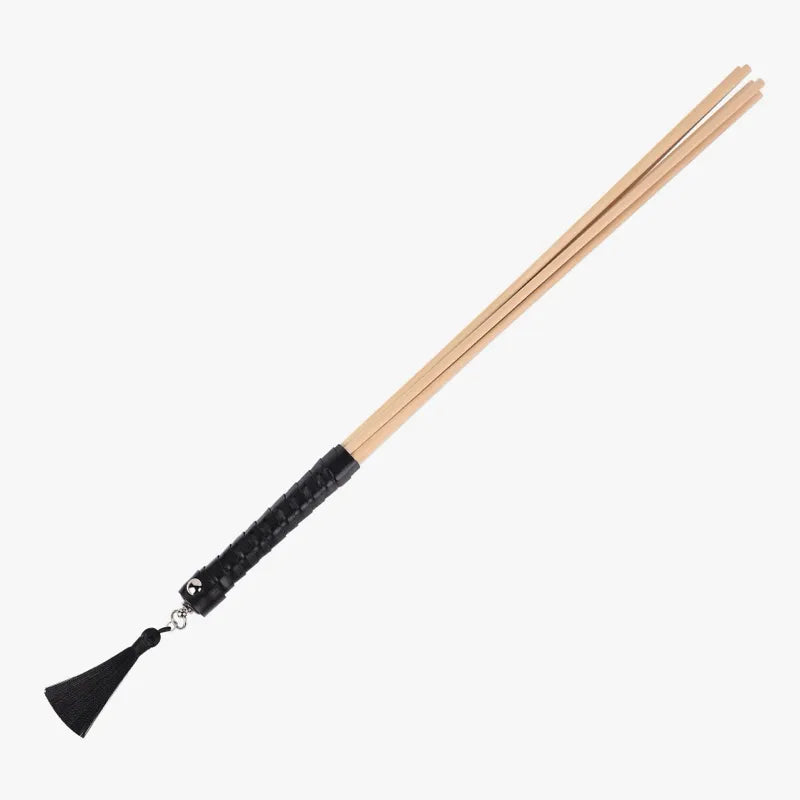
More rods generally means more dispersion and a gentler overall sensation — a 7-rod design will typically feel broader than a 4-rod version of the same cane at matched swing force.
Why Construction Can Matter More Than Material
A multi-rod rattan cane and a multi-rod bamboo cane will feel more similar to each other than a multi-rod rattan cane and a single-rod rattan cane.
| Comparison | What Changes More |
|---|---|
| Multi-rod rattan vs. multi-rod bamboo | Moderate difference — both disperse contact similarly |
| Multi-rod rattan vs. single-rod rattan | Large difference — contact pattern changes entirely |
| Single-rod acrylic vs. single-rod hardwood | Moderate difference — both concentrate contact into one line |
This is why it's worth deciding on construction before material when choosing a cane — construction determines the basic sensation category, and material fine-tunes it from there.
Which Should You Choose?
Choose multi-rod for a forgiving entry point; choose single-rod once you want maximum precision and have the calibration skill to use it responsibly.
| If you want... | Choose |
|---|---|
| The most forgiving cane for a beginner | Multi-rod |
| Broader, less punishing sensation | Multi-rod |
| Sharp, precise, concentrated sting | Single-rod |
| A tool that rewards well-practiced technique | Single-rod |
Real Experience: The Same Question, Two Different Canes
Most people assume material is the main variable until they actually compare single-rod and multi-rod versions side by side.
In a composite scenario based on common buyer questions, Yuki had used the Traditional Multi-Rod BDSM Cane for months and felt ready for something sharper, but wasn't sure whether to look for a different material or a different construction. A side-by-side comparison at matched light force answered the question quickly: switching to the single-rod Ebony Square Discipline Rod at the exact same swing effort felt dramatically sharper and more concentrated, even though both are technically "canes."
Yuki's takeaway was that construction, not material, had been the missing variable — the multi-rod cane's dispersed contact was what made it feel forgiving all along, and a single-rod design delivered the sharper sensation Yuki was actually looking for, independent of switching materials entirely.
FAQ
These answers cover common questions about single-rod versus multi-rod canes.
Is a multi-rod cane always more beginner-friendly than a single-rod one?
Generally yes, because bundling rods disperses contact and softens the effect of imperfect aim.
This holds true across most materials, though overall sensation still varies by specific product.
Does more rods always mean gentler sensation?
Generally, yes — a 7-rod cane will typically feel broader and gentler than a 4-rod cane in the same material at matched swing force.
More rods means contact is spread across a wider area.
Should I choose construction or material first?
Construction first. It determines the basic sensation category (concentrated vs dispersed), while material fine-tunes flex and warmth within that category.
Decide single-rod versus multi-rod, then choose a material that fits your desired feel.
Can a single-rod cane ever feel gentle?
With very light, controlled strikes, yes, but the fundamental sharpness of concentrated contact remains — a single-rod cane will always feel more precise than a multi-rod design at matched force.
Reduce force significantly if trying a single-rod cane for the first time.
Is a multi-rod cane less "serious" than a single-rod one?
No — multi-rod canes can still deliver substantial sensation with enough force, and many experienced users prefer their broader, rolling feel over a single-rod's sharpness.
Construction is a sensation preference, not a skill hierarchy.
Which should my first cane be?
A multi-rod design in a flexible material like rattan is the most forgiving starting point for nearly everyone.
Consider a single-rod cane once you're comfortable with consistent, precise placement.
Final Thoughts: Construction Is a Decision of Its Own
Single-rod versus multi-rod is arguably a bigger decision than material — it determines whether a cane concentrates or disperses every strike.
Start with a forgiving Traditional Multi-Rod BDSM Cane if you're building calibration skill. Move to a precise single-rod design like the Ebony Square Discipline Rod once you want maximum precision and have the experience to use it responsibly.
For material fundamentals, see The Complete Guide to BDSM Canes, and review the Cane Safety Guide before your next session.


