
Metal vs Traditional Material Impact Toys: Temperature Play Guide

Most impact toys are made from leather, wood, or rattan — materials that flex, warm slightly with contact, and spread sensation broadly. Metal behaves completely differently. It stays cool against skin, does not flex at all, and delivers a sharper, more high-contrast sensation than soft-tail tools. If you have not yet compared paddle and flogger materials broadly, see the wood vs leather vs silicone material guide. This comparison looks specifically at metal versus traditional soft-tail material.
Metal delivers a cool, crisp, high-contrast sensation with no flex or give, while traditional leather or suede tails feel warmer, broader, and more forgiving — metal is an experienced-user addition, not a starting point.
🔽 Quick Navigation
- 📌 Before You Try a Metal Impact Toy
- 📌 Metal vs Traditional at a Glance
- 📌 Traditional Leather: Warm and Forgiving
- 📌 Metal: Cool, Crisp, and High-Contrast
- 📌 Safety Notes Specific to Metal Tools
- 📌 Real Experience: Introducing Metal After Months of Leather
- ❓ FAQ
- 🧭 Final Thoughts: Metal Is an Accent, Not a Foundation
Before You Try a Metal Impact Toy
Metal tools should only be introduced after real experience with softer materials, since metal does not diffuse sensation the way leather or suede does.
Both tools in this comparison should only be used on the buttocks and outer thighs — never the spine, kidneys, lower back, joints, neck, or any bony or injured area. This caution matters even more with metal, since concentrated contact on bone can feel sharp and uncomfortable in a way soft tails rarely do. Check any metal tool's connections and hardware before each use to confirm nothing is loose, sharp, or damaged.
Metal vs Traditional at a Glance
The core difference is that metal has no flex or give at all, where traditional leather or suede tails absorb and diffuse some of the swing's energy.
| Factor | Traditional (Leather/Suede) | Metal |
|---|---|---|
| Temperature on contact | Neutral to warm | Cool, sometimes described as a "cold shock" |
| Flex | Flexes and diffuses some energy | No flex — direct, defined contact |
| Sensation character | Warmer, broader, more forgiving | Crisp, high-contrast, more concentrated |
| Typical skill level | Beginner to intermediate | Experienced teasing play |
| Featured product | Handwoven Grip Flogger — $32.90 | Diamond-Grip Short Chain Flogger — $36.90 |
Traditional Leather: Warm and Forgiving
Leather tails flex through the swing and absorb some of the impact energy, which is part of why they feel warmer and more forgiving than rigid materials.
The Handwoven Grip Flogger represents this familiar, broad-spread sensation. Its 18.9 in / 48 cm falls flex naturally through each swing, spreading contact and softening the acoustic and physical impact compared to a rigid material. At 168 g with a balanced, beginner-to-intermediate rating, it builds confidence through consistent, forgiving repetition rather than sharp, high-contrast moments.
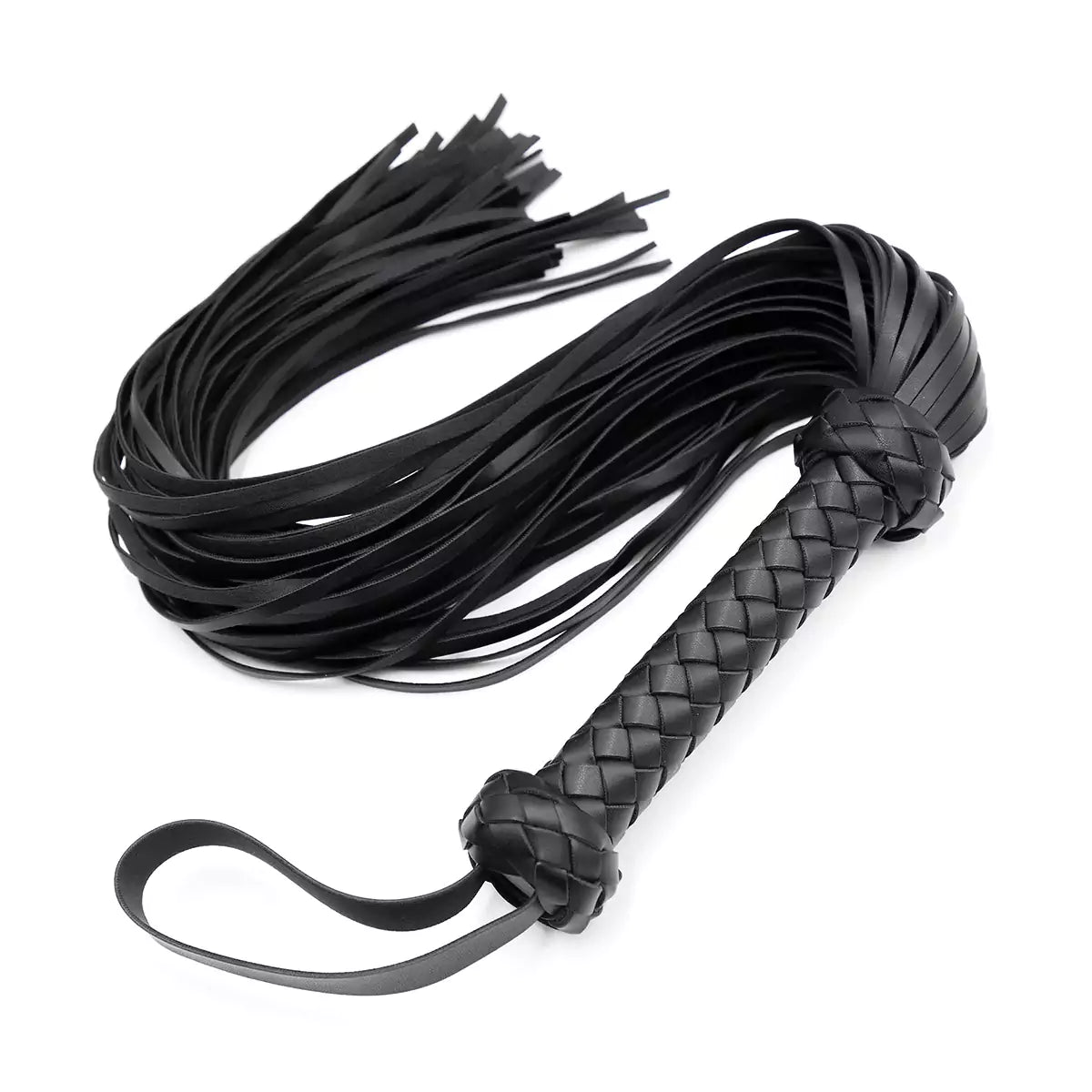
This is the baseline most people should build experience with before adding anything metal to their collection — leather teaches rhythm and calibration without the added intensity of temperature contrast. Browse the full floggers collection for more traditional material options.
Metal: Cool, Crisp, and High-Contrast
Because metal does not flex, every bit of swing energy transfers directly, and the material's natural coolness adds a temperature element leather cannot replicate.
The Diamond-Grip Short Chain Flogger is built specifically for this cool, high-contrast effect. Its silver metal chain falls create a noticeably cooler, crisper, more immediate sensation than soft-tail floggers — customer feedback describes it as producing "a cold shock before the impact." At a compact 17.3 in / 44 cm total length with 9.8 in / 25 cm chain falls and 253 g of weight, SexPaddle explicitly positions this as experienced teasing play rather than a beginner or warm-up tool, since chain contact does not diffuse the way broad leather tails do.
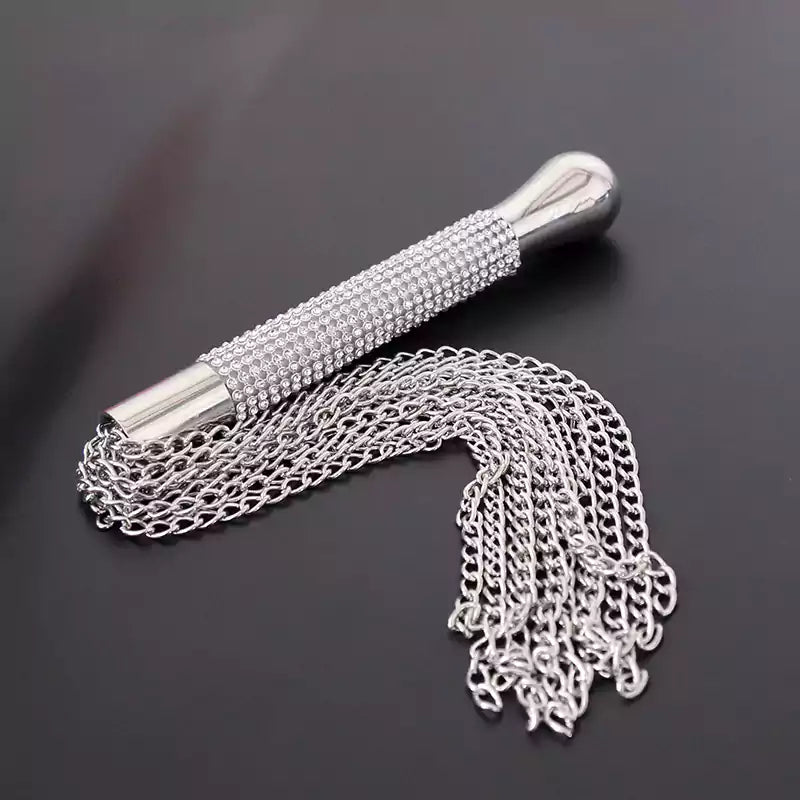
The rhinestone-style diamond grip handle also adds a display-ready, luxury quality that makes this a popular gift or collection piece — but the visual glamour does not reduce how much lighter your swing force should be compared to a familiar leather flogger. Because it is short and compact, it also rewards close, deliberate placement rather than a wide, sweeping motion.
Safety Notes Specific to Metal Tools
Metal introduces considerations that soft-tail materials generally do not: hardware integrity, concentrated contact risk, and a stronger response than the tool's size suggests.
| Consideration | Why It Matters |
|---|---|
| Check chain links and hardware before use | Loose or damaged connections can create unpredictable contact |
| Reduce swing force versus a familiar leather tool | Metal's weight and lack of flex can produce a stronger response than expected |
| Avoid all bony areas even more strictly | Concentrated metal contact on bone feels sharper than the same contact from soft tails |
| Start with very brief, light contact | Temperature contrast alone can feel more intense than anticipated |
Real Experience: Introducing Metal After Months of Leather
Most people who add a metal tool describe the temperature contrast, not the physical intensity, as the biggest surprise.
In a composite scenario based on common buyer questions, Sasha had used the Handwoven Grip Flogger comfortably for several months and felt curious about adding something with more visual and sensory drama. After confirming comfort with safe words and baseline sensation vocabulary, Sasha's partner introduced the Diamond-Grip Short Chain Flogger with extremely light, brief contact. The first reaction was immediate: "that's so much colder than I expected, it's not really about how hard it lands."
They kept sessions with the metal flogger short and used it as an occasional accent late in a scene rather than a primary tool, alternating back to the familiar leather flogger for the bulk of their time together. Their takeaway: metal's appeal is largely about the temperature and visual contrast rather than raw intensity, and treating it as a deliberate accent — not a replacement for a primary tool — kept it feeling special rather than overwhelming.
FAQ
These answers cover the most common questions about metal impact toys.
Is a metal flogger more painful than a leather one?
Not necessarily more painful, but more concentrated and higher-contrast, since metal does not flex or diffuse contact the way leather does.
Much of the distinctive sensation comes from temperature contrast rather than raw force.
Can beginners use a metal impact toy?
It's not recommended as a first tool. Metal tools like a chain flogger are generally positioned for experienced users who already understand calibration and safe strike zones.
Build experience with leather or suede materials first.
Why does metal feel cold?
Metal conducts and retains temperature differently than leather or suede, so it typically feels cool or cold on first contact, which is part of the sensory appeal for temperature play.
This cool sensation is often described as a distinct "shock" separate from the physical impact.
How do I check a metal tool for safety before use?
Inspect all chain links, connections, and hardware for looseness, sharp edges, or damage before every session.
Never use a metal tool with visibly compromised hardware.
Should I reduce force when switching from leather to metal?
Yes, significantly. Because metal does not flex or absorb energy, the same swing force will generally feel more concentrated and intense than with a leather or suede tool.
Start with much lighter, briefer contact than your usual leather-flogger baseline.
Is a metal flogger good for gifting?
Often yes — designs with decorative handles are frequently chosen as display-ready or gift-oriented pieces due to their polished, luxury appearance.
Keep in mind the recipient should already have some impact play experience given the tool's intensity profile.
Final Thoughts: Metal Is an Accent, Not a Foundation
Metal tools add a temperature and visual dimension that leather simply cannot replicate, but they work best as an accent for experienced users rather than a foundation for beginners.
Build your baseline experience with a traditional material like the Handwoven Grip Flogger first. Once you're comfortable with calibration and safe zones, the Diamond-Grip Short Chain Flogger offers a genuinely different, cooler, high-contrast experience for occasional use.
For a broader look at how material affects sensation, revisit the wood vs leather vs silicone material guide, and see the full Impact Play Toys 101 guide for the complete tool comparison.


