
Why the Same Paddle Feels Different Every Time: Understanding Skin Sensitivity Shifts

Same paddle, same partner, same force — and last Saturday it felt like a gentle tap while tonight it feels like fire. If that has happened to you, nothing is wrong with your gear or your technique. Skin and nervous system sensitivity shift constantly, and the shift has real, well-studied causes. Once you know what they are, you can plan around them instead of being surprised by them every time you pick up a paddle or cane.
Sensitivity to impact changes from session to session because of time of day, sleep, stress, attention, and how prepared the body is — so the smartest approach is to treat every session as a fresh calibration rather than assuming last week's intensity will land the same way tonight.
🔽 Quick Navigation
- 📌 What "Same Paddle, Different Feel" Actually Means
- 📌 Time of Day and Your Internal Clock
- 📌 Sleep and Recovery
- 📌 Stress, Attention and Arousal
- 📌 Warm-Up and the State of the Body
- 📌 Repeated Sessions and Changing Baselines
- 📌 Using Benchmark Tools to Track the Difference
- 📌 A Simple Session Log That Actually Helps
- 📌 Sensitivity Factor Table
- 📌 When to Check In With a Professional
- ❓ FAQ
- 🧭 Final Thoughts
What "Same Paddle, Different Feel" Actually Means
The implement is the constant; the person receiving it is the variable — and the receiving body is never in exactly the same state twice.
It is tempting to blame the tool when a session feels different. A paddle's weight, flex, and surface do not change from week to week, so the difference almost always lives on the receiving end. Researchers describe pain as having two interconnected components: a sensory-discriminative part covering location, quality, and intensity, and an emotional part covering unpleasantness, anxiety, and motivation. Both parts move with your physical state and your mental state, which means identical contact can genuinely register as two different experiences on two different nights. That is not exaggeration or imagination. It is how the nervous system is built.
Understanding this changes how you interpret a "bad" or "too intense" session. Rather than concluding that you have lost tolerance or that your partner has become heavy-handed, you can ask a more useful question: what was different about my body today? It also takes blame out of the conversation, which matters, because a partner who feels criticized for a session that simply landed differently tends to hold back next time instead of communicating openly. The rest of this guide walks through the most common answers, from the clock on the wall to the quality of last night's sleep, and shows how to build a simple habit that makes those differences visible.
Time of Day and Your Internal Clock
Pain sensitivity follows a daily rhythm, so the same scene at nine at night and at four in the afternoon can feel noticeably different even if everything else is identical.
Controlled laboratory research has shown that sensitivity to painful stimuli is governed by two overlapping processes: a strong circadian component tied to the body's internal clock, and a more modest component tied to how long you have been awake. Reviews of this literature report that humans tend to be most sensitive during the night and least sensitive in the late afternoon. Nobody schedules a scene around a research paper, but the practical takeaway is useful. If your Saturday afternoon sessions have always felt manageable and your late-night sessions feel sharper, the clock may be part of the explanation.
This also explains a common frustration: a couple finds a level that works beautifully at one time of day and then struggles to reproduce it at another. Rather than treating the later session as a failure, treat it as a different starting point. Warm up more slowly, expect to reach your comfortable ceiling sooner, and check in a little more often than you would at your personal sweet spot in the day.
Sleep and Recovery
Short or disrupted sleep is one of the most consistent drivers of higher sensitivity, and its effects can linger through the following day.
Studies looking at sleep loss and pain report that sleep deprivation increases sensitivity, and researchers have specifically examined whether irregular weekend sleep patterns make people more sensitive on Mondays. The mechanism is not fully mapped, but the direction of the effect is consistent across many experiments. A body running on too little sleep tends to register the same stimulus as more intense.
In practical terms, a scene after a bad night, a long travel day, or a week of poor rest deserves a lighter opening and a lower expected ceiling. This is not about being cautious for its own sake. It is about matching intensity to the nervous system you actually have tonight rather than the one you had after a full week of good sleep. Couples who notice this pattern often add a simple pre-scene question to their routine: how did you sleep, and how are you feeling in your body right now?
Stress, Attention and Arousal
Your mental state at the start of a scene shapes how sensation is processed, which is why the same strike can feel very different depending on stress, focus, and arousal.
Reflex and pain-processing research lists stress and attention among the physiological conditions that influence how excitable the underlying pathways are. In everyday terms, a mind that is anxious, distracted, or bracing for impact tends to amplify incoming sensation, while a mind that is absorbed, relaxed, and aroused often processes the same input as less threatening or even pleasurable. This is one reason a stressful workday can turn a familiar warm-up into something that feels harsh, and why the same intensity can feel wonderful once you have genuinely settled into the scene.
It also explains why arousal level matters so much. Many people find that sensation they would rate as uncomfortable at the start of a session becomes enjoyable once arousal has built. If your sensitivity seems inconsistent, look at the first ten minutes of the scene. A rushed start, an unresolved argument, or a mind still full of the day can all push perceived intensity up, and giving yourself a real transition period often brings it back down without changing anything about the implement.
Warm-Up and the State of the Body
A body that has been gradually prepared responds differently from one that goes straight to intensity, which is why the quality of your warm-up can change how the same paddle feels.
Slow, progressive warm-up gives the receiving partner time to settle into the scene, lets the giver read feedback, and generally makes the middle of a session feel smoother than a sudden jump would. Our guide to the science of warm-up covers why ten unhurried minutes tends to change the whole experience. For this article, the point is simpler: if last week you warmed up for fifteen minutes and tonight you skipped straight to the main event, the difference in feel may have nothing to do with sensitivity itself and everything to do with preparation.
The same logic applies to the environment. A cold room, an empty stomach, or a tense posture can all change how comfortable a session feels. None of these are exotic factors, but they are easy to overlook, and they are often the quickest to fix once you notice them.
Repeated Sessions and Changing Baselines
Your baseline is not fixed — regular practice, long breaks, and recent sessions all shift where "normal" sits.
People who play regularly often report that their comfortable range moves over time, and a long gap between sessions can make an old intensity feel new again. Our article on tolerance, sensitization and long-term tissue health explores how the body responds to repeated impact. Here, the practical lesson is that "what we did last time" is a starting hypothesis, not a promise. After a break, start lower. After a run of frequent sessions, notice whether you need more or less than before, and let the answer come from feedback rather than assumption.
Using Benchmark Tools to Track the Difference
Choosing one or two consistent implements as personal benchmarks makes sensitivity shifts visible, because a fixed tool and a fixed opening pattern leave the receiving body as the only variable.
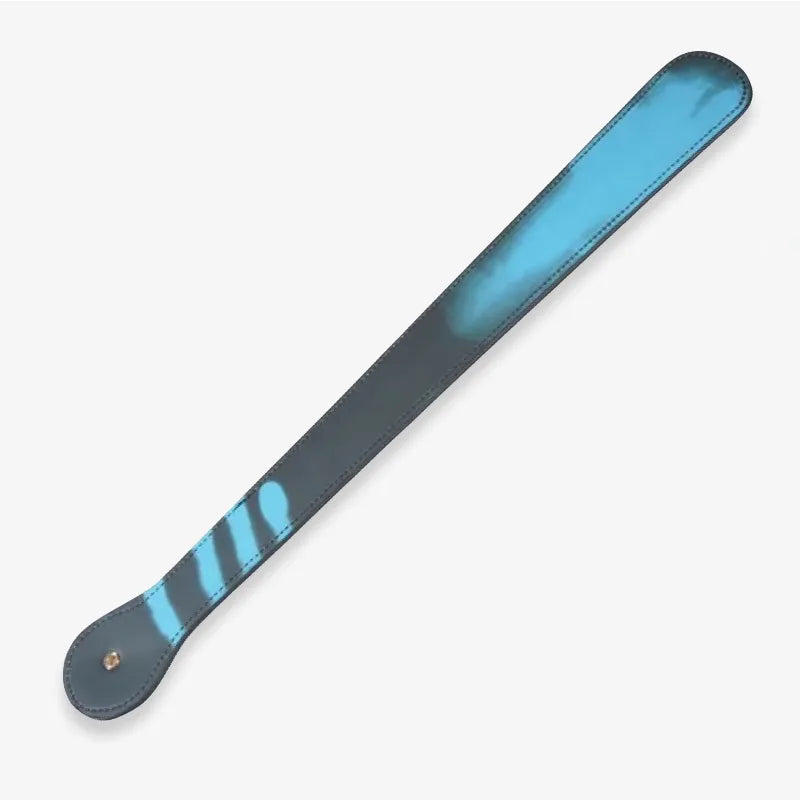
The Thermo Color-Changing Spanking Paddle ($59.00, down from $89.00) is a 19.1-inch heat-reactive paddle whose surface changes color where contact lands. It should not be mistaken for a sensitivity meter, and it does not measure anything about the skin. What it does offer is a visual record of where strikes landed, which helps a giver keep placement consistent from one session to the next. When placement is consistent, differences in how the receiver responds become easier to attribute to their state rather than to a wandering aim. Because the listing rates it intermediate to advanced with a medium-to-strong profile and long-arc momentum, it suits couples who already have a calibrated sense of their range.
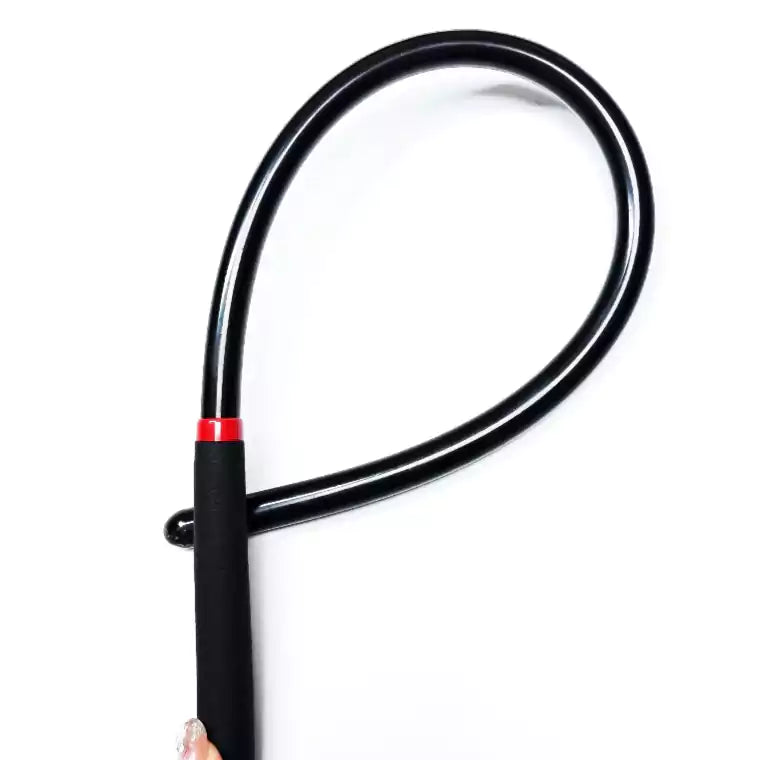
For a sting-focused counterpart, the Soft Acrylic Flexible Discipline Cane ($28.90) is a 19.7-inch, 11 mm flexible acrylic cane rated beginner to intermediate. Its own guide notes that the sensation can feel more intense than the swing looks because the bend increases tip speed on contact, which makes it a revealing tool for exactly this topic: on a high-sensitivity day, even very light strokes register clearly. The product's technique notes recommend starting with very light strokes and increasing only after checking the receiver's response, and that advice doubles as a sensitivity test. If a feather-light stroke already feels sharp, that is useful information about tonight.
Whichever implements you choose, the method matters more than the brand: same tool, same opening pattern, same warm-up length, and an honest note afterward about how it felt.
A Simple Session Log That Actually Helps
A few lines of notes after each session turn vague impressions into patterns you can actually use.
You do not need a spreadsheet. A short note in your phone is enough, as long as you record the same handful of details each time. After a few weeks, patterns tend to appear: maybe late sessions run sharper, maybe sessions after poor sleep need a gentler start, maybe a longer warm-up consistently improves the middle of the scene. The log turns "it felt different tonight" into "it feels different when I sleep badly," which is a far more actionable sentence.
- Time of day the session started.
- Sleep the night before, described simply as good, okay, or poor.
- Stress level on arrival, low, medium, or high.
- Warm-up length, roughly, in minutes.
- Implement and opening intensity.
- How it felt, including where the receiver's comfortable ceiling landed.
Sensitivity Factor Table
| Factor | Typical Effect | Practical Adjustment |
|---|---|---|
| Late evening or night start | Sensation may feel sharper | Warm up more slowly, check in more often |
| Poor or short sleep | Higher perceived intensity | Lower the opening intensity and expected ceiling |
| High stress on arrival | Sensation amplified, harder to settle | Add a real transition period before starting |
| Skipped or short warm-up | Middle of the scene feels harsher | Restore the progressive warm-up |
| Long break between sessions | Old intensity may feel new again | Start below your previous peak |
| Cold or tense environment | Less comfortable overall | Warm the room, relax posture before starting |
When to Check In With a Professional
Ordinary variation is normal, but sudden, persistent, or worrying changes in how your skin or body responds deserve a conversation with a qualified medical professional, not a guess from a blog.
This article is general education about why perceived intensity varies, not medical advice, and it cannot diagnose anything. If you notice unusual pain that lingers, marks that behave unexpectedly, numbness, or any change that concerns you, speak with a doctor. Being open about the activities involved is worth it, because a professional can only help with what they know. Sensitivity that simply moves around with sleep, stress, and timing is expected; symptoms that alarm you are a different category and deserve proper attention.
FAQ
Common questions about why sensitivity changes between sessions.
Why does the same paddle feel harder some nights than others?
The paddle stays the same while your body does not. Time of day, sleep, stress, attention, and preparation all influence how sensation is processed, so identical contact can register differently on different nights.
Is it normal for my tolerance to change?
Yes. Comfortable ranges commonly shift with regular practice, long breaks, and day-to-day condition. Treat last session's intensity as a starting hypothesis rather than a fixed target.
Does time of day really matter?
Research suggests pain sensitivity follows a daily rhythm, with higher sensitivity reported at night and lower sensitivity in the late afternoon. Individual patterns vary, so track your own experience.
Can lack of sleep make a scene feel more intense?
Studies consistently link sleep loss with higher pain sensitivity. After a poor night, a gentler opening and lower expected ceiling are sensible choices.
Should I lower the intensity when I'm stressed?
Often yes, at least at the start. Stress and distraction can amplify sensation, so a longer transition and slower warm-up frequently help more than pushing through.
Does a color-changing paddle measure how sensitive my skin is?
No. Its surface changes color where contact lands, which is useful for tracking placement, but it is not a diagnostic or measuring tool.
How can I tell whether the difference is my body or my partner's technique?
Keep the tool, opening pattern, and warm-up consistent, then compare notes afterward. When those variables stay fixed, differences point toward the receiving body's state.
When should I stop and seek medical advice?
If you experience unusual lingering pain, numbness, or any change that worries you, stop and consult a doctor. This guide is educational only and does not replace professional care.
Final Thoughts: Expect the Variation, Plan for It
Sensitivity shifts are normal, explainable, and manageable — the couples who handle them best are the ones who treat every session as a fresh calibration instead of a repeat performance.
Keep your implements consistent, log a few simple details, and let sleep, stress, and time of day inform where you start. A visual-feedback tool like the Thermo Color-Changing Spanking Paddle and a sting-forward benchmark like the Soft Acrylic Flexible Discipline Cane make the differences easier to notice. For more on choosing sensation profiles, read Thud vs Sting: Choosing the Right Sensation Profile, and browse the full spanking paddles collection and canes collection to build a set that covers your range.


