
Cane Aftercare and Cleaning Guide

A cane that's cared for properly can last for years; one that's neglected can crack, warp, or splinter within months. Unlike leather paddles or floggers, which mostly need conditioning, canes span three very different material categories — rattan, acrylic, and hardwood — each with its own specific care requirements. Using the wrong cleaning method on the wrong material is one of the most common ways people accidentally shorten a cane's usable life. This guide covers exactly how to clean, condition, and store every cane material in your collection.
Rattan and hardwood should stay completely dry and away from humidity, acrylic can be wiped with mild soap and water but needs regular crack inspection, and every cane should be checked before each use regardless of material.
🔽 Quick Navigation
- 📌 Why Cane Care Differs From Other Tools
- 📌 Caring for Rattan and Bamboo Canes
- 📌 Caring for Acrylic Canes
- 📌 Caring for Hardwood Canes
- 📌 The Pre-Use Inspection Checklist
- 📌 Storage Fundamentals Across All Materials
- 📌 When to Retire a Cane
- 📌 Seasonal and Climate Considerations
- 📌 Building a Simple Maintenance Routine
- 📌 Real Experience: A Cracked Cane That Should Have Been Inspected
- ❓ FAQ
- 🧭 Final Thoughts: Five Minutes of Care Per Session
Why Cane Care Differs From Other Tools
Because canes rely on structural rigidity or flex to function safely, material degradation isn't just a cosmetic issue — it directly affects how predictably the tool behaves during use.
A leather paddle that's slightly dried out still functions, just less comfortably. A cane with a hairline crack, internal warping, or splintering can strike unpredictably or even break apart mid-swing, which makes proper care a genuine safety consideration, not just a maintenance nice-to-have. This is especially true for rattan and bamboo, which rely on natural flex that degrades with improper moisture exposure, and hardwood, which can develop invisible internal stress well before a crack becomes externally visible.
Caring for Rattan and Bamboo Canes
Rattan and bamboo are natural, moisture-sensitive materials that should never be soaked, and their flex depends on staying properly dry.
After each use, wipe the Eight-Rod Rattan Discipline Cane or any similar rattan or bamboo cane with a dry cloth. If any moisture from skin contact remains, let it air dry fully before storing — never towel-dry aggressively or use heat to speed drying, as rapid moisture loss can cause the natural fibers to crack. Avoid any alcohol-based or solvent cleaners entirely; these strip natural oils from rattan and bamboo and accelerate brittleness over time.
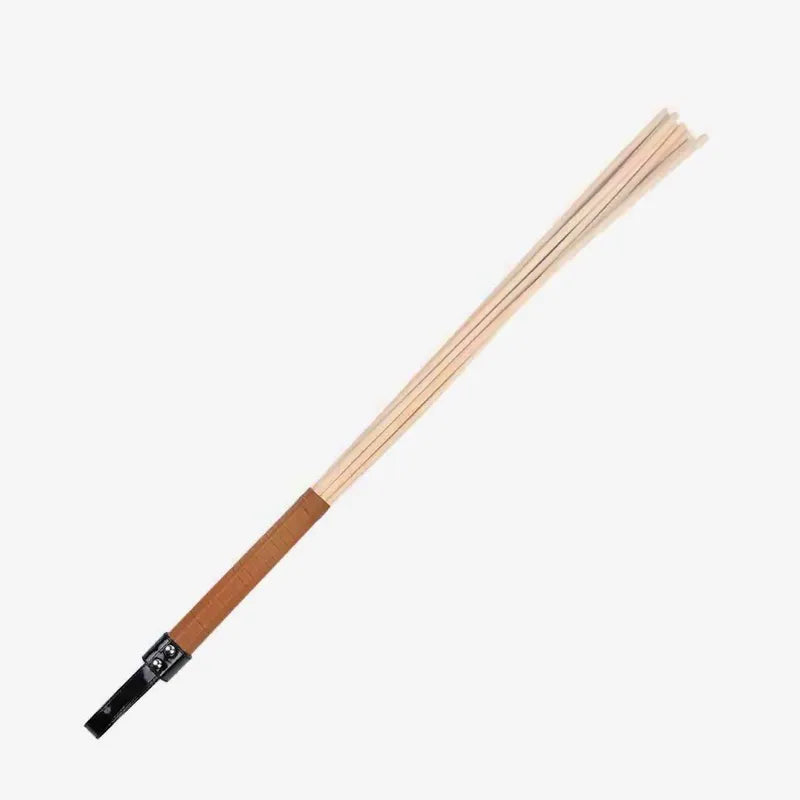
Multi-rod designs like this one have more individual surfaces and binding points than a single-rod cane, so check the wrapped handle and each rod's connection point periodically for any looseness or fraying, in addition to inspecting the rods themselves.
Caring for Acrylic Canes
Acrylic is non-porous and the most washable cane material, but it's also prone to stress cracking that isn't always immediately visible.
The Black Acrylic BDSM Cane can be wiped down with a damp cloth and mild soap after use, then dried fully before storage — this is meaningfully easier than the dry-only care rattan and hardwood require. However, acrylic's rigidity that makes it feel so precise in use also makes it susceptible to stress cracking, particularly at the handle-to-shaft transition point where flex concentrates during a swing. Hold the cane up to good light periodically and look along its length for any fine surface cracks or cloudy stress marks, especially after any accidental drops.

Avoid extreme temperature changes with acrylic canes — leaving one in a hot car or near direct heat can cause warping or clouding over time, even without visible cracking.
Caring for Hardwood Canes
Dense hardwoods like padauk are more resistant to everyday wear than rattan, but they still require dry storage and periodic inspection to prevent cracking along the grain.
Wipe the Padauk Hardwood Teaching Cane with a dry or barely damp cloth after use — never soak hardwood, and dry any dampness immediately rather than letting it air dry on its own. Unlike leather, hardwood generally doesn't need conditioning oil, but some owners choose to apply a small amount of furniture-grade wood oil periodically to maintain the wood's natural luster, particularly on a tapered design where the thinner tip section is more exposed to repeated flex stress.

Pay particular attention to the tip on any tapered hardwood cane — this is the thinnest, most stressed section of the entire tool, and it's where hairline cracks are most likely to first appear after repeated use.
The Pre-Use Inspection Checklist
A quick inspection before every single session catches most structural problems before they become a safety issue.
| Material | Check For |
|---|---|
| Rattan / Bamboo | Splitting, roughness, loose handle wrap, brittle feel |
| Acrylic | Hairline cracks, cloudy stress marks, warping |
| Hardwood | Cracks (especially at the tip), splinters, rough patches |
This inspection takes under a minute and should become as automatic as checking your safe word system before a session. A cane showing any of these signs should be set aside for closer evaluation rather than used, even if the damage looks minor.
Storage Fundamentals Across All Materials
Every cane material benefits from dry, stable storage away from direct heat, humidity swings, and pressure that could bend or warp it.
Store canes flat or hanging rather than leaning against a wall under tension, which can cause a gradual, permanent bend over time — especially in rattan and thinner acrylic designs. Keep them away from direct sunlight, which can fade finishes and, for wood, cause uneven drying that leads to cracking. A dedicated drawer, case, or hanging rack away from bathroom humidity or radiator heat is ideal for most collections.
When to Retire a Cane
Some damage can be monitored; other damage means immediate retirement, regardless of how much the cane cost.
| Sign | Action |
|---|---|
| Minor surface roughness (rattan/wood) | Monitor; light sanding may help if caught early |
| Visible crack of any size | Retire immediately, regardless of material |
| Splitting or fraying at handle connection | Retire or have professionally repaired before further use |
| Warping that changes the swing path | Retire — unpredictable flex is a real safety issue |
Seasonal and Climate Considerations
Humidity and temperature swings affect cane materials differently across seasons, and adjusting your storage habits seasonally can meaningfully extend a cane's lifespan.
| Condition | Effect on Rattan/Bamboo | Effect on Hardwood | Effect on Acrylic |
|---|---|---|---|
| High humidity | Can absorb moisture, softening structure temporarily | Slight swelling possible over time | Minimal direct effect |
| Very dry conditions | Increased brittleness and crack risk | Increased crack risk, especially at thin points | Minimal direct effect |
| Heat exposure | Accelerated drying and cracking | Can cause warping over time | Warping and clouding risk |
If you live somewhere with significant seasonal humidity swings, consider storing rattan and bamboo canes with slightly more attention during very dry winter months, when indoor heating can pull moisture out of natural materials faster than usual. A silica gel packet in a dedicated storage drawer can help moderate humidity swings for a small collection, though this is optional rather than essential for most climates.
Acrylic and dense hardwood are generally more forgiving of moderate climate variation than rattan or bamboo, but none of the three materials benefit from being stored near a radiator, in direct window sunlight, or in an uninsulated space that swings dramatically between hot and cold, such as a garage or attic.
Building a Simple Maintenance Routine
A consistent, low-effort routine does more for cane longevity than occasional deep cleaning ever will.
Most people find it easiest to build cane care into the same mental checklist as aftercare itself — while you're already tending to your partner after a session, take the extra thirty seconds to wipe down whatever tool was used and give it a quick visual check. This turns maintenance into a habit attached to something you're already doing, rather than a separate chore that's easy to forget or postpone.
For a small collection, a monthly deeper check — inspecting handle connections, looking closely under good light for any developing stress marks, and confirming storage conditions are still appropriate — is a reasonable rhythm. Larger collections may benefit from a rotating schedule so every cane gets a thorough look at least once every few months, even ones used less frequently. Tools that sit unused for long stretches aren't exempt from degradation; rattan in particular can dry out and become brittle even without any strikes at all, purely from prolonged storage in imperfect conditions.
Real Experience: A Cracked Cane That Should Have Been Inspected
Most cane-related equipment failures trace back to a skipped inspection rather than a sudden, unpredictable break.
In a composite scenario based on common care questions, Robin had been using an acrylic cane regularly for several months without a dedicated inspection routine. During one session, a strike that should have felt completely normal instead produced an unexpectedly sharp, uneven sensation — on closer inspection afterward, Robin found a hairline crack near the handle that had likely been developing gradually from repeated flex stress.
The cane was retired immediately, and Robin adopted a simple habit going forward: a 30-second visual check under good light before every single session, regardless of how recently the cane had last been inspected. Robin's takeaway was that the crack probably hadn't appeared suddenly — it had likely been building for weeks, and a regular inspection habit would have caught it well before it affected a real session.
FAQ
These answers cover common questions about cane care and maintenance.
Can I wash a rattan cane with water?
No, never soak rattan or bamboo — these materials should only be wiped with a dry cloth. Water exposure and rapid drying both accelerate cracking and brittleness.
If a rattan cane gets damp from skin contact, let it air dry fully at room temperature before storing.
Does acrylic need conditioning like leather?
No, acrylic doesn't require conditioning oils. It just needs periodic washing with mild soap and water, thorough drying, and regular inspection for stress cracks.
Avoid extreme temperature exposure, which can cause warping or clouding.
How often should I inspect my canes?
Before every single use, regardless of material or how recently you last checked. A quick visual and tactile check takes under a minute and can catch developing damage before it becomes a real issue.
Cracks and structural weaknesses don't always announce themselves obviously.
Can a hairline crack be repaired?
Generally no, not safely for continued impact use. Any visible crack in acrylic or hardwood means the cane should be retired rather than repaired and returned to use.
The structural integrity needed for safe impact play doesn't tolerate compromised materials.
What's the biggest mistake people make caring for canes?
Treating every material the same way — particularly soaking or heavily wetting rattan and hardwood the way you might clean a silicone toy, which accelerates damage rather than sanitizing effectively.
Always match your cleaning method to the specific material.
How should I store multiple canes together?
Store them flat or hanging individually rather than stacked or leaning under pressure, in a dry space away from direct heat and humidity swings.
Avoid letting canes press against each other in ways that could cause warping over time.
Do canes that sit unused still need maintenance?
Yes. Rattan in particular can dry out and become brittle purely from prolonged storage in imperfect conditions, even without ever being used for a strike.
Include rarely used canes in your periodic inspection rotation, not just your regularly used ones.
Final Thoughts: Five Minutes of Care Per Session
A quick wipe-down, a brief inspection, and proper dry storage take only a few minutes but meaningfully extend a cane's usable life and, more importantly, keep it structurally safe to use.
Match your care routine to the specific material — dry-only for rattan and hardwood, washable but crack-checked for acrylic — and never skip the pre-use inspection regardless of how new or well-cared-for your cane seems. For material fundamentals across every cane type, revisit The Complete Guide to BDSM Canes, and review the Cane Safety Guide for full technique fundamentals.


