
Paddle vs Cane: Which Impact Toy Should You Choose

Paddles and canes are two of the most common entry points into impact play, but they feel almost nothing alike. A paddle spreads contact across a flat, broad surface, while a cane concentrates energy into a thin line for sharp, precise sensation. If you have not yet compared every tool type, the Impact Play Toys 101 guide covers paddles, floggers, canes, and crops side by side. This guide goes deeper on paddle versus cane specifically, using real products to show exactly how the sensation, control, and skill requirements differ.
Paddles deliver broad, forgiving contact that is easier to control, while canes concentrate sensation into a narrow line that rewards — and requires — more precise aim.
🔽 Quick Navigation
- 📌 Before You Compare Paddle and Cane
- 📌 Paddle vs Cane at a Glance
- 📌 Paddle: Feel, Control, and Two Material Options
- 📌 Cane: Feel, Control, and What Makes It Different
- 📌 Which Should You Choose?
- 📌 Real Experience: Choosing Between a Paddle and a Cane
- 📌 Aftercare for Paddles and Canes
- ❓ FAQ
- 🧭 Final Thoughts: Different Tools, Different Conversations
Before You Compare Paddle and Cane
Neither a paddle nor a cane should touch skin before consent, safe words, and target zones are agreed on.
Both tools in this comparison should only be used on the buttocks and outer thighs — never the spine, kidneys, lower back, joints, neck, or any injured or numb area. Agree on a stop system before starting, and warm up by hand first so both partners have a shared baseline before either tool is introduced. A cane in particular should start with taps far lighter than you think are necessary; you can always add more, but you cannot take a strike back.
Paddle vs Cane at a Glance
The core difference comes down to surface area: a paddle's flat face spreads force, while a cane's thin profile concentrates it.
| Factor | Paddle | Cane |
|---|---|---|
| Contact area | Broad, flat surface | Narrow line or multi-rod spread |
| Sensation type | Tactile sting with underlying thud | Fast, sharp sting concentrated in a line |
| Aim tolerance | Forgiving of imperfect placement | Requires more precise, deliberate aim |
| Typical skill level | Intermediate (varies by material) | Beginner to intermediate for multi-rod designs |
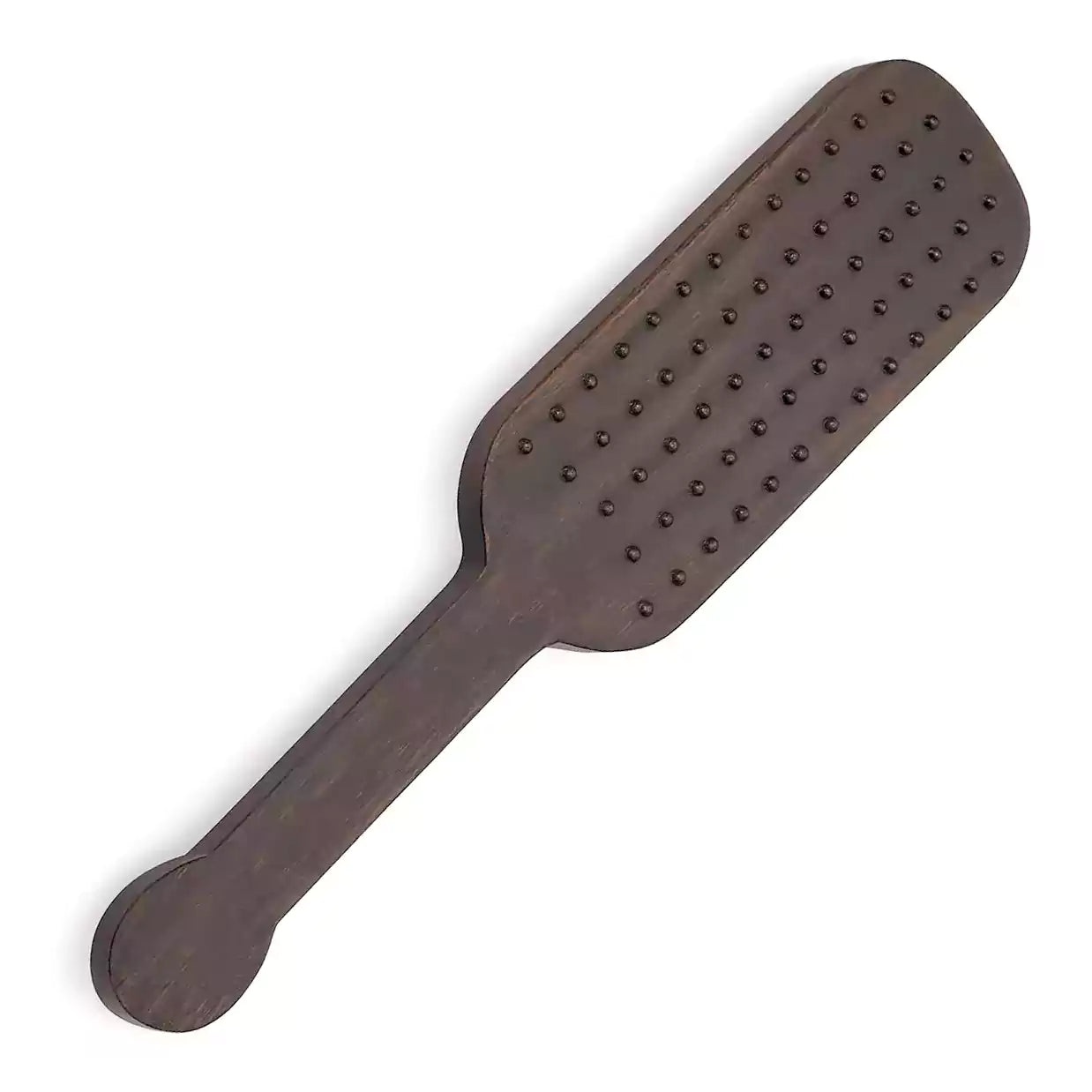
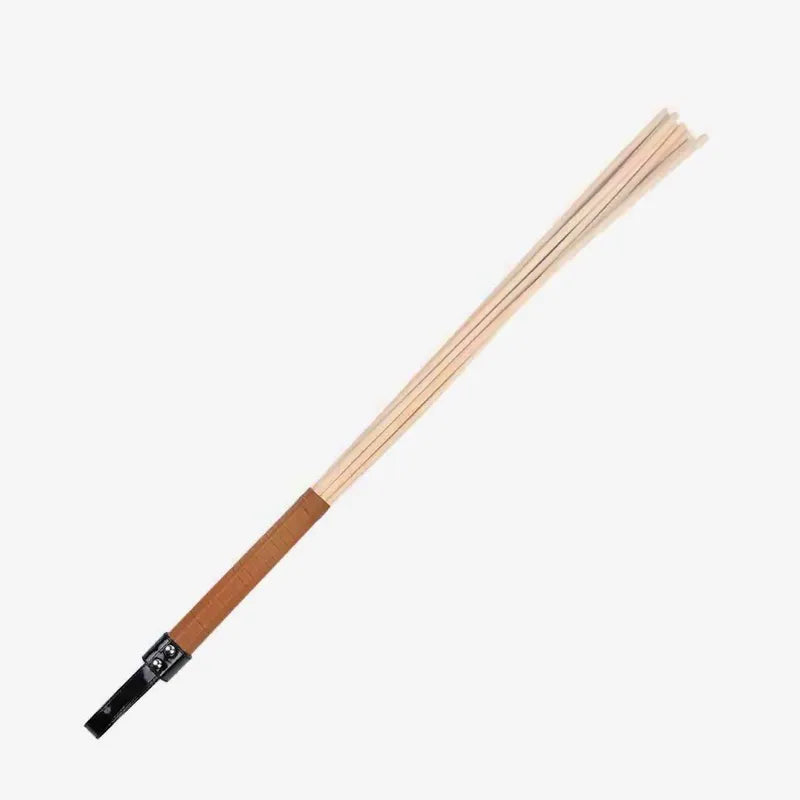
| Featured product | Ebony Dot Texture Spanking Paddle — $69.00 | Eight-Rod Rattan Discipline Cane — $27.90 |
Paddle: Feel, Control, and Two Material Options
Paddle sensation changes significantly with material — wood transfers force directly, while leather flexes and softens the same swing.
The Ebony Dot Texture Spanking Paddle represents the firmer end of paddle sensation. Its solid ebony construction does not flex, so the 138 g of weight transfers directly on contact, landing around 7/10 on sting and 4/10 on thud. The raised dot texture adds extra tactile feedback across the 2.56 in round face. Because ebony is dense and unforgiving, SexPaddle rates this an intermediate tool rather than a first-session pick.
For a softer paddle experience, the Brown Snake Leather Round Paddle offers a genuine snakeskin-textured leather face at 11.8 in wide, with a 5/10 sting and 6/10 thud profile — slightly gentler on sting and comparable on thud versus the ebony option. Its compact 4.7 in handle rewards close, controlled placement over a big swing. Both paddles share the same core advantage over a cane: a flat face is far more forgiving of imperfect aim, which is why paddles are common recommendations for a second or third impact tool. Compare more options in the full spanking paddles collection.
Cane: Feel, Control, and What Makes It Different
A cane's thin profile means the same amount of swing force feels sharper and more concentrated than any paddle.
The Eight-Rod Rattan Discipline Cane softens that intensity somewhat by bundling eight natural Indonesian rattan rods together instead of using a single solid shaft. This disperses contact across several points rather than one line, which is exactly why SexPaddle rates it beginner-to-intermediate despite being a cane. At 23.6 in / 60 cm and only 100 g, it moves quickly through the air and rebounds crisply — the speed itself is part of what makes cane sensation feel different from a paddle's flatter, slower impact.
Even a multi-rod, beginner-friendly cane deserves more caution than a paddle. Because the strike line is narrower, accidental contact with bone or joints carries more risk than the same mistake with a broad paddle face. Start with very light taps to calibrate before any rhythmic play. Browse the full canes collection for single-rod and other cane styles once you are comfortable with the basics.
Which Should You Choose?
Choose a paddle if you want forgiving, broad contact and a more relaxed learning curve; choose a cane if you want sharp, precise sensation and are ready to prioritize accuracy.
| If you want... | Choose |
|---|---|
| Forgiving contact that doesn't punish imperfect aim | Paddle |
| Deep, resonant thud with tactile texture | Paddle |
| Fast, sharp sting concentrated in a small area | Cane |
| A traditional, rhythmic discipline feel | Cane |
| The most beginner-forgiving overall option | Multi-rod cane or textured leather paddle |
If you are also weighing a flogger against either of these, the Paddle vs Flogger comparison covers that matchup, and Crop vs Cane breaks down how a crop's flexible shaft compares to a rigid cane.
Real Experience: Choosing Between a Paddle and a Cane
Testing both tools in the same low-intensity session, rather than committing to just one, often makes the decision obvious.
In a composite scenario based on common buyer questions, Alex and Jordan couldn't agree on whether to buy a paddle or a cane first, so they planned a session to try both at the lightest possible intensity. They started with hand warm-up, then introduced the Brown Snake Leather Round Paddle with a few broad, gentle contacts. Jordan described it as "solid, warm, easy to predict." Next they tried the Eight-Rod Rattan Discipline Cane with extremely light taps. Jordan's reaction was immediate: "that's so much sharper for barely any effort."
Neither reaction was wrong — it simply told them what Jordan's body responded to. They ended up keeping the paddle as their primary tool for regular sessions and treating the cane as an occasional, more deliberate addition rather than a default choice. Their takeaway: if you can't decide on paper, a shared low-intensity test session usually settles it faster than reading specs alone.


Aftercare for Paddles and Canes
Both tools need dry storage and gentle cleaning, but wood and rattan are more sensitive to moisture than leather.
| Tool | Cleaning | Storage | Watch For |
|---|---|---|---|
| Wood / ebony paddle | Wipe with a dry or lightly damp cloth | Dry, ventilated space away from heat | Cracks, rough spots, splinters |
| Leather paddle | Wipe with a dry cloth; condition periodically | Flat or hanging, away from humidity | Cracking, stiffness, surface peeling |
| Rattan cane | Wipe dry; avoid soaking or alcohol cleaners | Dry, ventilated, laid flat if possible | Warping, splitting, loose handle wrap |
FAQ
These answers cover the most common questions when comparing a paddle to a cane.
Does a paddle or a cane hurt more?
A cane typically feels sharper for the same effort because it concentrates force into a narrow line rather than spreading it.
A paddle can still deliver strong sensation, especially in firmer materials like wood, but the broader surface generally feels less intense per strike.
Which is easier for a beginner to control?
A paddle is generally easier because its flat face is forgiving of imperfect aim.
A multi-rod rattan cane is more beginner-friendly than a single solid cane, but it still requires more precision than a paddle.
Can I use a paddle and a cane in the same session?
Yes, many couples use a paddle for warm-up and a cane later once sensation has been established, or alternate between the two for variety.
Always reintroduce a lighter touch when switching tools, since sensation does not carry over predictably.
Do wood paddles feel the same as leather paddles?
No. Wood transfers force directly and feels firmer, while leather flexes slightly and often feels warmer and more forgiving.
Choose based on how much give you want in the sensation.
Is a cane only for experienced users?
Not always. Multi-rod rattan canes, like an eight-rod design, disperse sting and are often rated beginner-to-intermediate.
Single solid canes tend to feel sharper and typically suit more experienced users.
What should I buy if I can only choose one?
Most beginners find a paddle more versatile and forgiving as a single starter tool.
A cane is a strong second purchase once you understand how much force feels comfortable.
Final Thoughts: Different Tools, Different Conversations
A paddle and a cane are not better or worse than each other — they simply start different conversations about sensation, precision, and control.
If you want broad, forgiving contact with a lower learning curve, the Ebony Dot Texture Spanking Paddle or Brown Snake Leather Round Paddle are strong choices. If you want sharp, precise sensation and are ready to prioritize aim, the Eight-Rod Rattan Discipline Cane offers a beginner-friendly way into cane play.
For the full picture across every impact toy type, revisit the Impact Play Toys 101 guide, and make sure your safe word system is in place using the safe word guide before your next session.


