
Die Ästhetische Ecke: Elegante Arten, Ihre Sammlung zu präsentieren (nicht zu verstecken)

Ein Schuhsammler stopft seine Lieblingspaare nicht in einen schwarzen Müllsack. Ein Uhrensammler lässt eine Rolex nicht lose in einer Kramschublade liegen. Sobald ein Stück gut genug verarbeitet ist, fühlt es sich merkwürdig an, es zu verstecken – und die gleiche Logik gilt für ein gut gemachtes Lederpaddle. Nicht alles muss unsichtbar in einer Nachttischschublade wohnen. Einige Stücke sind wirklich schön genug, um angesehen zu werden.
Eine schicke Display-Ecke trennt Ihre Sammlung in „ansehnliche“ Stücke, die einen sichtbaren Platz verdienen, und „rein funktionale“ Stücke, die verstaut bleiben – das Ziel ist bewusstes Styling, nicht Unordnung.
🔽 Schnelle Navigation
- 📌 Nicht jedes Stück verdient ein Regal
- 📌 Ausstellungsstück: Die Schlangenhaut-Textur
- 📌 Ausstellungsstück: Die Krokodilprägung
- 📌 Drei einfache Ausstellungsaufbauten
- 📌 Was in der Schublade bleibt
- 📌 Display vs. Schublade: Schnelle Referenz
- 📌 Pflegehinweise für ausgestelltes Leder
- ❓ FAQ
- 🧭 Fazit
Nicht jedes Stück verdient ein Regal
Die Grenze zwischen „ausstellen“ und „aufbewahren“ hängt meist davon ab, ob das Stück eine ausgeprägte visuelle Textur oder ein Muster aufweist – schlichte, rein funktionale Ausrüstung sieht in der Regel besser verstaut aus.
Eine Ausstellungsecke funktioniert, wenn sie kuratiert wirkt, nicht überladen. Das bedeutet, wählerisch zu sein: Suchen Sie zwei oder drei Stücke mit echtem visuellen Charakter – Textur, Muster, skulpturale Form – und lassen Sie den Rest im Lager. Ein Regal mit einem auffälligen Paddle wirkt bewusst. Ein Regal mit zehn nicht zusammenpassenden Stücken sieht aus wie eine überlaufene Schublade, die ihren Deckel verloren hat.
Ausstellungsstück: Die Schlangenhaut-Textur
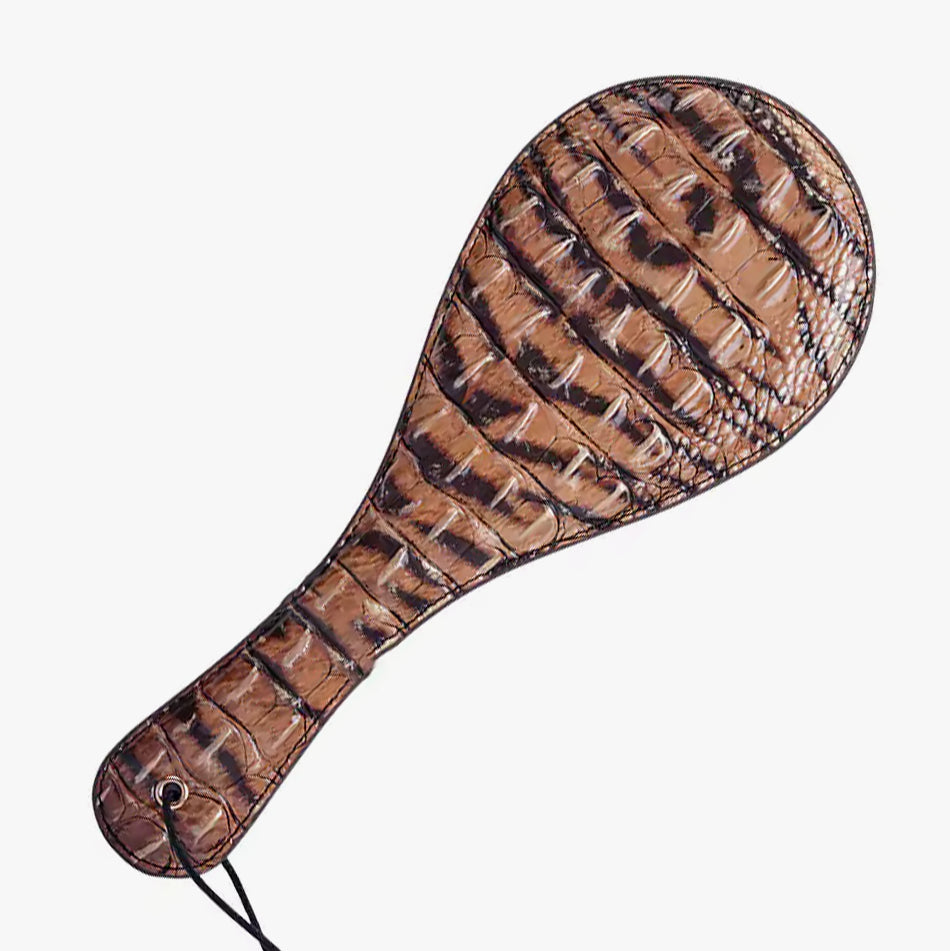
Geprägte Textur ist das, was ein Stück als „Objekt“ statt als „Werkzeug“ erscheinen lässt – und Leder mit Schlangenhautmuster ist eines der deutlichsten Beispiele.
Das Brown Snake Leather Round Paddle (59,00 $) funktioniert als Ausstellungsstück, weil das geprägte Schlangenhautmuster aus der Ferne so wirkt wie ein dekoratives Objekt – es braucht keinen Kontext, um bewusst auf einem Regal oder einer Ablageschale zu wirken. Mit einer Stech-Intensität von 5/10 und einem dumpfen Geräusch von 6/10 auf echtem Leder ist es auch funktional, aber das Muster leistet eine echte visuelle Arbeit, die ein schlichtes Paddle einfach nicht kann.
Ausstellungsstück: Die Krokodilprägung
Irisierende Oberflächen fangen Licht auf eine Weise ein, die glattes Leder nicht tut, was sie zu natürlichen Kandidaten für einen Platz in der Nähe eines Fensters oder unter einer Lampe macht, anstatt in einer Schublade.
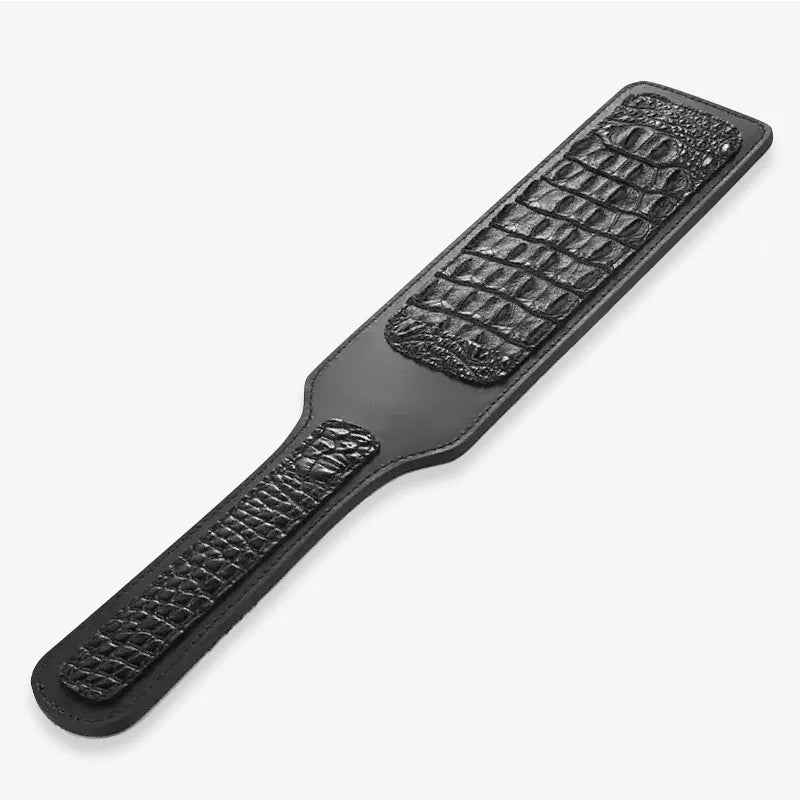
Das Blaue Krokodil-Leder-Spanking-Paddle (59,00 $) besteht aus vollnarbigem Leder mit irisierender Krokodilprägung – eine Oberfläche, die besonders von Umgebungslicht profitiert, das ein Schubladeninneres niemals bieten kann. Mit 400 g und einer Bewertung von 8/10 für Stechen und 8/10 für dumpfes Geräusch ist es auch substanziell genug, um sich beim Anfassen bewusst in der Hand anzufühlen und nicht nur aus der Ferne dekorativ zu wirken.
Drei einfache Ausstellungsaufbauten
Sie brauchen keine maßgefertigten Möbel – ein Ablagetablett, ein Wandhaken oder eine Schachtel mit offen gelassenem Deckel können ein oder zwei Stücke in wenigen Minuten zu einer bewussten Ausstellung machen.
| Aufbau | Am besten für | Aufwand |
|---|---|---|
| Leder-Ablageschale auf einer Kommode | 1–2 texturierte Stücke, fängt Licht gut ein | Niedrig – braucht nur eine Schale |
| Einzelner Wandhaken nahe einem Schrank | Ein Statement-Stück, nicht direkt sichtbar | Niedrig – ein Haken, eine Schraube |
| Lackschachtel mit offenem Deckel auf einem Regal | 2–3 Stücke, schließt für Gäste, öffnet für Sie | Mittel – Schachtel plus Platzierung |
Die Ablageschale ist der einfachste Ausgangspunkt: Sie signalisiert „Das gehört hierher“ auf die gleiche Weise, wie es ein Tablett mit Manschettenknöpfen oder einer Uhr tut, ohne dass eine Erklärung erforderlich ist.
Was in der Schublade bleibt
Schlichte, rein funktionale Stücke – Ihr Alltags-Arbeitstier und alle anfängergerechten Basics – sehen im Allgemeinen besser aufbewahrt als ausgestellt aus, da ihr ganzer Wert im Gebrauch liegt, nicht im Aussehen.
Ein moderates, ungemustertes Lederpaddel, das für zuverlässiges alltägliches Feedback gebaut wurde, verliert nichts, wenn es in einer Schublade bleibt – es wurde sowieso nicht wegen seines Aussehens ausgewählt. Reservieren Sie Regalplatz für Stücke, bei denen das Material selbst visuelles Interesse besitzt: Prägungen, Kornkontraste, skulpturale Verjüngung. Wenn der ganze Reiz eines Stücks „zuverlässig und vorhersehbar“ ist, dann ist es ein Schubladenstück, kein Ausstellungsstück, und das ist in Ordnung.
Display vs. Schublade: Schnelle Referenz
| Merkmal | Ausstellungsfähig | Nur für die Schublade |
|---|---|---|
| Oberflächenstruktur | Geprägt, gemustert oder irisierend | Flaches, glattes Leder |
| Form | Skulptural oder markante Silhouette | Standard-Paddle-Umriss |
| Lichtinteraktion | Fängt oder reflektiert Licht | Matt, nicht reflektierend |
| Primärer Wert | Visueller Charakter + Funktion | Nur Funktion |
Pflegehinweise für ausgestelltes Leder
Leder, das direktem Sonnenlicht oder Wärmequellen ausgesetzt ist, trocknet schneller aus und reißt schneller als Leder, das in einer Schublade aufbewahrt wird. Daher erfordert die Platzierung eines Ausstellungsstücks die gleiche Pflege wie die Lagerung.
Halten Sie ausgestellte Stücke von direkter Sonne und Heizkörpern oder Heizlüftern fern – die gleiche Pflegeroutine, die für gelagertes Leder gilt, gilt hier, nur mit etwas mehr Überwachung der Exposition. Ein schnelles Abwischen und gelegentliches Konditionieren lässt ein ausgestelltes Stück so scharf aussehen wie am ersten Tag, anstatt zu einem staubigen Regalobjekt zu verblassen, das niemand mehr in die Hand nimmt.
FAQ
Häufig gestellte Fragen zur Gestaltung einer sichtbaren Ausstellungsecke.
Wird das Ausstellen von Utensilien nicht unangenehm, wenn Gäste kommen?
Ein geschlossenes Ablagetablett oder eine Schachtel mit geschlossenem Deckel wird von jedem, der es nicht bereits weiß, als Schmuck- oder Accessoire-Tablett gelesen. Die Diskretion ist im Behälter integriert, nicht in der Abwesenheit der Ausstellung.
Wie viele Stücke sollten tatsächlich ausgestellt werden?
Ein bis drei ist der optimale Bereich. Mehr als das beginnt, wie eine überlaufene Aufbewahrung statt einer kuratierten Ecke auszusehen.
Beschädigt das Ausstellen von Leder es schneller als das Lagern?
Nur wenn es direktem Sonnenlicht oder Hitze ausgesetzt ist. Unter normalem Innenlicht, fernab eines Fensters, altert ausgestelltes Leder genauso wie gelagertes Leder.
Was, wenn meine ganze Sammlung aus schlichten, funktionalen Stücken besteht?
Das ist ein Zeichen dafür, die gesamte Sammlung vorerst in der Schublade zu behalten und Ihren nächsten Kauf als bewusstes Ausstellungsstück zu betrachten – etwas mit Textur oder Form, das speziell zum Anschauen ausgewählt wurde.
Ist ein Wandhaken eine gute Idee für Lederpaddles?
Ja, für ein Statement-Stück, das abseits direkter Blickachsen platziert wird – ein Schrankinnenraum oder hinter einer Tür funktioniert gut und hält das Stück sowohl für Sie sichtbar als auch aus dem allgemeinen Blickfeld.
Fazit: Kuratieren, nicht überladen
Eine Ausstellungsecke funktioniert, wenn sie selektiv ist – ein oder zwei Stücke mit echtem visuellem Charakter, gestylt, wie Sie jedes andere Objekt stylen würden, auf das Sie stolz sind.
Das braune Schlangenleder-Rundpaddel und das blaue Krokodilleder-Spanking-Paddel verdienen beide einen Platz auf einem Tablett oder Regal durch Textur und Verarbeitung, nicht nur durch Funktion. Für Hinweise, welche Stücke in Ihre alltägliche Rotation und welche in ein Ausstellungsregal gehören, siehe Die Capsule Wardrobe Methode und durchstöbern Sie die gesamte Leder-Spanking-Paddel-Kollektion für weitere texturierte, ausstellungsbereite Optionen.


