
Stocklänge & -durchmesser-Anleitung: Wie die Größe die Kontrolle beeinflusst

Die meisten Käufer vergleichen Stöcke nach Material und Preis, aber zwei Spezifikationen sind fast genauso wichtig und erhalten weitaus weniger Aufmerksamkeit: Länge und Durchmesser. Die Länge eines Stocks bestimmt die Reichweite und den Schwungraum, während der Durchmesser bestimmt, wie konzentriert oder verteilt jeder Schlag wahrgenommen wird. Wenn Sie eine davon für Ihren Raum oder Ihr Erfahrungsniveau falsch wählen, kann selbst das richtige Material unbeholfen zu verwenden sein. Dieser Leitfaden erklärt genau, wie die Größe die Kontrolle verändert, unter Verwendung realer Produkte mit tatsächlich unterschiedlichen Abmessungen.
Längere Stöcke erfordern mehr Schwungraum und Bogenkontrolle, erreichen aber mit weniger Anstrengung weiter, während der Durchmesser die Empfindung direkt verändert – dünnere Stöcke konzentrieren die Kraft in eine schärfere Linie, und dickere Stöcke verteilen dieselbe Anstrengung auf eine breitere, schwerere Linie.
🔽 Schnelle Navigation
- 📌 Bevor Sie über die Größe nachdenken
- 📌 Länge: Was sich ändert und warum es wichtig ist
- 📌 Ein kürzerer Stock in der Praxis
- 📌 Ein längerer Stock in der Praxis
- 📌 Durchmesser: Die Spezifikation, die die meisten Käufer übersehen
- 📌 Wie der Durchmesser die Empfindung bei einem Produkt verändert
- 📌 Größe an Ihren Raum und Ihre Erfahrung anpassen
- 📌 Echte Erfahrung: Durchmesser durch Versuch wählen
- ❓ FAQ
- 🧭 Abschließende Gedanken: Größe ist eine Spezifikation, kein nachträglicher Gedanke
Bevor Sie über die Größe nachdenken
Unabhängig von Länge oder Durchmesser sollte jeder Stock nur die Mitte des Gesäßes und der oberen Oberschenkel treffen – die Größe ändert die technischen Anforderungen, nicht die Zielzonen.
Zielen Sie niemals mit einem Stock, egal welcher Abmessungen, auf Wirbelsäule, Nieren, unteren Rücken, Hüften, Steißbein, Gelenke oder Innenseiten der Oberschenkel. Vereinbaren Sie vor Beginn ein Stopp-System und behandeln Sie jede neue Länge oder jeden neuen Durchmesser als eine eigene Kalibrierungsphase – ein Stock, der ein paar Zentimeter länger oder ein paar Millimeter dicker ist, als Sie es gewohnt sind, kann sich bei gleicher Schwunganstrengung deutlich anders anfühlen.
Länge: Was sich ändert und warum es wichtig ist
Ein längerer Stock erzeugt bei gleicher Armbewegung mehr Spitzengeschwindigkeit, erfordert aber auch mehr Schwungraum und mehr Übung, um ihn präzise zu kontrollieren.
| Längenbereich | Benötigter Schwungraum | Am besten für |
|---|---|---|
| Unter 50 cm | Minimal – funktioniert in kleineren Räumen | Nahbereichskontrolle, kleinere Räume, präzise Platzierung |
| 50–60 cm | Moderater – Standard-Schwungraum | Allgemeines Schlagen, ausgewogene Reichweite und Kontrolle |
| Über 60 cm | Erheblich – benötigt offenen Raum | Maximale Reichweite, fortgeschrittenere Bogenkontrolle |
Die Länge beeinflusst auch, wie viel vom Eigengewicht des Stocks zum Schlag beiträgt und wie viel von Ihrer Schwunggeschwindigkeit herrührt. Ein längerer Stock verteilt seine Masse über eine größere Distanz vom Griff, was dem Kopf auch bei relativ sanfter Bewegung Schwung verleihen kann – ein weiterer Grund, warum ein längerer Stock oft eine leichtere Berührung benötigt, als seine Länge allein vermuten lässt.
Ein kürzerer Stock in der Praxis
Ein kürzerer Stock tauscht maximale Reichweite gegen engere Kontrolle und einfachere Handhabung in beengten Räumen ein.
Der Padauk Hartholz Lehrstock ist 50 cm lang – spürbar kürzer als die meisten Stöcke in unserer Kollektion. Diese reduzierte Länge hält den gesamten Schwungbogen kompakter, was es einfacher macht, eine präzise Kontrolle zu gewährleisten, selbst in einem kleineren Schlafzimmer oder einem Raum mit Möbeln in der Nähe. Das verjüngte Profil, von 1,5 cm am Griff bis zu 0,8 cm an der Spitze, konzentriert die Empfindung direkt am Kontaktpunkt, unabhängig von der kürzeren Gesamtlänge, sodass Sie keine Intensität für Kompaktheit opfern.
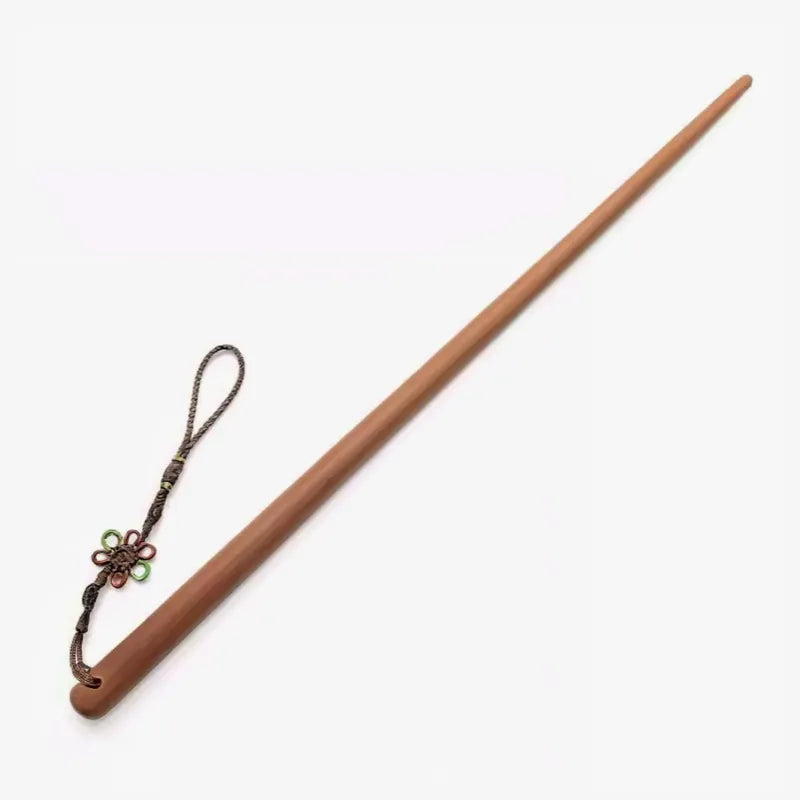
Kürzere Stöcke wie dieser sind auch generell leichter zu transportieren und diskret zu lagern, was ein wichtiger Faktor ist, wenn Platz oder Reisen neben reinen Empfindungspräferenzen eine Rolle spielen.
Ein längerer Stock in der Praxis
Ein längerer Stock erweitert die Reichweite und erhöht die Spitzengeschwindigkeit, doch diese zusätzliche Länge führt dazu, dass der genaue Auftreffpunkt der Spitze empfindlicher auf kleine Fehler im Armwinkel reagiert.
Der Acht-Ruten Rattan Disziplinarstock ist 60 cm lang – ein deutlicher Längensprung im Vergleich zum kürzeren Padauk-Design. Diese zusätzliche Reichweite ermöglicht es dem Geber, etwas weiter entfernt zu stehen und dennoch effektive Schläge zu landen, und die zusätzliche Länge erzeugt bei gleicher Armbewegung eine merklich höhere Spitzengeschwindigkeit. Die Mehrrutenkonstruktion dieses speziellen Stocks hilft, einige der zusätzlichen Präzisionsanforderungen auszugleichen, die die Länge normalerweise mit sich bringt, da der verteilte Kontakt geringfügige Platzierungsabweichungen mehr verzeiht, als es ein Einruten-Design bei gleicher Länge tun würde.
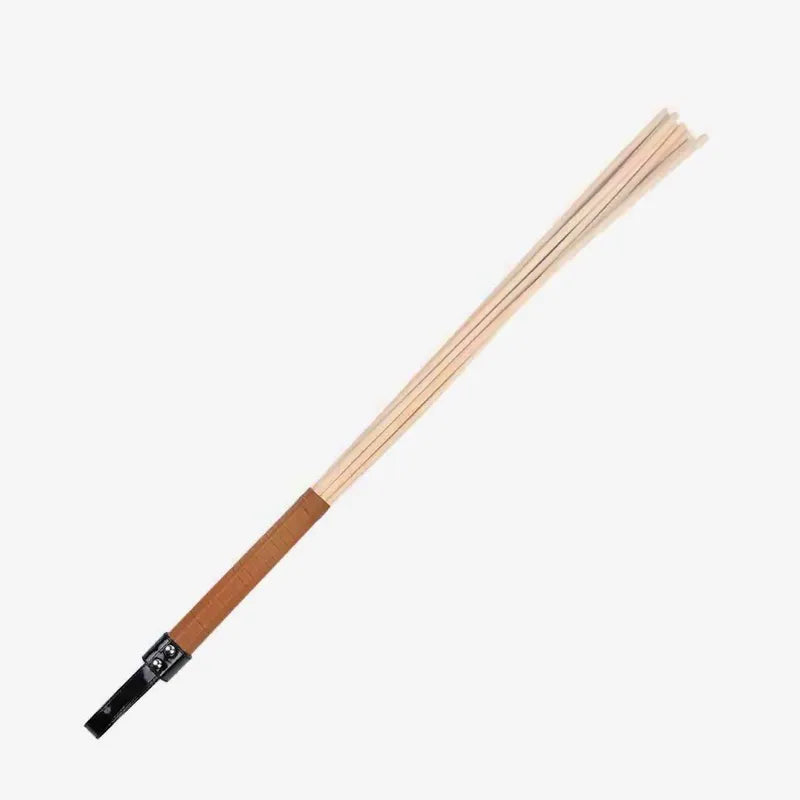
Wenn Sie zum ersten Mal einen längeren Stock verwenden, üben Sie Ihren Schwung im offenen Raum, bevor Sie ihn an einem Partner anwenden – die zusätzliche Länge verändert das Timing mehr, als die meisten Leute von einem kürzeren Design erwarten.
Durchmesser: Die Spezifikation, die die meisten Käufer übersehen
Der Durchmesser verändert die Empfindung so direkt wie das Material, doch ist es die Spezifikation, die die meisten Käufer beim Vergleich von Stöcken übersehen.
Ein dünnerer Stock konzentriert die gleiche Schwungkraft auf einen kleineren Querschnitt, was beim Kontakt als schärfer und präziser empfunden wird. Ein dickerer Stock verteilt dieselbe Kraft über eine größere Oberfläche und erzeugt so eine schwerere, substanziellere Empfindungslinie statt eines hauchdünnen Stichs. Keines davon ist von Natur aus besser – sie erzeugen einfach unterschiedliche Empfindungskategorien, ähnlich dem Unterschied zwischen einer Keeper- und einer Slapper-Spitze bei einer Reitgerte, aber auf die gesamte Länge eines Stocks und nicht nur auf dessen Ende angewendet.
Wie der Durchmesser die Empfindung bei einem Produkt verändert
Der Vergleich des Durchmessers innerhalb eines einzelnen Produkts eliminiert das Material als Variable und isoliert genau, was die Dicke allein für die Empfindung bewirkt.
Der Schwarze Acryl BDSM-Stock ist präzise in drei Durchmessern geschnitten – 6mm, 8mm und 10mm – alle aus demselben Acrylmaterial und mit derselben Länge von 60 cm. Dies macht ihn zu einer der klarsten Möglichkeiten, die Wirkung des Durchmessers isoliert zu verstehen: Die 6mm-Option liefert den schärfsten, konzentriertesten Biss; die 8mm-Option gleicht Stich und etwas mehr Substanz aus; und die 10mm-Option verschiebt sich merklich hin zu einem schwereren, autoritäreren Aufprall.
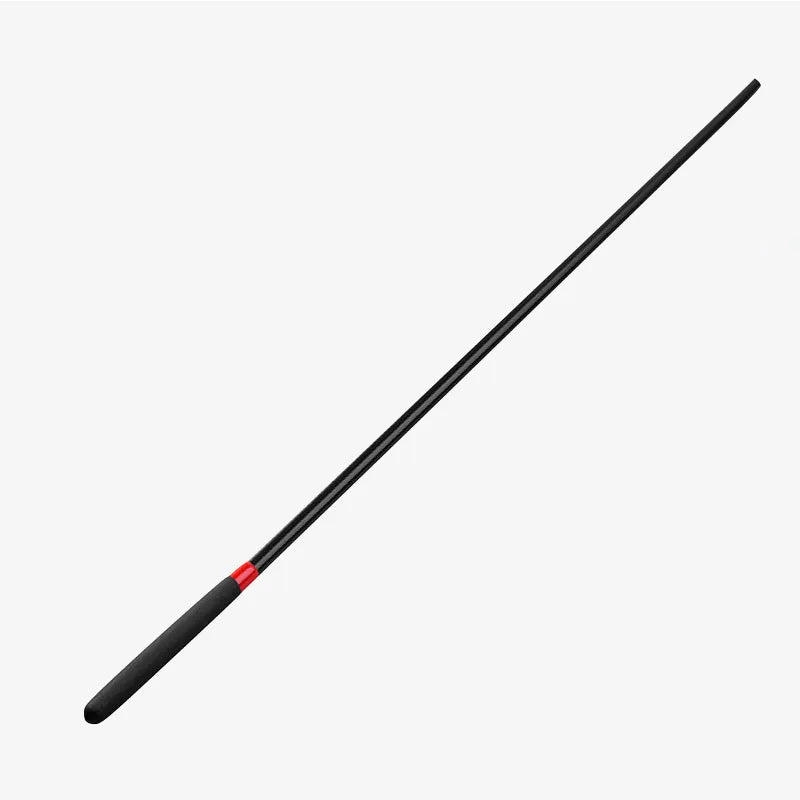
| Durchmesser | Empfindung | Am besten für |
|---|---|---|
| 6mm | Schärfster, konzentriertester Biss | Präzise, punktuelle Empfindung |
| 8mm | Ausgewogener Stich mit mehr Fülle | Allgemeines Schlagen |
| 10mm | Schwerer, autoritärer Aufprall | Für diejenigen, die mehr Gewicht hinter jedem Schlag wünschen |
Wenn Sie unsicher sind, welcher Durchmesser für Sie geeignet ist, ist 8 mm ein vernünftiger Mittelweg als Ausgangspunkt, der es Ihnen ermöglicht, sich zu kalibrieren, bevor Sie sich für ein Extrem entscheiden.
Größe an Ihren Raum und Ihre Erfahrung anpassen
Wählen Sie die Länge basierend auf dem verfügbaren Raum und den Reichweitenpräferenzen, und den Durchmesser basierend auf der gewünschten Empfindung und Erfahrung mit Präzision.
| Ihre Situation | Empfohlene Länge | Empfohlener Durchmesser |
|---|---|---|
| Kleinerer Raum, neu beim Stock | Unter 50 cm | Dünner (6 mm) oder Mehrstab für Nachsicht |
| Standardzimmer, etwas Erfahrung | 50–60 cm | 8 mm oder gleichwertiger Mittelbereich |
| Offener Raum, erfahrener Benutzer | Über 60 cm | 10 mm oder dicker für stärkeren Aufprall |
Echte Erfahrung: Durchmesser durch Versuch wählen
Die meisten Menschen können ihre Durchmesserpräferenz nicht allein anhand von Spezifikationen vorhersagen – ein direkter Side-by-Side-Test klärt dies schneller als Raten.
In einem zusammengesetzten Szenario, das auf häufigen Käuferfragen basiert, bestellte Kendall den Black Acrylic BDSM Cane speziell, weil die Option mit drei Durchmessern es ihnen ermöglichte, alle drei zu testen, ohne drei separate Stöcke kaufen zu müssen. Beginnend mit dem 6mm bei sehr geringer Kalibrierungskraft beschrieb Kendalls Partnerin es als „scharf, fast zu präzise – ich möchte etwas mit etwas mehr Körper.“ Das Umsteigen auf den 8mm bei gleicher leichter Anstrengung fühlte sich merklich ausgewogener an, und der 10mm fühlte sich noch schwerer an, näher an dem, was sie sich von einem Stock erhofft hatte, basierend auf ihrer Erfahrung mit Handspanking.
Sie einigten sich auf den 8mm als ihren regelmäßig verwendeten Durchmesser, wobei der 6mm für Gelegenheiten reserviert war, bei denen eine schärfere, präzisere Empfindung ausdrücklich gewünscht wurde. Kendalls Fazit war, dass die Präferenz für den Durchmesser allein durch das Lesen der Spezifikationen wirklich nicht hätte vorhergesagt werden können – das gleichzeitige Ausprobieren mehrerer Dicken war der einzige zuverlässige Weg, es herauszufinden.
FAQ
Diese Antworten decken häufige Fragen zur Stocklänge und zum Durchmesser ab.
Tut ein längerer Stock immer mehr weh?
Nicht unbedingt mehr, aber anders – die Länge erhöht die Spitzengeschwindigkeit und Reichweite, was die Kraft am Kontaktpunkt erhöhen kann, aber die Gesamtempfindung hängt immer noch stark vom Durchmesser, Material und der Schwungtechnik ab.
Ein kürzerer Stock, mit mehr engagierter Kraft geschwungen, kann immer noch eine ernsthafte Empfindung liefern.
Mit welchem Durchmesser sollte ein Anfänger beginnen?
Ein mittlerer Durchmesser wie 8 mm oder ein Mehrstab-Design, das den Kontakt unabhängig von der individuellen Stabstärke verteilt, ist ein vernünftiger Ausgangspunkt für die meisten Anfänger.
Sehr dünne Durchmesser konzentrieren die Kraft scharf und eignen sich besser für erfahrenere Benutzer.
Wie viel Platz benötige ich, um einen längeren Stock sicher zu schwingen?
Genug offener Raum, um eine volle Armschwingung auszuführen, ohne Möbel, Wände oder andere Gegenstände zu treffen – üben Sie die Bewegung zuerst ohne Partner, wenn Sie unsicher sind.
Ein beengter Raum mit einem langen Stock erhöht das Risiko eines unkontrollierten, unbeabsichtigten Schlags.
Kann ich denselben Stock sowohl für präzise als auch für intensive Empfindungen verwenden?
Bis zu einem gewissen Grad durch Technik und Krafteinstellung, aber ein Stock mit festem Durchmesser hat reale physikalische Grenzen – ein sehr dünner Stock kann die stärkere Wirkung eines dicken Stocks unabhängig von der Schwungkraft nicht nachbilden.
Produkte, die in mehreren Durchmessern angeboten werden, wie bestimmte Acrylstöcke, ermöglichen es Ihnen, dies tatsächlich zu variieren, ohne mehrere separate Werkzeuge kaufen zu müssen.
Beeinflusst der Durchmesser, wie ein Stock beim Aufprall klingt?
Ja, im Allgemeinen – dünnere Stöcke erzeugen tendenziell einen schärferen, höher klingenden Knall, während dickere Stöcke einen tieferen, resonanteren Klang erzeugen.
Dies kann wichtig sein, wenn der Geräuschpegel in Ihrem Raum eine Rolle spielt.
Ist ein kürzerer Stock weniger „ernst“ als ein längerer?
Nein – ein kürzerer Stock wie ein handverjüngter Lehrstock kann genauso viel echte Empfindung und Atmosphäre vermitteln wie ein längeres Design, nur mit einem kompakteren Schwung.
Die Länge ist eine praktische und technische Überlegung, kein Maß dafür, wie ernst oder fortgeschritten ein Stock ist.
Abschließende Gedanken: Größe ist eine Spezifikation, kein nachträglicher Gedanke
Länge und Durchmesser prägen die Praxistauglichkeit und Empfindung eines Stocks genauso stark wie das Material – lesen Sie beide Spezifikationen genauso sorgfältig wie alles andere auf der Produktseite.
Wenn der Platz begrenzt ist oder Sie eine präzisere Kontrolle wünschen, ist ein kürzeres Design wie der Padauk Hartholz Lehrstock eine gute Wahl. Wenn Sie mehr Reichweite wünschen und die zusätzlichen Anforderungen an die Bogenkontrolle nicht stören, deckt der Acht-Ruten Rattan Disziplinarstock diesen Bereich gut ab. Speziell für den Durchmesser ermöglicht der mehroptionale Schwarze Acryl BDSM-Stock einen direkten Vergleich von dünner, mittlerer und dicker Empfindung.
Für die Materialgrundlagen aller Stockarten lesen Sie noch einmal den Kompletten Leitfaden zu BDSM-Stöcken und überprüfen Sie den Stock-Sicherheitsleitfaden vor Ihrer nächsten Session.


