
Arten von Zuschneidegriffen: Halt, Komfort und Kontrolle

Der Griff ist der Teil eines Stocks, mit dem Sie während der gesamten Session interagieren, doch er erhält weitaus weniger Aufmerksamkeit als das Schaftmaterial oder die Gesamtlänge. Ein sicherer, bequemer Griff beeinflusst direkt die Kontrolle, Präzision und wie lange Sie einen Stock bequem benutzen können, bevor Ermüdung einsetzt – und verschiedene Griffdesigns lösen dieses Problem auf wirklich unterschiedliche Weisen. Dieser Leitfaden schlüsselt die wichtigsten Griffarten auf, denen Sie begegnen werden, und verwendet reale Produkte, um zu zeigen, wie das Griffdesign das Erlebnis verändert.
Ummantelte Ledergriffe bieten einen sicheren, texturierten Halt, der mit der Benutzung besser wird. Integrierte Holzgriffe halten den gesamten Stock ausgewogen und minimalistisch, und dekorative Harzgriffe verleihen visuelle Präsenz – die richtige Wahl hängt davon ab, wie sehr Sie Griffsicherheit gegenüber Ästhetik und Balance priorisieren.
🔽 Schnelle Navigation
- 📌 Bevor Sie Griffarten vergleichen
- 📌 Warum das Griffdesign wichtiger ist, als es scheint
- 📌 Ummantelte Ledergriffe: Sicherer, texturierter Halt
- 📌 Integrierte Griffe: Minimalistisch und ausgewogen
- 📌 Dekorative Griffe: Präsenz und Persönlichkeit
- 📌 Grifftechnik bei verschiedenen Griffarten
- 📌 Wie Sie anhand Ihrer Prioritäten auswählen
- 📌 Grifflänge und Handposition
- 📌 Reinigung und Pflege verschiedener Griffe
- 📌 Echte Erfahrung: Ermüdung und Griff bei einer langen Session
- ❓ FAQ
- 🧭 Abschließende Gedanken: Der Griff ist kein nachträglicher Einfall
Bevor Sie Griffarten vergleichen
Unabhängig vom Griffdesign sind sicherer Halt und kontrollierte Technik für die Sicherheit wichtiger als jedes einzelne Designmerkmal.
Ein Stock sollte immer nur den Mittelpunkt des Gesäßes und der oberen Oberschenkelmuskulatur berühren, und ein Kontrollverlust des Griffs mitten im Schwung – so unwahrscheinlich er auch ist – ist genau die Art von Unfall, die gutes Griffdesign und die richtige Technik verhindern sollen. Üben Sie Ihren Griff und die Schwungbewegung mit jedem neuen Grifftyp an der frischen Luft, bevor Sie ihn in einer echten Session verwenden, da selbst kleine Unterschiede in der Griffform Ihre natürliche Handposition beeinflussen können.
Warum das Griffdesign wichtiger ist, als es scheint
Das Griffdesign beeinflusst drei praktische Dinge: wie sicher Sie den Stock bei einem schnellen Schwung halten können, wie stark die Handermüdung bei einer längeren Session zunimmt und wie viel Feingefühl Sie bei präziser Platzierung haben.
| Grifffaktor | Was er beeinflusst |
|---|---|
| Textur | Griffsicherheit, besonders bei schwitzigen oder angespannten Händen |
| Form und Verjüngung | Natürliche Handposition und Feingefühl |
| Gewichtsverteilung | Wie stark sich der Stock kopflastig anfühlt im Vergleich zu ausgewogen |
| Material | Komfort bei längeren Sessions, Temperaturgefühl |
Ein Stock, der sich bei einem schnellen Test im Ausstellungsraum großartig anfühlt, kann sich nach zehn oder fünfzehn Minuten aktiver Nutzung deutlich anders anfühlen. Deshalb verdient das Griffdesign bei einer schnellen Kaufentscheidung mehr Beachtung, als es normalerweise bekommt.
Ummantelte Ledergriffe: Sicherer, texturierter Halt
Ein lederummantelter Griff fügt Textur und eine leichte Polsterung hinzu, die die Griffsicherheit verbessert, besonders bei schnelleren oder engagierteren Schwüngen.
Der Traditionelle Multi-Rod BDSM Stock verwendet genau dieses Design, wobei ein ummantelter Ledergriff seine gebündelten Rattanruten sichert. Die Umwicklung erfüllt eine Doppelfunktion: Sie bindet die mehreren Ruten an der Basis zusammen und gibt gleichzeitig der Hand des Gebenden etwas mit echter Textur zum Greifen, anstatt einer glatten, potenziell rutschigen gebündelten Oberfläche. Diese Textur wird spürbarer – und wertvoller –, wenn eine Session länger dauert und die Hände natürlich wärmer werden oder leicht feucht werden.
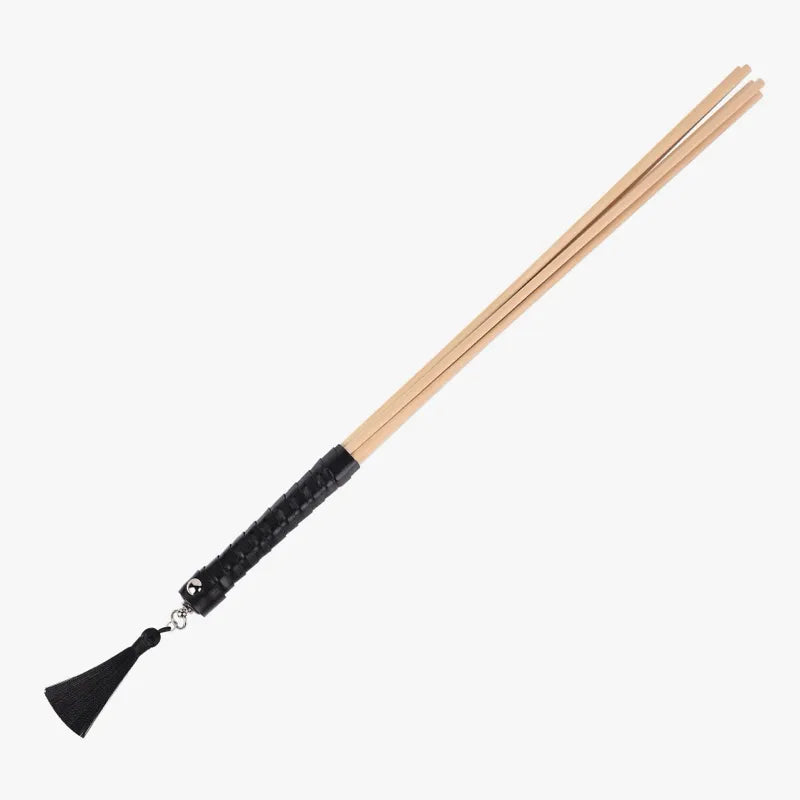
Ummantelte Griffe neigen auch dazu, im Vergleich zu blankem Material eine geringe Polsterung hinzuzufügen, was die Handermüdung bei einer längeren Session reduzieren kann, insbesondere für diejenigen, die aus Gewohnheit oder Nervosität dazu neigen, etwas fester als nötig zuzugreifen.
Integrierte Griffe: Minimalistisch und ausgewogen
Ein integrierter Griff – bei dem der Griffbereich einfach eine Fortsetzung desselben Materials wie der Schaft ist – hält den gesamten Stock ausgewogen und von Ende zu Ende konsistent.
Der Padauk Hartholz Lehrstock verfolgt diesen Ansatz, wobei sein Griff einfach das dickere Ende desselben sich verjüngenden Hartholzstabs ist, der sich von 0,3 Zoll an der Spitze auf 0,6 Zoll am Griff verbreitert. Es gibt keine separate Umwicklung, Polsterung oder zusätzliches Material – der gesamte Stock ist ein einziges durchgehendes Stück. Dies schafft eine sehr direkte, ungefilterte Verbindung zwischen Hand und Spitze, da es keine Zwischenpolsterschicht gibt, die das Feedback vom Schwung absorbiert oder verändert.
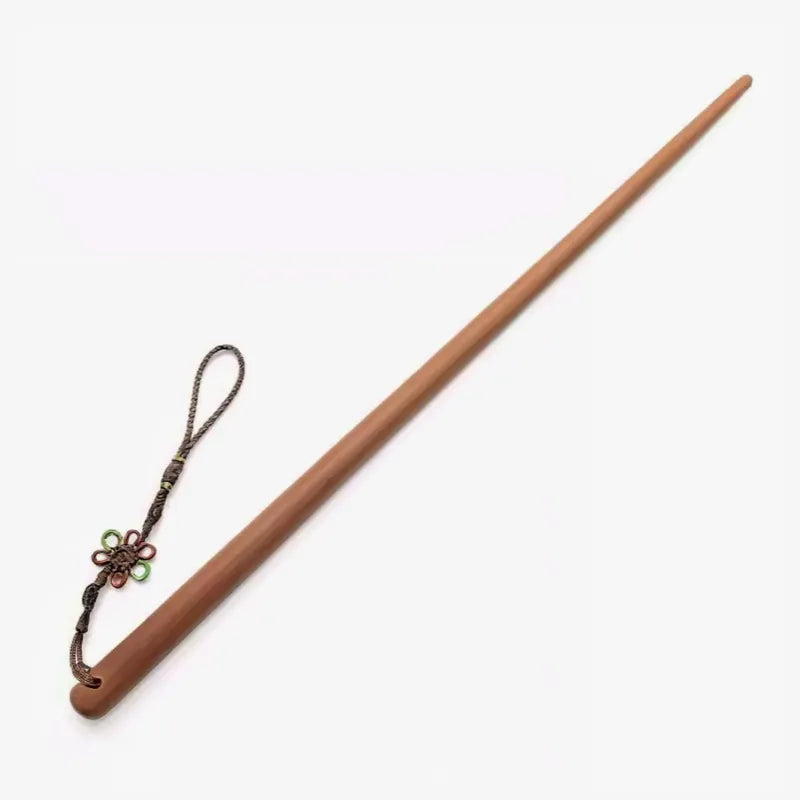
Dieser minimalistische Ansatz eignet sich für Benutzer, die maximales Feedback und eine traditionelle, schmucklose Ästhetik bevorzugen, obwohl er im Allgemeinen weniger Grifffestigkeit als ein umwickeltes Design bietet – dies sollte beachtet werden, wenn Ihre Hände während einer Session warm oder leicht feucht werden, da blankes Hartholz unter diesen Bedingungen rutschiger als eine texturierte Umwicklung sein kann.
Dekorative Griffe: Präsenz und Persönlichkeit
Ein dekorativer Griff priorisiert neben der Funktion auch den visuellen Charakter, oft unter Verwendung eines völlig anderen Materials als der Schaft, um Kontrast und Präsenz zu schaffen.
Der Vintage Geflochtene BDSM Stock kombiniert einen geflochtenen Schaft mit einem Harz-Diamantgriff – einem wirklich anderen Material und einer anderen Textur als der Körper des Stocks, speziell wegen seiner facettierten, juwelenartigen Optik gewählt. Diese Art von Griff macht den Stock ebenso zu einem Ausstellungs- oder Sammlerstück wie zu einem funktionalen Werkzeug, und die glatte, facettierte Oberfläche des Harzes bietet einen anderen Griffcharakter als entweder Lederumwicklung oder blankes Holz.
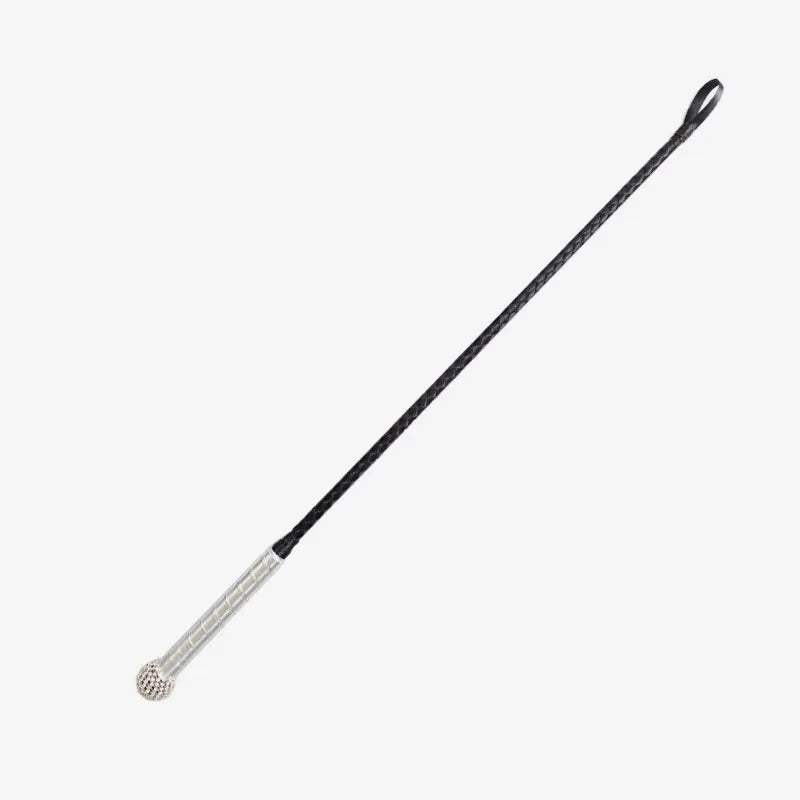
Dekorative Griffe sind eine Überlegung wert, wenn die visuelle Präsentation für Sie wirklich wichtig ist – als Geschenk, als Ausstellungsstück oder einfach, weil Sie ein Werkzeug möchten, das sich besonders anfühlt. Es lohnt sich jedoch, einen solchen Griff persönlich zu testen oder detaillierte Produktfotos zu prüfen, bevor Sie davon ausgehen, dass sich ein dekorativer Griff genauso anfühlt wie ein schlichteres, funktionsorientiertes Design.
Grifftechnik bei verschiedenen Griffarten
Eine gute Grifftechnik bleibt in ihren Grundlagen über alle Grifftypen hinweg konstant, aber kleine Anpassungen helfen jedem Design, seine beste Leistung zu erbringen.
| Grifftyp | Griff-Tipp |
|---|---|
| Ummanteltes Leder | Fest zugreifen, aber die Textur die Arbeit machen lassen – Sie müssen nicht so fest zudrücken, wie es ein glatter Griff verlocken könnte |
| Integriert / blankes Holz | Hände trocken halten; bei Neigung zu Schwitzen während Sessions ein leichtes griffförderndes Produkt in Betracht ziehen |
| Dekoratives Harz | Testen Sie zuerst die Griffsicherheit bei geringer Intensität, da glatte facettierte Oberflächen sich anders verhalten können als texturierte Designs |
Wie Sie anhand Ihrer Prioritäten auswählen
Passen Sie den Grifftyp an das an, was Ihnen am wichtigsten ist – Sicherheit, Feedback oder Präsentation.
| Ihre Priorität | Empfohlener Grifftyp |
|---|---|
| Maximale Griffsicherheit, besonders für längere Sessions | Ummanteltes Leder |
| Direktes, ungefiltertes Feedback und ein traditionelles Gefühl | Integriertes / blankes Material |
| Visuelle Präsenz, Geschenk oder Sammlerwert | Dekoratives Harz oder kontrastierendes Material |
| Ausgewogene, gleichmäßige Gewichtsverteilung | Integrierte Griffdesigns |
Grifflänge und Handposition
Jenseits von Material und Textur beeinflusst die Länge des als „Griff“ im Vergleich zum „Arbeitsschaft“ bezeichneten Teils eines Stocks die Optionen für die Handposition und die Kontrolle.
Ein längerer Griffbereich bietet mehr Spielraum, um die Griffposition anzupassen – fester zugreifen für kürzere, kontrolliertere Schläge oder weiter zurückgreifen für mehr Reichweite und Schwung bei einem vollen Schlag. Ein kürzerer, kompakterer Griff bietet weniger Positionsflexibilität, fühlt sich aber oft präziser und gezielter an, da es weniger Unklarheit darüber gibt, wo genau Ihre Hand sitzen sollte. Keiner der Ansätze ist objektiv besser; ein längerer Griff eignet sich für Benutzer, die es mögen, die Griffposition während der Session für Abwechslung anzupassen, während ein kürzerer, fester Griff für diejenigen geeignet ist, die eine einzige, konsistente Handposition durchweg bevorzugen.
| Grifflänge | Griffflexibilität | Am besten geeignet für |
|---|---|---|
| Kurzer, definierter Griff | Gering – eine konsistente Handposition | Benutzer, die Präzision und Konsistenz bevorzugen |
| Längerer Griffabschnitt | Hoch – Platz zum Festhalten oder Ausstrecken | Benutzer, die gerne Reichweite und Kraft während der Sitzung anpassen |
Beim Vergleich von Stöcken lohnt es sich, nicht nur die Gesamtlänge zu prüfen, sondern insbesondere, wie viel dieser Länge als Griff im Vergleich zum Arbeitsschaft vorgesehen ist – zwei Stöcke ähnlicher Gesamtlänge können je nachdem, wo der Hersteller diese Linie zieht, sehr unterschiedliche Flexibilität bei der Handposition bieten.
Reinigung und Pflege verschiedener Griffe
Das Griffmaterial beeinflusst die Reinigung ebenso stark wie der Schaft, und eine unpassende Pflege zwischen Schaft und Griff ist ein leicht zu übersehendes Detail.
Ein ummantelter Ledergriff benötigt dieselbe Trockenwisch-, regelmäßige Pflege wie jedes Lederprodukt und sollte niemals eingeweicht werden, selbst wenn der Schaft selbst aus einem waschbaren Material besteht. Ein integrierter Hartholzgriff erfordert dieselbe trocken-alleinige Pflege wie der Rest des Stocks, ohne dass eine separate Berücksichtigung erforderlich ist, da es sich um dasselbe durchgehende Material handelt. Harz- oder dekorative Griffe können typischerweise mit einem leicht feuchten Tuch abgewischt werden, aber prüfen Sie auf Klebstoffe oder Verbindungspunkte, die den Griff mit dem Schaft verbinden, da diese Verbindungspunkte oft die ersten Stellen sind, an denen Verschleiß bei einem Design aus gemischtem Material auftritt.
Echte Erfahrung: Ermüdung und Griff bei einer langen Session
Komfortunterschiede bei Griffen, die bei einem kurzen Test gering erscheinen, werden bei einer längeren Session oft viel deutlicher.
In einem zusammengesetzten Szenario, das auf häufigen Käuferfragen basiert, besaß Noor nur den Padauk Hartholz Lehrstock und fand seinen integrierten Griff bei typischen kürzeren Sessions immer vollkommen bequem. Während einer ungewöhnlich langen, strukturierten Szene begannen Noors Hände etwa zwanzig Minuten lang zu ermüden und der Griff wurde etwas unsicherer – etwas, das bei kürzeren, typischeren Anwendungen nie ein Problem gewesen war.
Neugierig, ob das Griffdesign die Ursache war, schlug Noors Partner vor, den ummantelten Ledergriff des Traditionellen Multi-Rod BDSM Stocks zum Vergleich während einer späteren Session ähnlicher Länge auszuprobieren. Der Unterschied war spürbar: Die texturierte Umwicklung erforderte weniger aktiven Greifaufwand, um die Kontrolle zu behalten, und die Handermüdung setzte langsamer ein. Noors Erkenntnis war nicht, dass der Hartholzstock schlecht konstruiert war – sein minimalistischer, direktes Feedback gebender Griff wurde immer noch für kürzere Sessions bevorzugt –, sondern dass der Grifftyp für längere Nutzung tatsächlich wichtiger war als erwartet und es sich lohnte, ihn bewusst basierend auf der typischen Sessionlänge zu wählen, anstatt anzunehmen, dass jeder Griff über die Zeit identisch funktionieren würde.
FAQ
Diese Antworten behandeln häufige Fragen zu Stockgriffarten.
Beeinflusst die Griffform, wie stark ein Stock schmerzt?
Nicht direkt – das Griffdesign beeinflusst den Halt und die Kontrolle, nicht die an der Spitze übertragene Empfindung. Eine bessere Griffsicherheit kann jedoch indirekt eine konsistentere, kontrolliertere Technik unterstützen.
Die Empfindung wird hauptsächlich durch Material, Durchmesser und Konstruktion bestimmt, nicht durch den Griffstil.
Welcher Grifftyp ist am besten für Anfänger geeignet?
Ein ummantelter Ledergriff ist oft die nachsichtigste Wahl für Anfänger, da seine Textur mehr Griffsicherheit bietet, während Sie noch eine konsistente Technik aufbauen.
Ein glatter oder dekorativer Griff kann eine gute Wahl sein, sobald Ihr Griff und Ihre Schwungbewegung sicher sind.
Beeinträchtigen dekorative Griffe die Funktionalität?
Nicht unbedingt – ein gut gearbeiteter dekorativer Griff, wie ein Harz-Diamant-Design, bleibt voll funktionsfähig, obwohl es sich lohnt, den Griffkomfort zu überprüfen, ob er Ihren Erwartungen entspricht, bevor Sie annehmen, dass er sich identisch zu einem schlichten Design verhält.
Überprüfen Sie detaillierte Produktfotos und Beschreibungen, anstatt sich rein vom Aussehen leiten zu lassen.
Kann ich meinem Stock ohne Griff eine eigene Griffwicklung hinzufügen?
Manche Leute fügen einem Stock mit blankem, integriertem Griff Griffband oder eine Umwicklung hinzu, um zusätzliche Textur zu erhalten, obwohl dies die Balance und Ästhetik des Stocks gegenüber seinem ursprünglichen Design verändert.
Wenn Sie dies in Erwägung ziehen, testen Sie es sorgfältig, bevor Sie sich bei einer echten Session darauf verlassen.
Beeinflusst das Griffmaterial das Temperaturempfinden?
Ja – Leder erwärmt sich im Allgemeinen schneller durch Körperwärme als blankes Holz oder Harz, was einen umwickelten Griff bei kälteren Bedingungen oder längeren Sessions angenehmer erscheinen lassen kann.
Harz und Hartholz bleiben während des Gebrauchs tendenziell näher an der Raumtemperatur.
Sollte der Griffkomfort bei der Wahl meines ersten Stocks eine Rolle spielen?
Ja, neben Material, Länge und Durchmesser. Ein Stock mit Sensationsspezifikationen, die Sie lieben, aber einem Griff, der nicht Ihren Griffvorlieben entspricht, kann dennoch weniger befriedigend sein, um ihn regelmäßig zu verwenden.
Betrachten Sie den Grifftyp als einen echten Entscheidungsfaktor, nicht als einen nachträglichen Einfall zu den häufiger diskutierten Spezifikationen.
Abschließende Gedanken: Der Griff ist kein nachträglicher Einfall
Der Griff ist der Ort, an dem Sie und der Stock während der gesamten Session tatsächlich miteinander verbunden sind – er verdient die gleiche sorgfältige Überlegung wie Material, Länge und Durchmesser.
Für maximale Griffsicherheit, besonders bei längeren Sessions, ist der ummantelte Ledergriff des Traditionellen Multi-Rod BDSM Stocks eine starke Wahl. Für direktes, ungefiltertes Feedback und ein traditionelles Gefühl liefert der integrierte Griff des Padauk Hartholz Lehrstocks genau das. Für visuelle Präsenz und Sammlerwert bietet der Harz-Diamantgriff des Vintage Geflochtenen BDSM Stocks etwas wirklich Besonderes.
Für ein vollständiges Bild aller Stockarten, Materialien und Bauweisen besuchen Sie erneut den Kompletten Leitfaden für BDSM Stöcke und lesen Sie den Sicherheitsleitfaden für Stöcke vor Ihrer nächsten Session.


