
Arten von Erntespitzen erklärt: Keeper Tips, Poppers & Slappers

Zwei Reitgerten können dieselbe Schaftlänge, dasselbe Leder und dieselbe Preisspanne haben und sich dennoch völlig unterschiedlich anfühlen – weil die Spitze fast die ganze Arbeit leistet. Keeper-Spitzen, Slapper-Köpfe, Popper und neuartige Formen übertragen die Schwungenergie jeweils auf eine einzigartige Weise, und das Verständnis des Unterschieds ermöglicht es Ihnen, vorherzusagen, wie sich eine Reitgerte anfühlen wird, bevor Sie sie kaufen. Falls Sie die umfassendere Materialübersicht noch nicht gesehen haben, beginnen Sie mit Der vollständige Leitfaden für Reitgerten. Dieser Leitfaden geht speziell auf das Spitzendesign ein.
Das Spitzendesign einer Reitgerte bestimmt ihre Empfindung weit mehr als Schaftlänge oder Griffmaterial – Keeper-Spitzen liefern strukturierten, präzisen Kontakt, Slapper-Köpfe verteilen die Empfindung mit mehr hörbarem Feedback, Popper fügen ein charakteristisches Schnappen hinzu, und neuartige Formen erzeugen ihre eigene einzigartige Kontaktgeometrie.
🔽 Schnelle Navigation
- 📌 Bevor Sie Spitzentypen vergleichen
- 📌 Keeper-Spitzen: Strukturierter, präziser Kontakt
- 📌 Slapper-Köpfe: Breites, hörbares Feedback
- 📌 Popper: Die klassische Schlaufe und das Schnappen
- 📌 Neuartige und geformte Spitzen: Gabel, Herz und darüber hinaus
- 📌 Vollständige Vergleichstabelle
- 📌 Wie Sie basierend auf Ihrem Ziel auswählen
- 📌 Echte Erfahrung: Derselbe Schaft, vier verschiedene Spitzen
- ❓ FAQ
- 🧭 Letzte Gedanken: Kaufen Sie die Spitze, nicht die ganze Reitgerte
Bevor Sie Spitzentypen vergleichen
Jeder Spitzentyp in diesem Leitfaden erfordert dieselbe Disziplin im Zielbereich – Gesäß und oberer äußerer Oberschenkel, parallel zu den Muskelfasern landend.
Zielen Sie niemals auf die Wirbelsäule, Nieren, den unteren Rücken, die inneren Oberschenkel, die Leiste oder Gelenke, unabhängig davon, welches Spitzendesign Sie verwenden. Vereinbaren Sie vor Beginn ein Stoppsystem und behandeln Sie jeden neuen Spitzentyp so, als ob er eine eigene Kalibrierungsphase erfordert – eine Keeper-Spitze und ein Slapper-Kopf können sich selbst bei gleicher Schwungkraft dramatisch unterschiedlich anfühlen, also gehen Sie nicht davon aus, dass die Erfahrung mit einem direkt auf den anderen übertragbar ist.
Es hilft auch, zwei Fragen zu trennen, die oft verwechselt werden: wie intensiv sich eine Spitze physisch anfühlt und wie dramatisch sie klingt. Ein Popper oder Slapper kann wirklich laut sein, ohne besonders schmerzhaft zu sein, während eine kleine, leise Keeper-Spitze aus nächster Nähe ernsthaften Schmerz mit minimalem Geräusch verursachen kann. Wenn Sie aufgrund eines Videos oder einer Beschreibung einkaufen, die das "Knallen" oder den Geräuschpegel einer Reitgerte hervorhebt, denken Sie daran, dass dies Ihnen etwas über das akustische Erlebnis sagt, nicht unbedingt über den physischen Aufprallindex – überprüfen Sie beides getrennt, anstatt anzunehmen, dass sie sich zusammen bewegen.
Keeper-Spitzen: Strukturierter, präziser Kontakt
Eine Keeper-Spitze ist der klassische, definierte Lederriegel, den die meisten Menschen vor Augen haben, wenn sie an eine "Reitgerte" denken – kompakt, strukturiert und für präzise, wiederholbare Platzierung konzipiert.
Die Klassische BDSM-Reitgerte mit quadratischem Kopf (24,90 $) ist ein Lehrbuchbeispiel für ein Keeper-Design. Ihre definierte quadratische Spitze liefert Kontakt innerhalb eines kleinen, konsistenten Bereichs, was es einfacher macht, Schläge genau dort zu platzieren, wo Sie beabsichtigen, im Vergleich zu einer breiteren oder unregelmäßigeren Spitzenform. Diese Präzision ist genau der Grund, warum Keeper-Spitzen oft als grundlegendes Design zum Lernen empfohlen werden – das Feedback, das Sie erhalten, ist eine direkte, unkomplizierte Lesart Ihrer Technik, ohne dass die größere Oberfläche einer breiteren Spitze kleine Zielfehler ausgleicht.
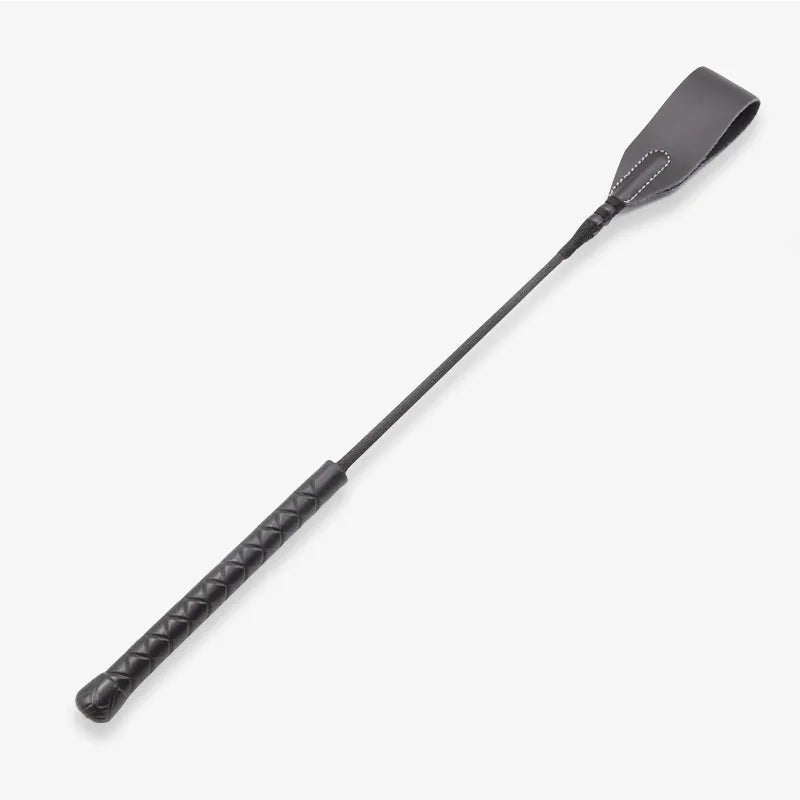
Keeper-Spitzen neigen auch dazu, ein saubereres, konzentrierteres Gefühl zu erzeugen als die breitere Ausbreitung eines Slappers – näher an einem definierten Kontaktpunkt als an einer Oberfläche. Wenn Ihre Priorität präzises Anleiten oder präzise Korrekturen und nicht eine breite sensorische Abdeckung ist, ist eine Keeper-Spitze normalerweise die richtige Ausgangskategorie.
Slapper-Köpfe: Breites, hörbares Feedback
Ein Slapper-Kopf tauscht die punktgenaue Präzision des Keepers gegen eine breitere, flachere Oberfläche ein, die den Kontakt verteilt und typischerweise einen lauteren, helleren Klang beim Aufprall erzeugt.
Die Doppellagige ovale Reitgerte (24,90 $) zeigt diesen Kompromiss deutlich. Ihre ovale, doppellagige Konstruktion deckt deutlich mehr Oberfläche ab als eine Keeper-Spitze, was bedeutet, dass ein Schlag, der leicht außermittig landet, immer noch einen festen, befriedigenden Kontakt herstellt und nicht nur einen Streifschuss. Die breitere Oberfläche verdrängt auch mehr Luft beim Kontakt, was einer der Gründe ist, warum Slapper-artige Spitzen im Allgemeinen ein helleres, hörbareres "Knallen" erzeugen als eine schmale Keeper-Spitze.
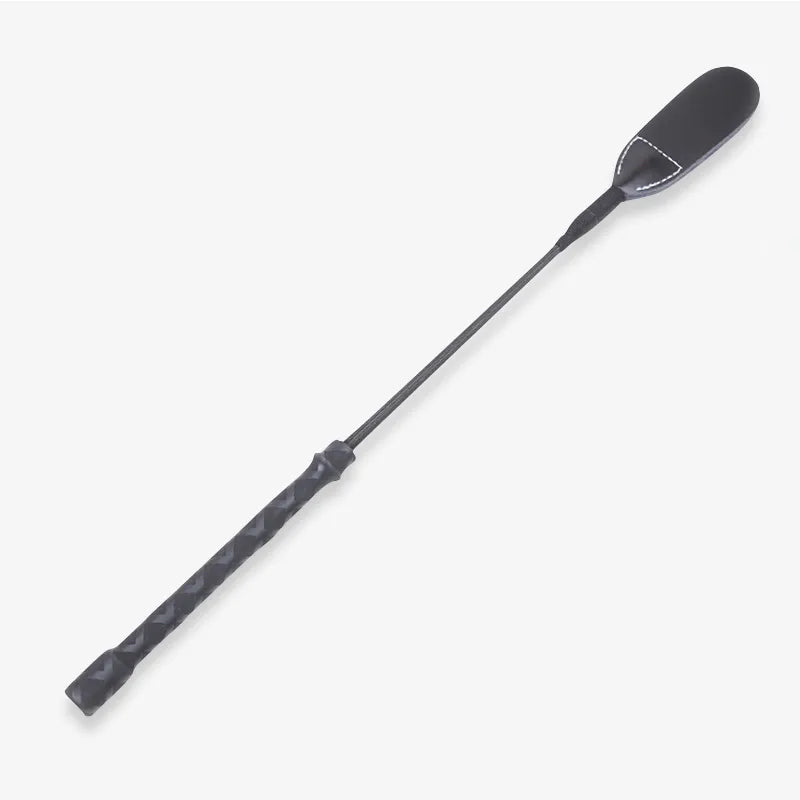
Slapper-Köpfe sind eine gute Wahl, wenn Sie eine fehlerverzeihendere Zielgenauigkeit, mehr hörbares Feedback für Szenen, in denen der Klang wichtig ist, oder eine breitere Empfindung wünschen, die eher einem Mini-Paddel als einem präzisen, peitschenartigen Punkt ähnelt. Der Kompromiss ist eine geringere Punktgenauigkeit – wenn Sie einen sehr spezifischen kleinen Bereich wiederholt ansteuern müssen, wird Ihnen eine Keeper-Spitze besser dienen.
Popper: Die klassische Schlaufe und das Schnappen
Eine Popper-Spitze verwendet ein geschlungenes Lederstück anstelle einer flachen Keeper- oder Slapper-Spitze, und diese Schlaufe ist speziell dafür ausgelegt, beim Kontakt ein scharfes, charakteristisches "Pop"-Geräusch zu erzeugen.
Traditionelle Popper-Reitgerten sind ein Design, das direkt aus dem Reitsport stammt, wo der Klang selbst – nicht nur der physische Kontakt – als Hinweis dient. Die Konstruktion der Schlaufe bewirkt, dass Luft im Moment des Aufpralls explosiv eingeschlossen und freigesetzt wird, wodurch ein hörbares Knallen entsteht, das lauter und schärfer ist als das, was ein Keeper- oder Slapper-Design typischerweise bei gleicher Schwungkraft erzeugt. Für Szenen, in denen akustisches Feedback und Vorfreude ebenso wichtig sind wie die physische Empfindung, fügt eine Popper-Spitze eine psychologische Dimension hinzu, die flache Spitzendesigns nicht nachbilden. Stöbern Sie in der Kollektion Lederreitgerten, um Popper-artige Optionen neben Keeper- und Slapper-Designs zu finden.
Da der Klang oft dramatischer ist als die physische Empfindung, können Popper eine gute Option für Szenen sein, die sich auf Erwartung, Disziplinatmosphäre und Anleiten konzentrieren, anstatt auf reine physische Intensität – das Knallen selbst leistet viel emotionale Arbeit.
Neuartige und geformte Spitzen: Gabel, Herz und darüber hinaus
Über die drei funktionalen Kategorien hinaus erzeugen geformte und neuartige Spitzen ihre eigene einzigartige Kontaktgeometrie und fügen gleichzeitig ein visuelles oder thematisches Element hinzu, das Standardspitzen nicht haben.
Die Dämonengabel-Reitgerte (33,90 $) ersetzt die einzelne flache Oberfläche vollständig durch ein geteiltes Gabeldesign, wodurch zwei Kontaktpunkte pro Schlag anstelle einer durchgehenden Oberfläche entstehen – eine wirklich andere Empfindung als jede Keeper-, Slapper- oder Popper-Spitze. Dies ist keine dekorative Variante einer Standardspitze; die gegabelte Struktur verändert grundlegend, wie die Kraft beim Aufprall verteilt wird.
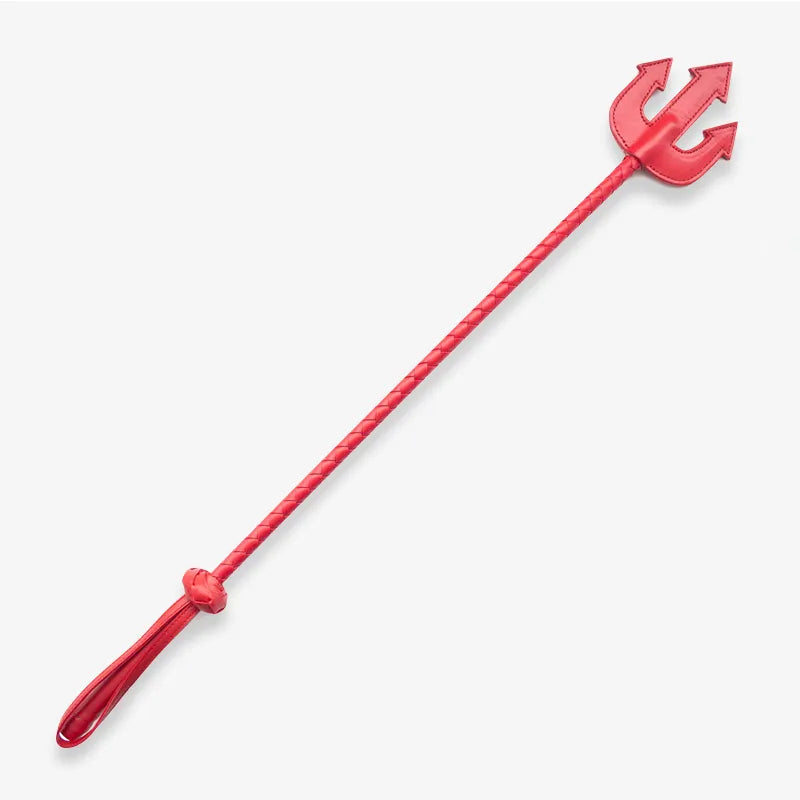
Herzformen, Tiersilhouetten und andere neuartige Spitzen funktionieren im Allgemeinen eher wie ein kleiner Keeper oder Slapper, abhängig von ihrer Gesamtfläche, mit dem zusätzlichen Element, einen geformten Eindruck zu hinterlassen oder einer Szene thematische Persönlichkeit zu verleihen. Diese sind es wert, nach Stimmung und Anlass ausgewählt zu werden, ebenso wie nach reiner Empfindung – eine herzförmige Spitze für eine romantische Szene dient einem anderen Zweck als ein schlichter schwarzer Keeper für eine strukturierte Disziplinarsitzung, selbst wenn ihr physischer Aufprallindex ähnlich ist. Einige neuartige Spitzen eignen sich auch als durchdachte Geschenke, gerade weil die Form etwas Persönliches kommuniziert, was ein Standard-Keeper oder Slapper einfach nicht kann.
Vollständige Vergleichstabelle
Die Gegenüberstellung aller vier Spitzenkategorien macht die praktischen Unterschiede deutlich.
| Spitzentyp | Kontaktfläche | Klang | Am besten geeignet für | Beispiel |
|---|---|---|---|---|
| Keeper | Klein, definiert | Moderat, fokussiert | Präzises Anleiten und Korrigieren | Klassische BDSM-Reitgerte mit quadratischem Kopf |
| Slapper | Breit, flach | Laut, hell | Fehlerverzeihende Zielgenauigkeit, hörbares Feedback | Doppellagige ovale Reitgerte |
| Popper | Klein, geschlungen | Sehr laut, scharfes Knallen | Erwartung und Atmosphäre | Siehe Kollektion Lederreitgerten |
| Neuheit / Geformt | Variiert je nach Design | Variiert je nach Design | Themenbezogene Szenen, visueller Eindruck | Dämonengabel-Reitgerte |
Wie Sie basierend auf Ihrem Ziel auswählen
Passen Sie den Spitzentyp an das an, was Sie in einer Szene tatsächlich erreichen möchten, nicht nur an die allgemeine "Anfänger versus Fortgeschrittene"-Logik.
| Ihr Ziel | Empfohlener Spitzentyp |
|---|---|
| Präzise, wiederholbare Platzierung zum Anleiten oder Korrigieren | Keeper |
| Breitere Empfindung mit fehlerverzeihenderer Zielgenauigkeit | Slapper |
| Dramatischer Klang und Erwartungsaufbau | Popper |
| Thematische oder visuell unverwechselbare Szenen | Neuheit / Geformt |
| Wirklich unterschiedliche physische Empfindung als Standardspitzen | Gabel- oder geteilte Spitzendesigns |
Echte Erfahrung: Derselbe Schaft, vier verschiedene Spitzen
Die meisten Menschen gehen davon aus, dass sich alle Reitgerten ungefähr ähnlich anfühlen, bis sie tatsächlich verschiedene Spitzentypen bei gleicher Schwungkraft vergleichen.
In einem zusammengesetzten Szenario, das auf häufigen Käuferfragen basiert, besaß Sasha nur die Klassische BDSM-Reitgerte mit quadratischem Kopf und hatte über mehrere Monate hinweg eine solide Technik mit ihrer präzisen, definierten Keeper-Spitze aufgebaut. Aus Neugier schlug Sashas Partner vor, die Doppellagige ovale Reitgerte mit der gleichen leichten Kalibrierkraft auszuprobieren. Der Unterschied war sofort spürbar – die breitere Oberfläche des Slappers fühlte sich weniger scharf, aber irgendwie präsenter an, und der Klang war selbst bei reduzierter Kraft merklich lauter.
Sie probierten später aus Neugier die Dämonengabel-Reitgerte aus, und beide waren sich einig, dass es sich um eine wirklich neue Empfindungskategorie handelte und nicht um eine Variation des Keepers oder Slappers – der Zwei-Punkt-Kontakt wurde anders wahrgenommen als bei beiden flachen Designs. Sashas Fazit war, dass der Spitzentyp wichtiger war als erwartet; drei Reitgerten mit nahezu identischer Schaftlänge und Preis dienten letztendlich drei völlig unterschiedlichen Zwecken in ihrer Sammlung, von präziser Korrektur über breites hörbares Feedback bis hin zu etwas ganz Eigenem.
FAQ
Diese Antworten decken die häufigsten Fragen zu Reitgerten-Spitzentypen ab.
Was ist der Unterschied zwischen einer Keeper- und einer Slapper-Spitze?
Ein Keeper ist eine kleine, definierte Spitze, die für präzisen, fokussierten Kontakt ausgelegt ist, während ein Slapper ein breiterer, flacherer Kopf ist, der den Kontakt verteilt und typischerweise einen lauteren Klang erzeugt.
Keeper eignen sich für präzises Anleiten; Slapper eignen sich für eine breitere Empfindung und fehlerverzeihendere Zielgenauigkeit.
Warum erzeugen Popper-Spitzen einen lauteren Klang als andere Designs?
Die geschlungene Konstruktion eines Poppers schließt Luft ein und setzt sie beim Kontakt explosiv frei, wodurch ein schärferes Knallen entsteht als bei einer flachen Keeper- oder Slapper-Spitze bei gleicher Schwungkraft.
Dieses Design ist direkt von traditionellen Reitgerten entlehnt, wo der Klang selbst als Hinweis dient.
Sind neuartige, geformte Spitzen weniger funktional als Standarddesigns?
Nein – geformte Spitzen wie Gabel- oder Herzdesigns sind immer noch voll funktionsfähige Schlagwerkzeuge, obwohl ihre Kontaktgeometrie von Standard-Keepern und Slappern abweicht.
Wählen Sie basierend auf der gewünschten Empfindung und dem visuellen oder thematischen Element, das Sie suchen.
Welcher Spitzentyp ist am einfachsten für einen Anfänger?
Eine Standard-Keeper-Spitze ist im Allgemeinen der einfachste Ausgangspunkt, da sie klares, direktes Feedback zu Ihrer Technik gibt, ohne dass eine breitere Oberfläche Zielfehler ausgleicht.
Slapper- und neuartige Spitzen sind ausgezeichnete Ergänzungen, sobald Sie grundlegende Erfahrung mit Reitgerten gesammelt haben.
Beeinflusst der Spitzentyp die Lautstärke einer Reitgerte?
Deutlich. Popper und Slapper erzeugen im Allgemeinen mehr Geräusch als eine kompakte Keeper-Spitze, da beide mehr Luft verdrängen oder sie so einschließen, dass das Aufprallknallen verstärkt wird.
Wenn Sie in einem geräuschempfindlichen Raum spielen, ist eine Keeper-Spitze normalerweise die leisere Wahl.
Kann ich zwischen Spitzentypen in derselben Sitzung wechseln?
Ja, viele erfahrene Benutzer wechseln bewusst – ein Keeper für präzise Momente, ein Slapper oder Popper für breitere oder dramatischere Akzente.
Kalibrieren Sie immer mit leichterem Kontakt neu, wenn Sie Spitzentypen wechseln, da sich Empfindung und Klang erheblich ändern.
Verletzen Gabel- oder geteilte Spitzen mehr als Standardspitzen?
Nicht unbedingt mehr, aber anders – der Zwei-Punkt-Kontakt wird als eine eindeutige Empfindung registriert und nicht einfach als "mehr" oder "weniger" als bei einer flachen Spitze.
Probieren Sie es zuerst mit sehr leichter Kalibrierkraft aus, um zu verstehen, wie es sich im Vergleich zu Spitzen anfühlt, die Sie bereits kennen.
Wie reinige ich verschiedene Spitzentypen?
Leder-Keeper-, Slapper- und Popper-Spitzen sollten trocken abgewischt und regelmäßig gepflegt werden, niemals einweichen. Silikon- oder neuartige Spitzen mit synthetischem Material können im Allgemeinen mit milder Seife und Wasser gewaschen werden – beachten Sie die spezifischen Pflegehinweise des Produkts.
Überprüfen Sie vor jedem Gebrauch die Verbindung zwischen Spitze und Schaft bei jedem Spitzentyp.
Lohnt es sich, mehr als einen Spitzentyp zu besitzen?
Für die meisten Menschen, die im Laufe der Zeit eine Sammlung für Impact Play aufbauen, ja – ein Keeper für präzise Arbeit, ein Slapper oder Popper für breitere oder theatralischere Momente deckt einen deutlich größeren Bereich ab als jeder einzelne Spitzentyp allein.
Es gibt keine Verpflichtung, jede Kategorie auf einmal zu besitzen; fügen Sie Spitzentypen schrittweise hinzu, wenn Sie entdecken, welche Empfindungen und Szenenstile Sie am meisten genießen.
Letzte Gedanken: Kaufen Sie die Spitze, nicht die ganze Reitgerte
Das Spitzendesign erklärt den größten Teil des wahren Charakters einer Reitgerte – wenn Sie Optionen vergleichen, bewerten Sie zuerst die Spitze und behandeln Sie Schaftlänge, Griff und Preis als sekundäre Details.
Für präzises, fokussiertes Anleiten ist die Klassische BDSM-Reitgerte mit quadratischem Kopf eine zuverlässige Wahl im Keeper-Stil. Für ein breiteres, hörbareres Feedback deckt die Doppellagige ovale Reitgerte diesen Bereich gut ab. Für etwas wirklich anderes bietet die Dämonengabel-Reitgerte eine Zwei-Punkt-Kontakt-Empfindung, die keines der Standarddesigns nachbildet.
Für die Grundlagen der Fähigkeiten lesen Sie bitte Wie Sie die richtige Reitgerte für Ihr Können auswählen und lesen Sie den Leitfaden zur Sicherheit bei Reitgerten für die vollständigen technischen Grundlagen vor Ihrer nächsten gemeinsamen Sitzung.


